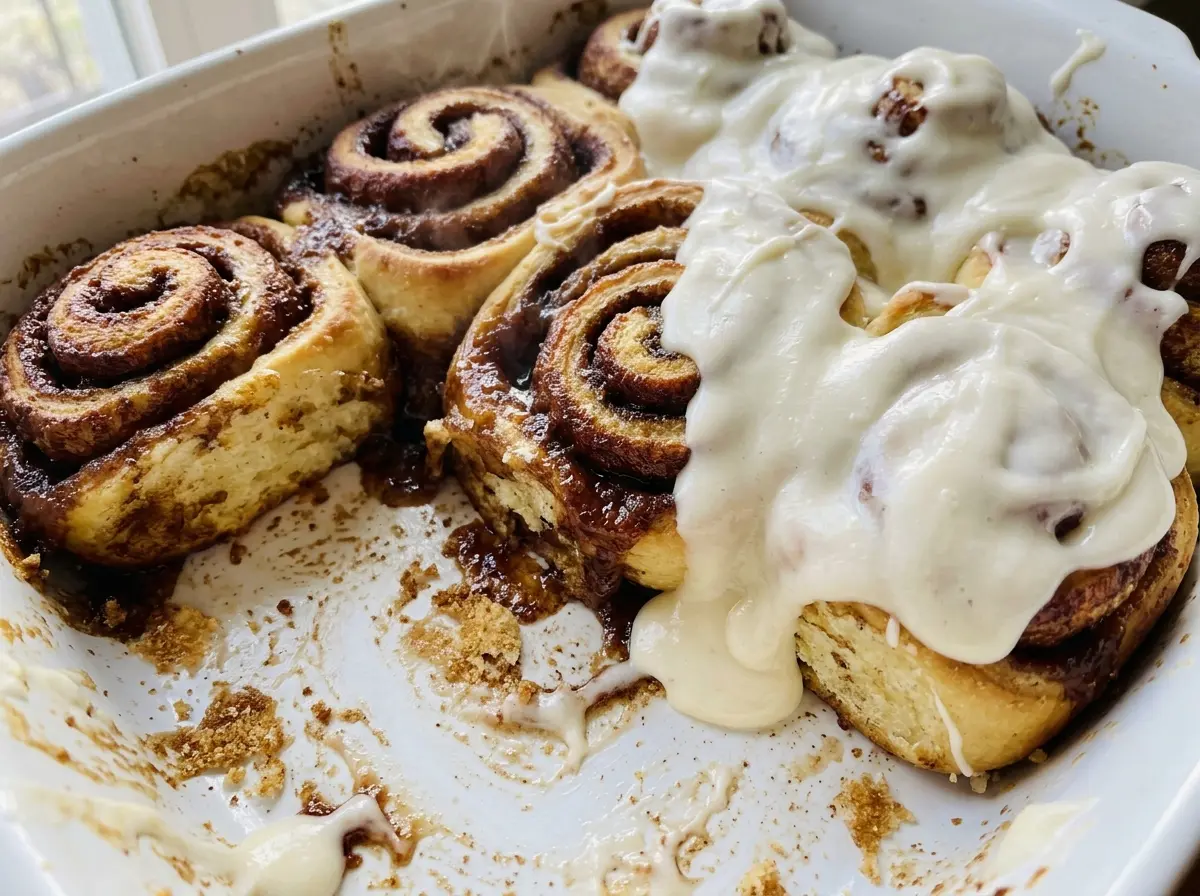
Golden tops can fool you: the middle rolls may still need a few minutes in the oven. I watch the center of the pan, not just the edges, when I make these homemade cinnamon rolls for Christmas brunch. Once the rolls are set in the middle, they’re soft and tender without that underbaked, doughy seam.
The dough should feel slightly tacky after kneading, and that’s a good thing. Too much extra flour can make the rolls dense, so I use the reserved flour for the counter and rolling pin rather than working it all into the dough. A generous layer of cinnamon and brown sugar stays tucked inside each swirl, then smooth cream cheese frosting goes onto the rolls while they’re still warm.
Kitchen Note
Give the yeast mixture the full 5–10 minutes before adding the eggs and butter. You’re looking for a foamy surface, not just a few bubbles around the edge.
Save these Christmas brunch cinnamon rolls for a soft, cinnamon-filled center and a smooth cream cheese frosting.
Why Adding More Flour Can Make These Cinnamon Rolls Tough
Enriched dough is softer and stickier than a basic bread dough, so it’s easy to mistake the texture for a problem. After kneading, this dough should be smooth but still a little tacky. If you keep dusting in flour until it feels dry, the rolls can turn dense instead of pillowy. Trust the texture cue and use the reserved flour on the work surface when it’s time to roll.
The dough also needs room to rise before you shape it. Once it has doubled, it’s easier to roll into an even rectangle without pulling or tearing. During shaping, spread the filling across the dough rather than piling it in one spot; an even layer gives each roll a consistent cinnamon-sugar spiral. Rolling from a long edge creates the long log you need for twelve rolls.
These details matter more than getting a perfectly polished-looking log. A slightly uneven edge is easy to trim or even out as you cut, while flour worked into the dough changes the texture of every roll.
What the Milk, Butter, and Brown Sugar Bring to the Dough

- Whole milk and active dry yeast — The milk gives the dough richness, while the yeast creates its rise. Use fresh active dry yeast; old yeast may not foam or raise the dough well. Whole milk is the best match for the tender texture here.
- Eggs and unsalted butter — Room-temperature eggs blend into the dough more evenly. The butter is divided for a reason: melted butter enriches the dough, softened butter coats the pan and filling, and softened butter rounds out the frosting. Let the melted portion cool before mixing it in.
- All-purpose flour and kosher salt — All-purpose flour gives these rolls enough structure without making them chewy. Measure the flour carefully and keep the extra reserved for dusting. The salt balances the sweetness and seasons the dough.
- Light brown sugar and cinnamon — Packed brown sugar makes a moist filling that clings to the butter, and cinnamon gives the rolls their familiar warm center. Fresh, fragrant cinnamon makes a noticeable difference; an old jar that smells faint won’t bring as much flavor.
- Cream cheese and powdered sugar — Cream cheese gives the frosting its slight tang, while powdered sugar makes it smooth enough to spread. Use softened cream cheese so you don’t end up chasing lumps through the frosting.
- Vanilla and whole milk — Vanilla rounds out the frosting, and a little milk loosens it to a spreadable consistency. Add neither as a substitute for the cream cheese; they play supporting roles, not the same one.
From Foamy Yeast to Frosted, Warm Rolls
Wake the yeast and bring the dough together
Warm the milk to 105–110°F, then whisk it with the yeast and a teaspoon of the sugar. Let it stand until foamy, then whisk in the remaining sugar, eggs, and cooled melted butter. Add the flour and salt and mix until a shaggy dough forms. If the mixture still looks ragged at this point, that’s fine; kneading smooths it out.
Knead until smooth, then let the dough double
Knead with a dough hook for 6–8 minutes. The finished dough should look smooth and feel slightly tacky, not stiff or dry. Cover the bowl and leave it at room temperature for 1–1 1/2 hours, until doubled. Give it the time it needs to reach that visual cue rather than shaping it while it’s still compact.
Roll an even rectangle and fill it edge to edge
Grease a 9×13-inch baking dish with 1 tablespoon of softened butter. Dust your work surface with the reserved flour and roll the dough into a 12×18-inch rectangle. Spread it with the remaining softened butter, then sprinkle the brown sugar and cinnamon evenly over the surface. Roll from a long edge and cut the log into 12 equal rolls; keeping the cuts even helps them bake at a similar pace.
Give the rolls their second rise, then bake
Set the rolls cut-side up in the prepared dish, cover them, and let them rise for 30–45 minutes, until puffy. Preheat the oven to 350°F during this rise so it’s ready when the rolls are. Bake for 25–30 minutes, until the tops are golden brown and the center rolls are set. If the middle still looks unset, don’t take the pan out just because the outer rolls are golden.
Frost while the rolls are warm
Let the baked rolls rest in the pan for 10 minutes. While they rest, beat the softened cream cheese, powdered sugar, vanilla, milk, and softened butter until smooth. Spread the frosting over the warm rolls so it softens slightly against the tops without disappearing into the pan.
Two Ingredient Swaps for a Different Cinnamon Roll
Use dark brown sugar for a deeper filling
Swap dark brown sugar for the light brown sugar in the filling, using the same amount. The extra molasses gives the cinnamon center a deeper, more caramel-like taste, though it can make the filling feel a little richer.
Make the rolls dairy-free
Replace the whole milk with unsweetened dairy-free milk, the butter with dairy-free butter, and the cream cheese with a dairy-free cream cheese-style spread. Use the same amounts and keep the steps the same. The dough and frosting will be a little different in richness, but you’ll still get the cinnamon swirl and a creamy topping.
Storage and Reheating
- Refrigerator: Keep the frosted rolls covered in the refrigerator for 3–4 days. The dough will firm up when chilled, and the frosting will be less soft.
- Freezer: Freeze individual frosted rolls in an airtight container for up to 2 months. Thaw them in the refrigerator overnight; the cream cheese frosting may look a little less smooth after thawing.
- Reheating: Warm one refrigerated roll in the microwave in short bursts, just until soft and warm. Heating it too long can melt the frosting and dry out the dough.
Questions That Come Up When Making These Cinnamon Rolls
Homemade Cinnamon Rolls for Christmas Brunch
Ingredients
Equipment
Method
- Warm the milk to 105–110°F.
- Whisk the warm milk with the yeast and 1 teaspoon of the sugar.
- Let the mixture stand for 5–10 minutes, until foamy.
- Whisk in the remaining sugar, eggs, and 6 tablespoons melted butter.
- Add the 4 cups flour and salt, then mix until a shaggy dough forms.
- Knead with a dough hook for 6–8 minutes, until smooth and slightly tacky.
- Cover the bowl and let the dough rise at room temperature for 1–1 1/2 hours, until doubled.
- Grease a 9x13-inch baking dish with 1 tablespoon of the softened butter.
- On a surface dusted with the reserved flour, roll the dough into a 12x18-inch rectangle.
- Spread the dough with the remaining 6 tablespoons softened butter.
- Sprinkle the brown sugar and cinnamon evenly over the dough.
- Roll the dough up from a long edge.
- Cut the rolled dough into 12 equal rolls.
- Arrange the rolls cut-side up in the prepared dish.
- Cover the rolls and let rise for 30–45 minutes, until puffy.
- Preheat the oven to 350°F during this rise.
- Bake for 25–30 minutes, until the tops are golden brown and the center rolls are set.
- Let the rolls rest in the pan for 10 minutes.
- Beat the cream cheese, powdered sugar, vanilla, milk, and remaining 2 tablespoons softened butter until smooth.
- Spread the frosting over the warm rolls.