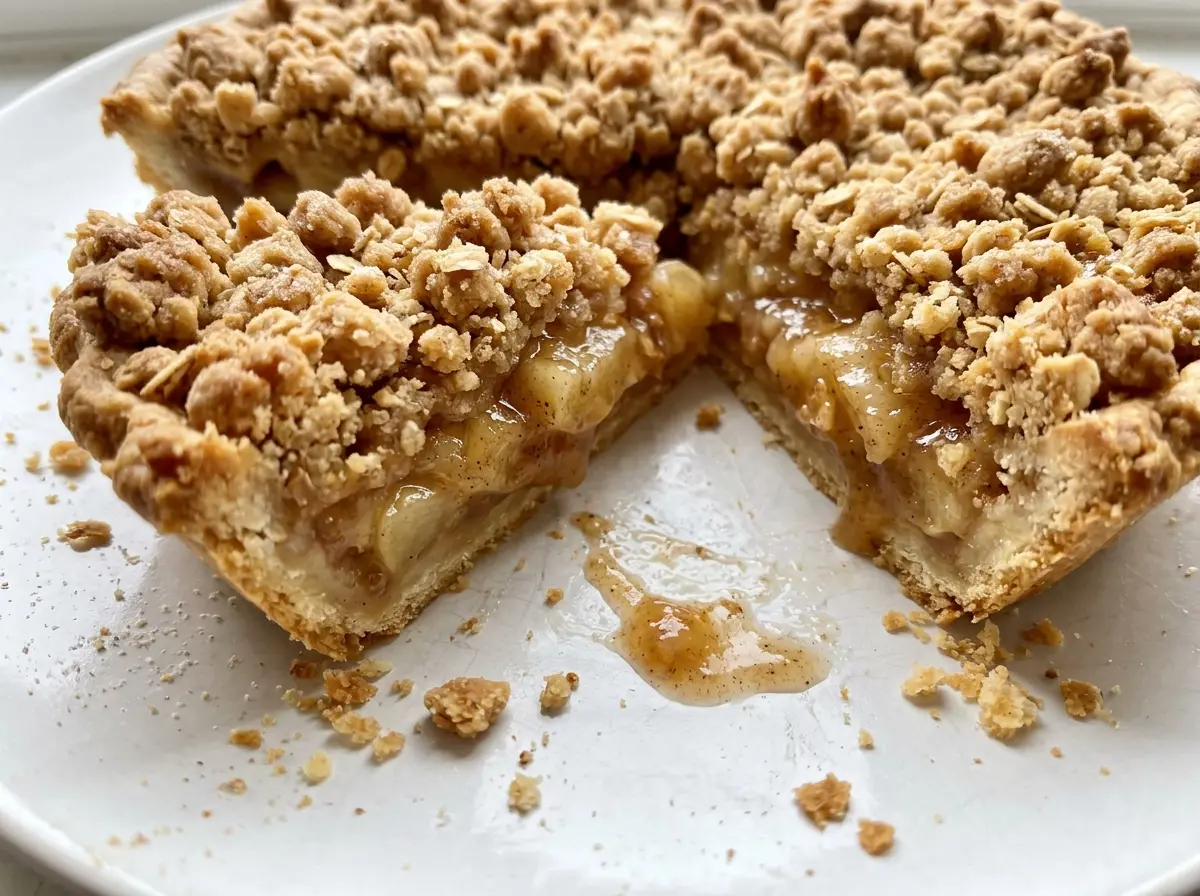
The crust edge can look beautifully golden while the apples in the middle are still releasing thin, watery juice. I watch for bubbling in the center before I call this Apple Crumble Pie done; that’s the sign the filling has had time to cook through, not just the edges.
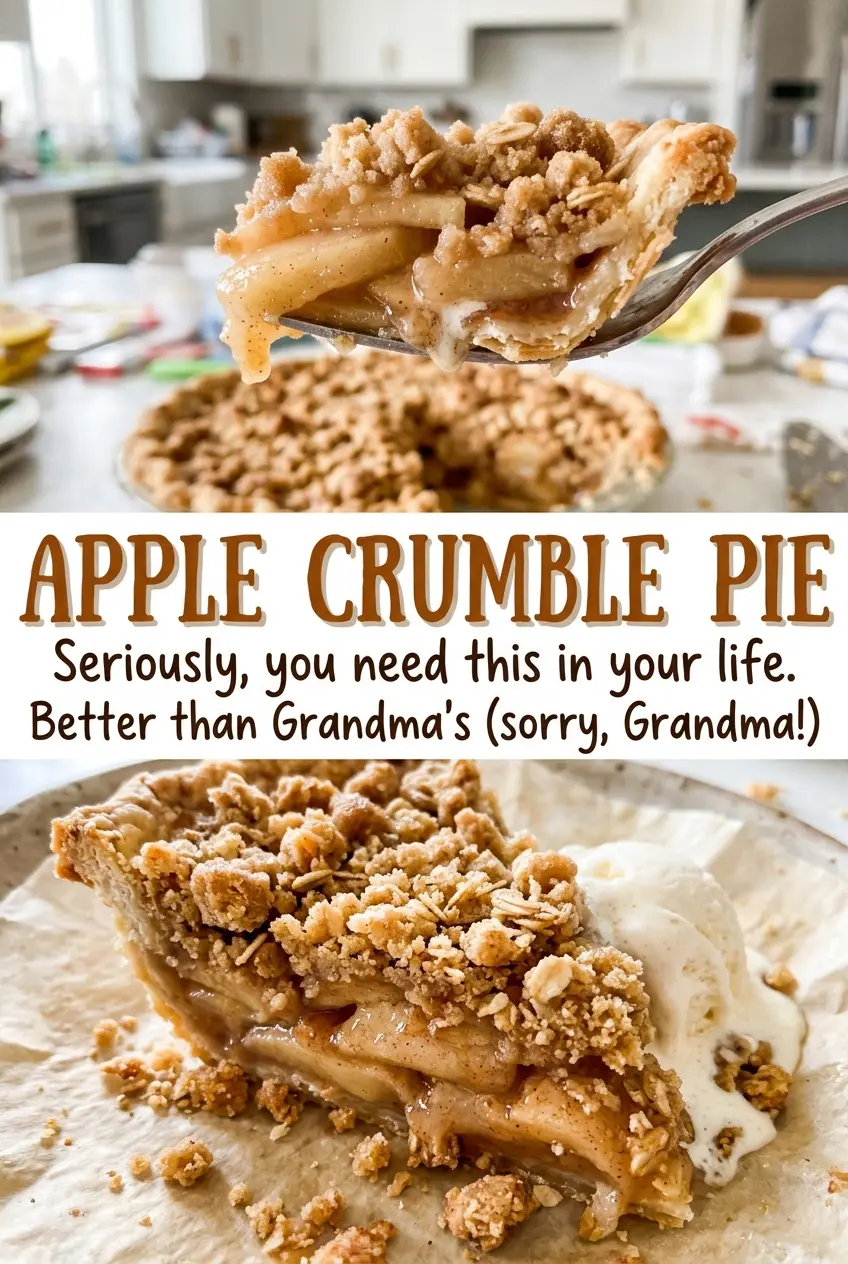
Firm apples help the filling stay pleasantly sliceable beneath the oat crumble. I like the contrast of tart Granny Smith apples with sweeter Honeycrisp, while cinnamon and lemon keep the fruit bright. The topping comes together with cold butter cut into the flour, brown sugar, and oats, so you get coarse crumbs instead of a flat layer. Give each slice a little time to cool, and the apples settle into a tender, gently spiced filling under crisp, buttery crumbs.
Kitchen Note
Start with the first 3 tablespoons of ice water, then add more a teaspoon at a time. Stop as soon as the dough holds together when squeezed; extra water makes a tougher crust.
Save this Apple Crumble Pie for its flaky crust, cinnamon apples, and buttery oat topping.
Why a Firm Apple Matters More Than a Sweet One
In a pie, sweetness doesn’t tell you whether an apple will keep its shape. Firm apples hold up better through a long bake, so the filling stays tender rather than collapsing into a soft layer of fruit. Granny Smith brings a sharper, tart bite; Honeycrisp adds a sweeter note and a little contrast. Using both gives you more than one kind of apple texture in each forkful.
The filling also needs a thickener because the apples release juice as they bake. Cornstarch coats the slices along with the sugar, lemon juice, and cinnamon, helping those juices turn into a glossy filling instead of pooling at the bottom of the crust. A firm apple and an evenly coated slice are doing different jobs here: one keeps the fruit from losing all its shape, and the other helps the juices cling to it. That balance is what makes a slice hold together without turning the apples hard or dry.
What the Apples, Cornstarch, and Oats Each Bring to This Pie
- Firm apples — Granny Smith and Honeycrisp are a useful pairing because one leans tart and the other sweeter. Choose fruit that feels firm, not soft or mealy, so the slices hold their shape during baking. Peel, core, and slice them evenly for a consistent filling.
- Cornstarch — It thickens the apple juices without adding a strong flavor of its own. Toss it thoroughly with the sugar and spices so it doesn’t sit in dry pockets; clumps can leave parts of the filling thin and other parts pasty.
- Cold unsalted butter — The butter has two jobs: it’s cut into the crust flour and into the crumble flour. Keeping it cold helps both mixtures stay crumbly rather than greasy. Unsalted butter also lets the measured salt in the crust do its job without making the seasoning hard to predict.
- Old-fashioned rolled oats — Their broad flakes give the topping a distinct, hearty bite. Quick oats are finer and make a less textured crumble, so reach for rolled oats when you want those visible oat pieces.
- Brown sugar, cinnamon, and lemon juice — Brown sugar brings a deeper sweetness to the topping, while cinnamon seasons the fruit. Lemon juice adds a bright note against the sugar and apples, keeping the filling from tasting one-dimensional.
- All-purpose flour — The portion in the crust gives the dough structure, while the portion in the topping helps bind the butter and oats into coarse crumbs. Measure each portion separately so the crust and crumble each get the right share.
From a Chilled Dough Disk to a Crumb-Capped Pie
Bring the Crust Together Without Overworking It
Whisk the crust flour with the salt, then cut in the cold butter with a pastry blender until the pieces are about the size of peas. Toss in the ice water with a fork, using only enough for the dough to hold when squeezed. Shape it into a disk, wrap it, and refrigerate it for 1 hour. If it feels sticky or greasy while you handle it, the butter has warmed; chilling gives the dough time to firm back up.
Roll and Shape the 9-Inch Crust
Roll the chilled dough between two sheets of parchment into a 12-inch circle. The parchment makes it easier to move the dough without stretching it, which can leave the crust uneven in the pie plate. Fit it into a 9-inch pie plate, peel away the parchment, trim the overhang to 1/2 inch, then fold the edge under and crimp. Refrigerate the shaped crust while you prepare the filling so it stays cold.
Coat the Apple Slices and Make Coarse Crumbs
Toss the peeled, cored apple slices with the granulated sugar, cornstarch, lemon juice, and cinnamon until every slice is coated. In a separate bowl, combine the remaining flour with the brown sugar and oats, then cut in the cold butter until coarse crumbs form. If the topping looks like a smooth paste, the butter has softened too much; coarse crumbs are what you want scattered across the fruit. Spoon the apples into the chilled crust, mound them slightly, and distribute the topping evenly.
Use the Two-Temperature Bake, Then Let It Set
After the pie is assembled, heat the oven to 400°F with a rack in the lower third. Set the pie on a rimmed baking sheet and bake for 20 minutes, then reduce the oven to 375°F and continue baking for 40 to 50 minutes. Look for a golden topping and juices bubbling in the center; if the crust edge or topping gets too dark before then, shield that area loosely with foil. Cool the pie on a rack for at least 3 hours before slicing, or the filling won’t have time to settle.
Two Apple Crumble Pie Variations Worth Trying
Make It Tart with All Granny Smith Apples
Use Granny Smith for all the apples instead of blending them with Honeycrisp. The filling will taste sharper and less sweet, which plays especially well against the brown sugar and oat topping.
Make the Crust and Crumble Gluten-Free
Replace the all-purpose flour in both the crust and topping with the same amount of a cup-for-cup gluten-free baking blend that includes a binder such as xanthan gum. The dough is more delicate to roll, so keep it between the parchment sheets and handle it gently; the oat topping will still give the pie a satisfying crumbly finish.
Storage and Reheating
- Refrigerator: Cover and refrigerate for up to 4 days. The topping softens a little as it sits against the fruit.
- Freezer: Freeze the completely cooled pie, wrapped tightly, for up to 2 months. Thaw it in the refrigerator before serving.
- Reheating: Warm individual slices in the oven until heated through for a crisper topping. Avoid heating a slice for too long in the microwave, since the crumble softens and the apple filling can get much hotter than the crust.
Questions That Come Up While Making Apple Crumble Pie
Apple Crumble Pie
Ingredients
Equipment
Method
- In a large bowl, whisk 1 1/4 cups of the flour with the salt.
- Cut in 1/2 cup of the cold butter with a pastry blender until the pieces are about the size of peas.
- Drizzle in 3 tablespoons of the ice water, tossing with a fork; add more water, 1 teaspoon at a time, until the dough holds together when squeezed.
- Shape the dough into a disk, wrap, and refrigerate for 1 hour.
- Roll the dough between two sheets of parchment paper into a 12-inch circle.
- Fit the dough into a 9-inch pie plate and remove the parchment.
- Trim the overhang to 1/2 inch, fold the edge under, and crimp.
- Refrigerate the crust while you prepare the filling.
- In a large bowl, toss the apples with the granulated sugar, cornstarch, lemon juice, and cinnamon until evenly coated.
- In a medium bowl, combine the remaining 1/2 cup flour, brown sugar, and oats.
- Cut in the remaining 1/2 cup cold butter until the mixture forms coarse crumbs.
- Spoon the filling into the chilled crust, mounding the apples slightly.
- Scatter the topping evenly over the apples.
- Heat the oven to 400°F with a rack in the lower third.
- Set the pie on a rimmed baking sheet and bake for 20 minutes.
- Reduce the oven to 375°F and bake for 40 to 50 minutes, until the topping is golden and juices bubble in the center; shield the crust edge or topping loosely with foil if either browns too quickly.
- Cool the pie on a rack for at least 3 hours before slicing.