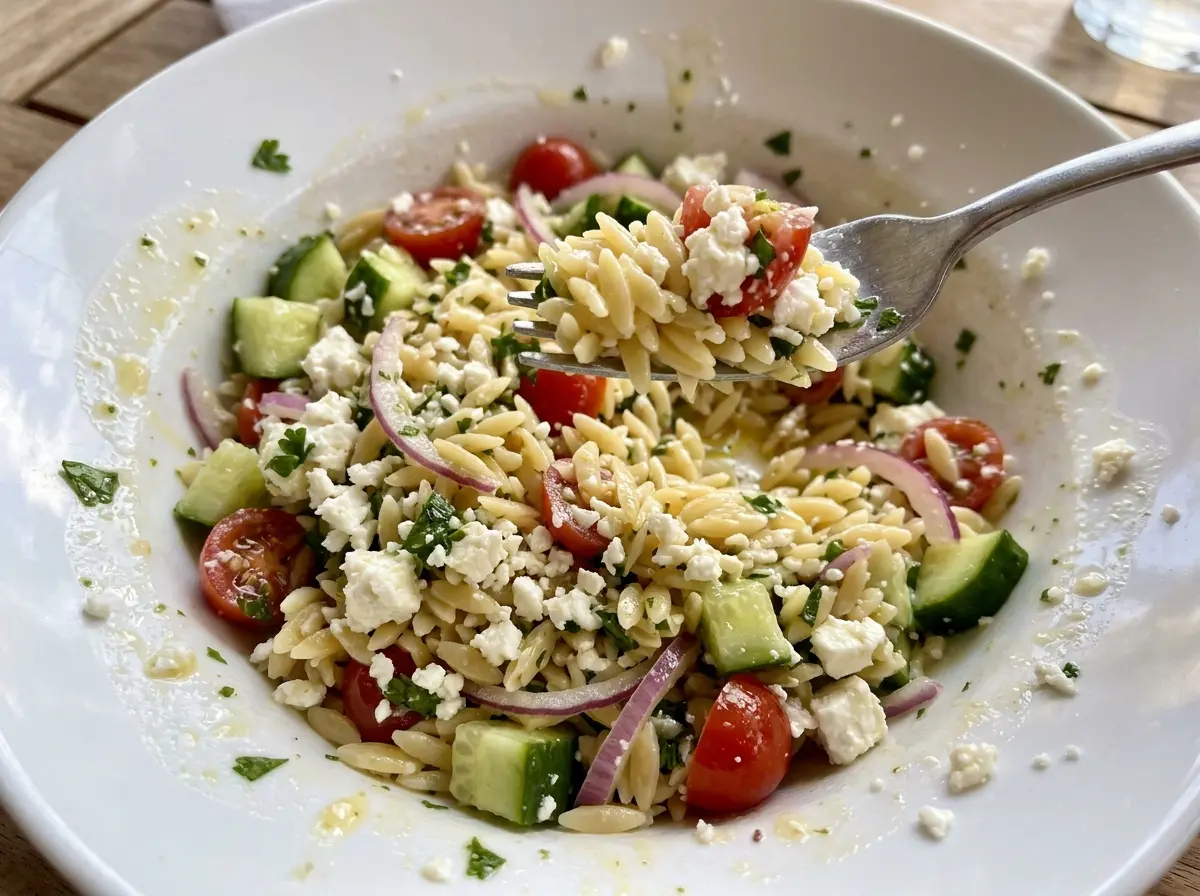
The dressing hits the warmest part of the orzo first, and for a moment it looks like the pasta is drinking it all up. That’s why I cool the orzo completely before tossing everything together: the lemon stays bright, and the cucumber and tomatoes keep their fresh bite. This Lemon Orzo Salad with Feta is a generous bowl of tender pasta, briny olives, crisp vegetables, and a punchy lemon dressing.
The small details keep the salad balanced. Fresh lemon zest brings fragrance that juice alone can’t give, while Dijon helps the oil and acid come together in the dressing. I cut the red onion finely so it spreads through the bowl instead of taking over a bite. Crumbled feta goes in last, where it stays in soft, salty pieces among the vegetables and orzo.
Kitchen Note
Give the salad 15 minutes to rest before serving. That short pause lets the lemon, oregano, and briny olives settle into the orzo rather than tasting like separate parts.
Save this Lemon Orzo Salad with Feta for a bright, make-ahead bowl with briny olives, crisp vegetables, and fresh lemon.
Why the Cold Rinse Matters More Than You Think
Orzo keeps cooking from its own heat after it leaves the pot. If it goes straight into the bowl while hot, the pasta can turn softer as it sits, and its heat dulls the fresh, sharp edge of the lemon dressing. Rinsing under cold water stops that carryover cooking and brings the orzo down to a temperature that works for a chilled salad.
There’s another practical reason to take your time at the colander: water left clinging to the pasta can thin the dressing. Drain it well after rinsing so the oil, lemon, vinegar, and Dijon cling to the orzo instead of sliding into a watery layer at the bottom. This matters especially in a salad with juicy tomatoes and cucumber, where you want each bite dressed but not swimming. Cool, well-drained orzo gives the other ingredients room to stay distinct.
What Gives This Salad Its Bright, Briny Balance

- Orzo — Its small shape catches bits of parsley, crumbled feta, and dressing in every forkful. Cook it to al dente rather than soft; a softer pasta has less structure once it’s tossed with the vegetables.
- Fresh lemons — The zest supplies fragrant citrus oils, while the juice brings the clean acidity that keeps olive oil and feta from feeling heavy. Since both are used, fresh lemons matter here more than a juice-only ingredient would.
- Olive oil, red wine vinegar, and Dijon — Olive oil gives the dressing body, vinegar adds a second kind of tang, and Dijon helps the liquids combine when whisked. Use an olive oil whose taste you like, since it’s a noticeable part of the finished dressing.
- Garlic and dried oregano — Minced garlic gives the dressing a direct savory note; dried oregano brings the familiar, earthy herb flavor that suits the olives and feta. Mince the garlic finely so you don’t get a harsh chunk in an otherwise delicate salad.
- English cucumber and cherry tomatoes — These are the fresh, juicy contrast to the pasta and salty additions. Dice the cucumber and halve the tomatoes so they’re easy to pick up with the small orzo.
- Red onion — Finely diced pieces distribute more evenly than larger chunks, giving the salad a little sharpness throughout instead of an overpowering bite.
- Kalamata olives and feta — The olives bring a deep, briny flavor, while feta adds creamy, salty crumbles. Feta varies in saltiness and firmness, so taste a piece before serving if you’re deciding whether the salad needs any adjustment.
- Fresh parsley — Chopped parsley adds a clean herbal lift beside the richer olives and cheese. Fresh parsley is worth using here; dried herbs won’t give the same fresh finish.
Build the Salad Without Soft Orzo or Watery Dressing
Boil the Orzo Until Al Dente
Bring 4 quarts of water and 1 tablespoon kosher salt to a boil in an 8-quart pot. Add the pound of orzo and cook according to the package directions, usually 8 to 10 minutes. Start checking near the shorter end of that range; the pasta should be tender but still have a slight firmness at the center. Overcooked orzo can lose its shape once it’s mixed and chilled.
Cool It Down and Drain Thoroughly
Drain the orzo, then rinse it under cold water until it’s cool. Move the pasta around gently in the colander so the water reaches all of it, not just the top layer. Let it drain well before transferring it to the serving bowl. Excess rinse water makes it harder for the dressing to coat the pasta evenly.
Whisk the Lemon Dressing
In a small bowl, whisk together the olive oil, lemon zest and juice, red wine vinegar, Dijon mustard, minced garlic, dried oregano, and black pepper. Keep whisking until the dressing looks combined rather than streaky, with the Dijon distributed through the oil and citrus. The zest can collect in little flecks; that’s expected. Minced garlic should be fine enough to disperse instead of settling into one strong bite.
Toss the Vegetables and Fold in Feta
Combine the cooled orzo with the diced cucumber, halved cherry tomatoes, finely diced red onion, halved kalamata olives, and chopped parsley in a large serving bowl. Pour the dressing over everything and toss until the pasta and vegetables look evenly coated. Add the crumbled feta at the end and fold gently so the pieces stay visible. A heavy-handed toss can break the feta down and make the salad look less distinct.
Easy Ways to Adjust the Bowl to Your Table
Leave Out the Feta for a Dairy-Free Salad
Omit the feta and keep the rest of the salad and dressing the same. The result is lighter and less creamy, with the kalamata olives providing the main salty, savory contrast.
Make It Without Red Onion
Leave out the red onion for a milder bowl. You’ll lose its sharp little contrast, but the lemon, parsley, olives, and feta still give the salad plenty of character.
Skip the Olives for a Less Briny Version
Omit the kalamata olives if you prefer a gentler, less salty taste. The feta will still bring savory richness, while lemon and fresh vegetables move to the foreground.
Make-Ahead and Storage
- Refrigerator: Store the salad covered in the refrigerator for up to 3 days. The orzo will absorb some dressing, and the cucumber will soften as it sits.
- Freezer: Freezing isn’t a good fit for this salad. Cucumber and tomatoes lose their fresh texture after thawing, and feta can become crumbly and watery.
- Serving: This salad is served chilled, so it doesn’t need reheating. Give it a gentle toss before serving to redistribute any dressing that has settled.
Questions That Come Up When Making Lemon Orzo Salad
Lemon Orzo Salad with Feta
Ingredients
Method
- Bring the water and kosher salt to a boil in an 8-quart pot.
- Add the orzo and cook according to package directions until al dente, usually 8 to 10 minutes.
- Drain the orzo.
- Rinse the orzo under cold water until cool, then drain well.
- Whisk the olive oil, lemon zest and juice, red wine vinegar, Dijon mustard, garlic, oregano, and black pepper in a small bowl until combined.
- Combine the cooled orzo, cucumber, tomatoes, red onion, olives, and parsley in a large serving bowl.
- Pour the dressing over the salad and toss to coat.
- Gently fold in the feta.
- Let the salad rest for 15 minutes before serving so the flavors can meld.