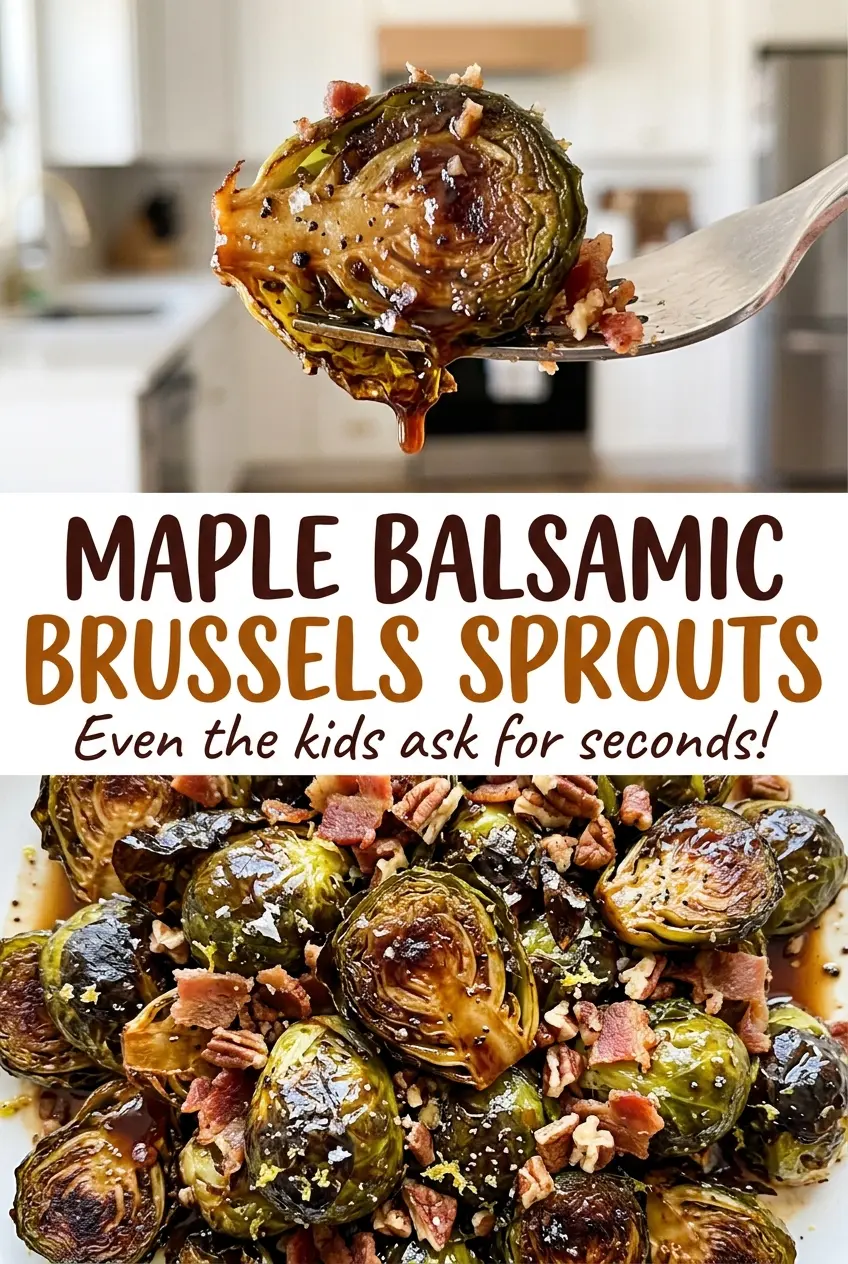
The cut sides of the Brussels sprouts should be the first thing to touch the hot pan. That’s where the deep brown color develops, while the rounded sides stay tender instead of picking up too much heat. I used to turn the sprouts halfway through roasting, but leaving them cut-side down gives them a better sear with less fuss.
For these Maple Balsamic Brussels Sprouts, the glaze simmers on the stove while the vegetables roast, so both parts are ready at about the same time. Dijon gives the sweet maple and sharp balsamic a savory edge, and a quick toss in a serving bowl coats the warm sprouts without hiding their browned surfaces. The batch serves four, and the balance of tangy glaze and tender centers makes each bite taste like more than a plain roasted vegetable side.
Kitchen Note
The glaze is ready when it looks slightly thicker than it did in the saucepan at the start. Take it off the heat then; it doesn’t need to turn sticky or syrupy before it meets the roasted sprouts.
Save these Maple Balsamic Brussels Sprouts for a vegetable side with browned edges and a tangy maple glaze.
Why the Cut Side Has to Hit the Pan First
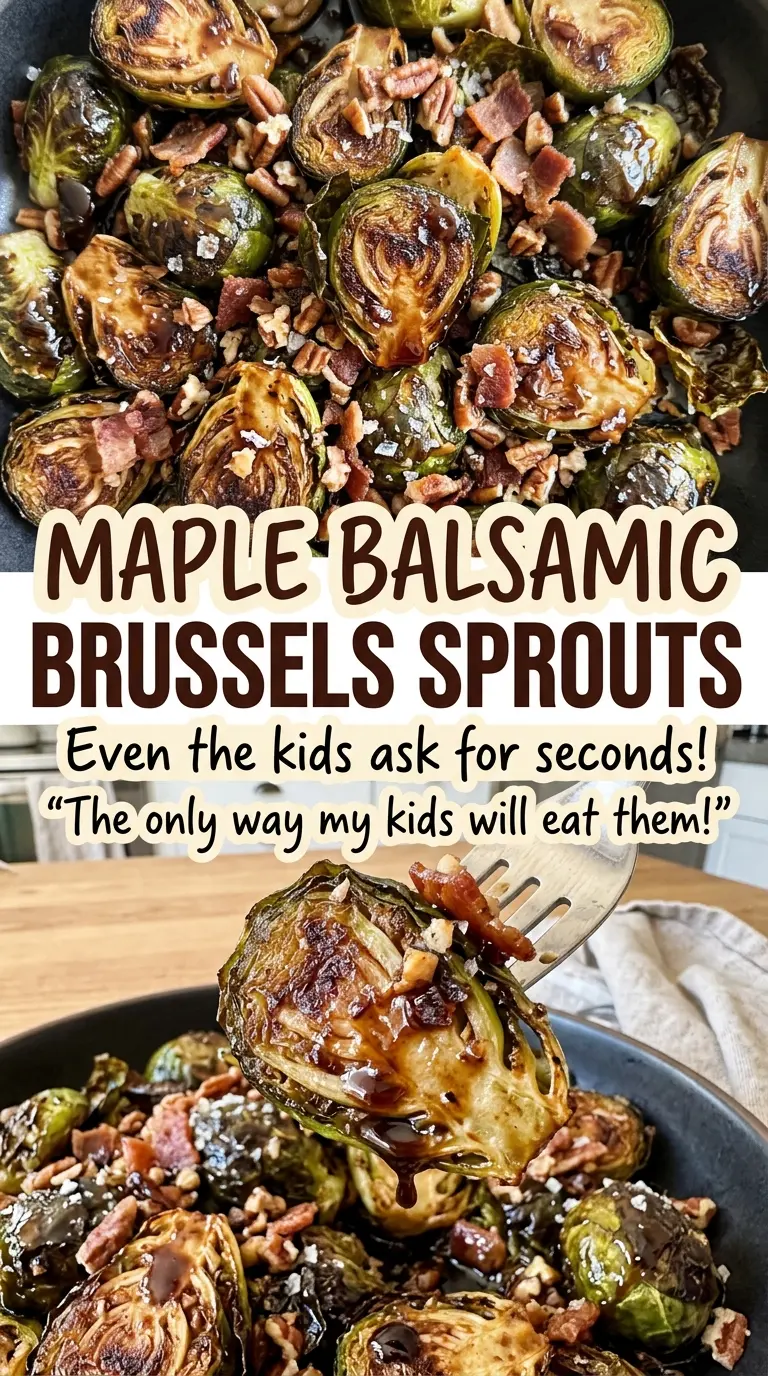
Brussels sprouts have two very different surfaces once they’re halved. The flat cut face can sit flush against the baking sheet, which gives it direct contact with the hot pan; the rounded side can’t do that as evenly. That contact is what builds the browned face while the inside becomes tender.
Arrange the halves cut-side down in a single layer rather than piling them up or turning them partway through. A crowded pan traps moisture between the vegetables, and the sprouts are more likely to soften before they brown. If some halves are much larger than others, they’ll take a little longer to become fork-tender, so use the fork test as well as the color cue. The goal is a browned cut surface and a center that gives easily when pierced, not merely a dark exterior.
What the Maple, Balsamic, and Dijon Each Bring
- Brussels sprouts — Choose firm sprouts with compact leaves and no soft, damp patches. Trimming the stem ends and halving them gives each piece a flat surface for browning; keep the halves reasonably similar in size so they roast at a similar pace.
- Olive oil — The oil helps the salt and pepper cling and keeps the cut faces from drying out as they roast. A basic everyday olive oil works well here; there’s no need to use a prized finishing oil when the sprouts are headed for a hot oven and a bold glaze.
- Balsamic vinegar — This supplies the glaze’s acidity and its dark, concentrated character. A familiar grocery-store balsamic is fine; a sweeter, thicker one can make the finished glaze taste sweeter and heavier, so taste matters more than an expensive bottle.
- Pure maple syrup — It softens balsamic’s sharpness and gives the glaze a rounded sweetness. Use pure maple syrup rather than pancake syrup, which is a different sweetener and won’t give the same maple taste.
- Dijon mustard — Dijon brings a gentle savory tang that keeps the glaze from tasting like vinegar sweetened with syrup. Its smooth texture blends into the simmering mixture, so a coarse mustard would leave a different, more textured finish.
Roast the Sprouts and Simmer the Glaze Side by Side
Get the cut faces ready for the oven
Heat the oven to 425°F and line a large rimmed baking sheet with parchment paper. Toss the trimmed, halved sprouts with olive oil, kosher salt, and black pepper until the surfaces look lightly coated. Arrange them cut-side down in one layer, leaving space rather than stacking any halves. If they’re crowded, the exposed surfaces won’t brown as readily.
Roast until browned and fork-tender
Roast for 20 to 25 minutes, keeping the sprouts cut-side down. Look for browned cut faces and a fork that slides into the thickest part without much resistance. Start checking at the 20-minute mark, since smaller halves may become tender before larger ones. If they’re still firm, give them the remaining roasting time rather than pulling them just because the outside has color.
Simmer, coat, and serve
While the sprouts roast, combine the balsamic vinegar, pure maple syrup, and Dijon mustard in a small saucepan. Bring the mixture to a simmer over medium heat, stirring occasionally, and cook for 4 to 6 minutes until it’s slightly thickened. Remove the pan from the heat, then transfer the roasted sprouts to a serving bowl and toss them with the glaze. Serve once the glaze has coated the sprouts; there’s no need to return them to the oven.
Two Simple Ways to Change the Maple-Balsamic Finish
A mustard-free glaze
For a mustard-free version, leave out the Dijon and simmer the balsamic vinegar with the maple syrup. The glaze will lose Dijon’s savory tang and taste more directly sweet-tart, but it still gives the roasted sprouts a glossy finish.
Serve them without the glaze
Skip the glaze and serve the roasted sprouts with their olive oil, salt, and pepper seasoning for a simpler, less sweet side. This keeps the browned, tender vegetable front and center, though you’ll miss the balsamic tang and maple finish.
Storage and Reheating
- Refrigerator: Store leftovers in an airtight container for up to 3 to 4 days. The sprouts soften in storage, and the glaze will settle around them.
- Freezer: They can be frozen in an airtight container, but thawed Brussels sprouts tend to be softer and wetter. For the best texture, serve them fresh or refrigerated rather than freezing them.
- Reheating: Spread the leftovers on a baking sheet and warm them in a 425°F oven until hot. Avoid heating them longer than needed; extended reheating makes the already-tender sprouts softer.
Questions That Come Up When Making These Brussels Sprouts
Maple Balsamic Brussels Sprouts
Ingredients
Equipment
Method
- Heat the oven to 425°F.
- Line a large rimmed baking sheet with parchment paper.
- Toss the Brussels sprouts with the olive oil, salt, and pepper.
- Arrange the Brussels sprouts cut sides down in a single layer on the baking sheet.
- Roast for 20 to 25 minutes, until browned on the cut sides and tender when pierced with a fork.
- While the sprouts roast, combine the balsamic vinegar, maple syrup, and Dijon mustard in a small saucepan.
- Bring the mixture to a simmer over medium heat.
- Simmer for 4 to 6 minutes, stirring occasionally, until slightly thickened.
- Remove the glaze from the heat.
- Transfer the roasted Brussels sprouts to a serving bowl.
- Toss the sprouts with the glaze.
- Serve.