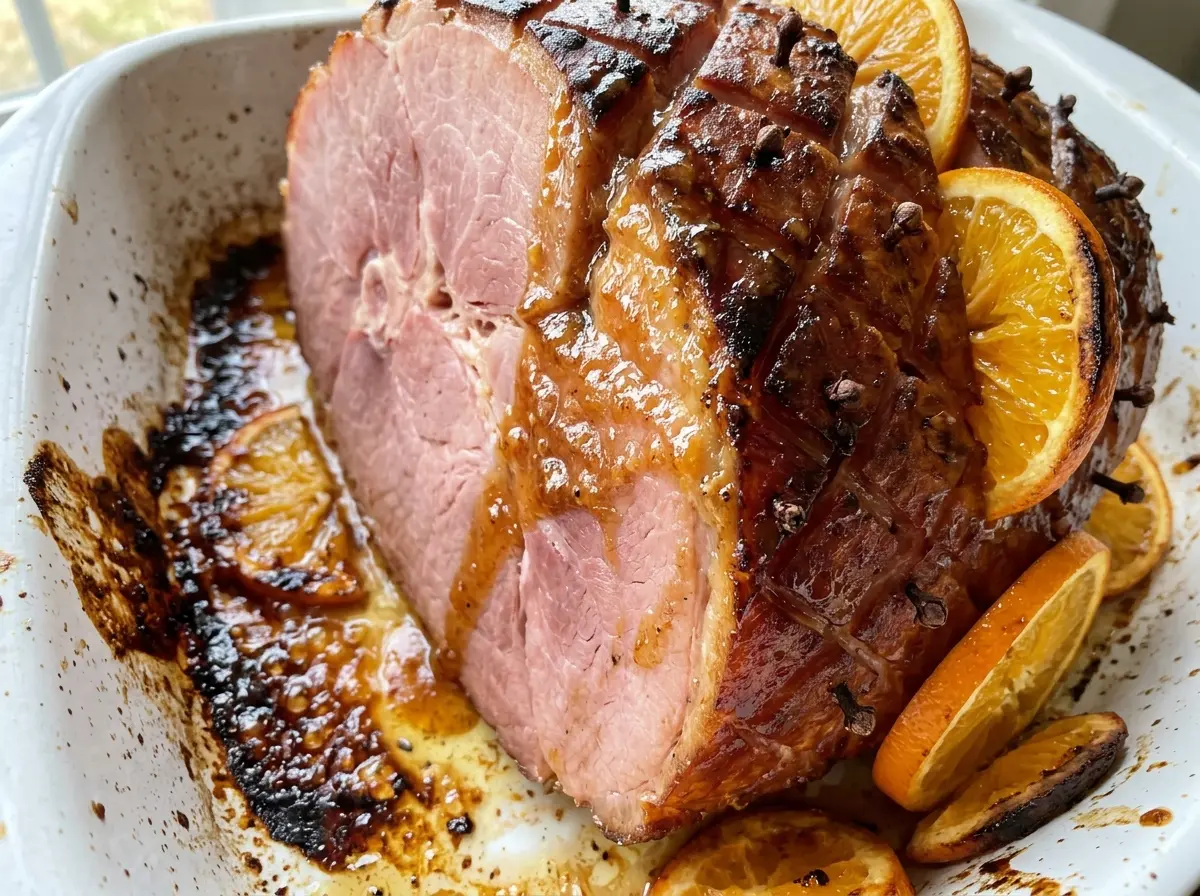
When the foil comes off, the ham still looks pale, and that’s exactly when the glaze goes on. The first covered stretch warms the meat gently; the maple, Dijon, and orange get their glossy finish only at the end. That timing is what makes this Maple Dijon Holiday Ham with Orange and Cloves a dependable centerpiece instead of a sticky, overbrowned roast.
I like that the glaze uses the whole orange, not just its juice. The zest gives it a bright aroma, while Dijon keeps the maple and brown sugar from tasting flat or overly sweet. Score the fat before baking so the cloves have a place to sit, then let the glaze cling to those little diamonds during the final stretch. Each slice comes to the table with a sweet-tangy coating and a hint of clove.
Kitchen Note
Keep the water below the roasting rack, not against the ham. It gives the covered roast a little moisture and keeps the pan from sitting completely dry while the ham warms.
Save this Maple Dijon Holiday Ham for a glossy maple-orange finish, warm clove aroma, and a carving-friendly unsliced roast.
Why the Maple Glaze Waits Until the Ham Is Already Hot
Maple syrup and brown sugar make a glaze that can turn dark if it spends the entire roast in the oven. Starting with the ham covered and unglazed lets the heat work on the meat first, without exposing the sugars to a long bake. The glaze gets its turn once the ham has warmed through.
That order also gives you a clearer finish to watch for. Brush the glaze over the ham, then let it bake uncovered so it can tighten into a shiny coating. Basting with the pan juices keeps the surface from looking patchy, while the foil tent gives you a quick fix if the glaze colors faster than the ham reaches its final temperature. It’s a short finishing stage, not a second long roast, and that difference keeps the maple and orange tasting bright.
What the Maple, Dijon, and Orange Each Bring to the Glaze
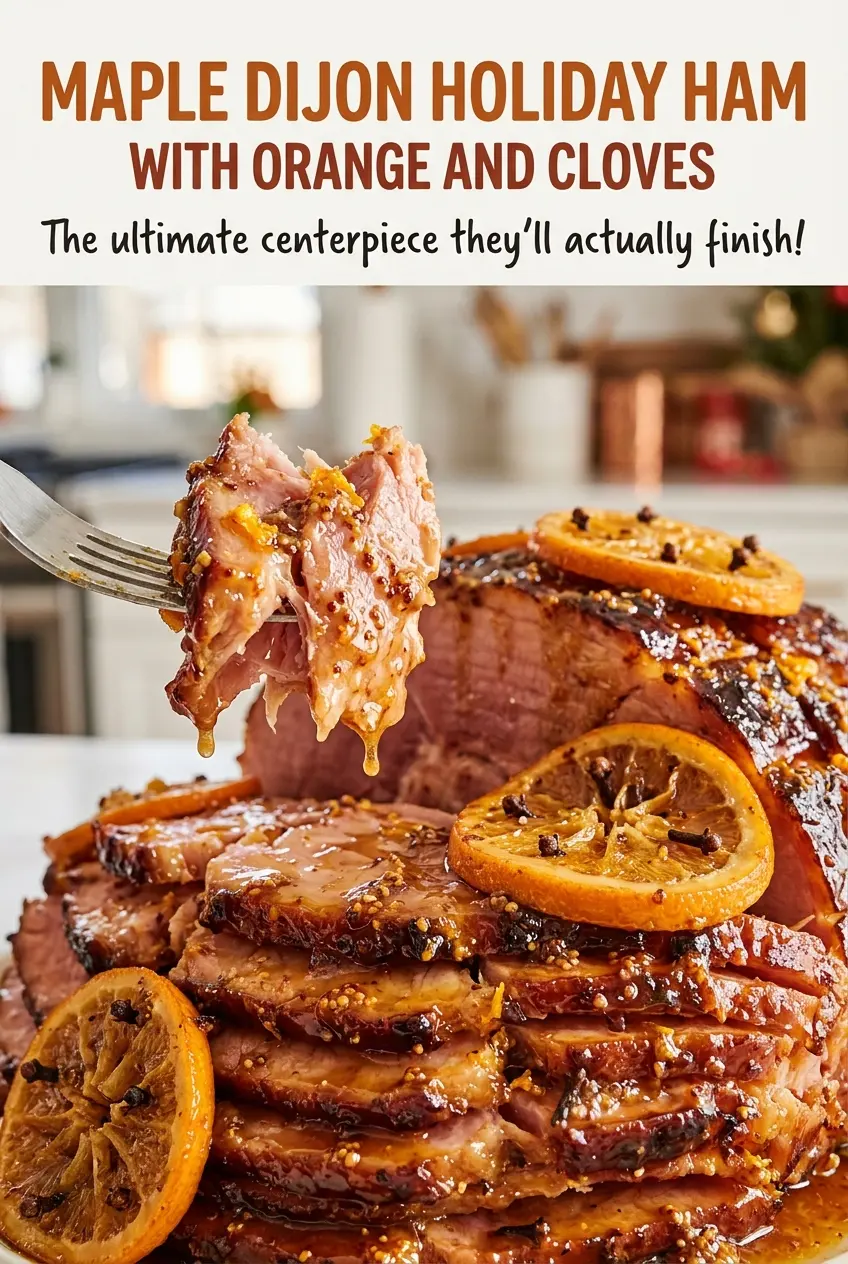
- The ham — A fully cooked, bone-in shank-end ham gives you a stable surface to score and a bone that helps the roast hold its shape. Choose one that hasn’t been spiral-sliced; the intact exterior is easier to score and glaze evenly. A boneless or uncooked ham isn’t a direct stand-in because its shape and cooking needs differ.
- Pure maple syrup and brown sugar — Maple brings its own deep, woodsy sweetness, and brown sugar gives the glaze body. Pure maple syrup matters here; pancake syrup won’t have the same character. There isn’t a like-for-like replacement among the other ingredients, so leaving out the maple changes the glaze rather than recreating it.
- Dijon mustard — Its sharp tang balances the sweetness and gives the glaze a savory edge. Use Dijon rather than a mild mustard if you want that contrast. No other ingredient in this short list can replace its bite, so omitting it will leave a sweeter, less rounded coating.
- Orange — One fresh orange supplies both the zest and juice. Zest it before juicing; it’s much easier to collect the fragrant outer peel while the fruit is whole. The juice adds citrus brightness, while the zest brings a more pronounced orange aroma.
- Whole cloves — Whole cloves are easy to press into the scored intersections and remove as you carve. Ground cloves won’t stay in place or give you the same controlled distribution. If you don’t want the clove note, leaving them out is a cleaner choice than substituting ground spice.
From Scored Fat to a Glossy Maple-Orange Finish
Score the Ham and Set the Cloves
Heat the oven to 325°F and position a rack in the lower third. Remove the rind while leaving about 1/4 inch of fat, then score that fat in a 1-inch diamond pattern. Press a whole clove into each diamond intersection; keep the pattern on the fat rather than cutting deeply into the meat. The scored surface gives the glaze more places to settle later.
Cover the Ham for Its First Bake
Pour the water into a large roasting pan fitted with a rack, then set the ham cut-side down on the rack. Cover the pan tightly with foil before it goes into the oven. Bake for 1 1/4 to 2 hours, beginning to check after 1 hour 15 minutes. Measure in the thickest part without touching the bone; it should reach 110°F to 115°F before you move on, and you can continue in 15-minute increments if it hasn’t.
Simmer the Orange-Dijon Glaze
While the ham bakes, stir the maple syrup, packed brown sugar, Dijon, orange zest, and orange juice together in a small saucepan. Bring the mixture to a simmer over medium-low heat, stirring as it cooks for 6 to 8 minutes. Look for a glaze that has thickened slightly but still brushes easily. Keep the heat at a simmer; a hard boil can reduce the liquid too quickly before the ham is ready.
Brush, Baste, and Rest Before Carving
Uncover the ham and brush it all over with the glaze. Bake for 25 to 35 minutes, basting with pan juices every 10 minutes, until glossy and heated to 140°F, or 165°F if the ham isn’t labeled as packaged in a USDA-inspected plant. If the surface browns too quickly, loosely tent it with foil. Let the ham rest for 15 minutes before carving, and remove the cloves as you slice.
Two Small Changes for a Different Ham Glaze
Leave Out the Whole Cloves
Skip the cloves and keep the rest of the ham and glaze the same. You’ll still have the maple-Dijon-orange coating, but without the concentrated warm spice in each slice. The scored fat can stay as it is; there’s no need to change the glaze.
Make the Glaze Less Aromatic
Leave out the orange zest but keep the orange juice in the glaze. The citrus will taste softer and less fragrant, while the Dijon still offsets the maple and brown sugar. This is a handy adjustment if you prefer a smoother orange note rather than zest’s sharper aroma.
Storage and Reheating
- Refrigerator: Refrigerate leftover ham in a covered container for 3 to 4 days. The glaze will firm up when cold.
- Freezer: Freeze carved portions in airtight freezer-safe packaging for 1 to 2 months for best quality. Thaw in the refrigerator before reheating.
- Reheating: Warm only the slices you need in a covered baking dish until they reach 165°F. Reheating the whole roast repeatedly can dry out the cut surfaces.
Questions That Come Up Before Carving This Holiday Ham
Maple Dijon Holiday Ham With Orange And Cloves Recipe
Ingredients
Equipment
Method
- Heat the oven to 325°F and position a rack in the lower third of the oven.
- Remove the ham rind, leaving about 1/4 inch of fat, and score the fat in a 1-inch diamond pattern; press a whole clove into each diamond intersection.
- Pour the water into a large roasting pan fitted with a rack, set the ham cut-side down on the rack, and cover the pan tightly with foil.
- Stir the maple syrup, brown sugar, Dijon mustard, orange zest, and orange juice together in a small saucepan; simmer over medium-low heat for 6 to 8 minutes, stirring, until slightly thickened.
- Bake the covered ham for 1 1/4 to 2 hours, beginning to check after 1 hour 15 minutes, until the thickest part (without touching the bone) reaches 110°F to 115°F; continue in 15-minute increments if needed.
- Uncover the ham and brush it all over with the glaze; bake for 25 to 35 minutes, basting with pan juices every 10 minutes, until glossy and heated to 140°F, or 165°F if the ham is not labeled as packaged in a USDA-inspected plant; loosely tent with foil if it browns too quickly.
- Rest the ham for 15 minutes before carving, and remove the cloves as you carve.