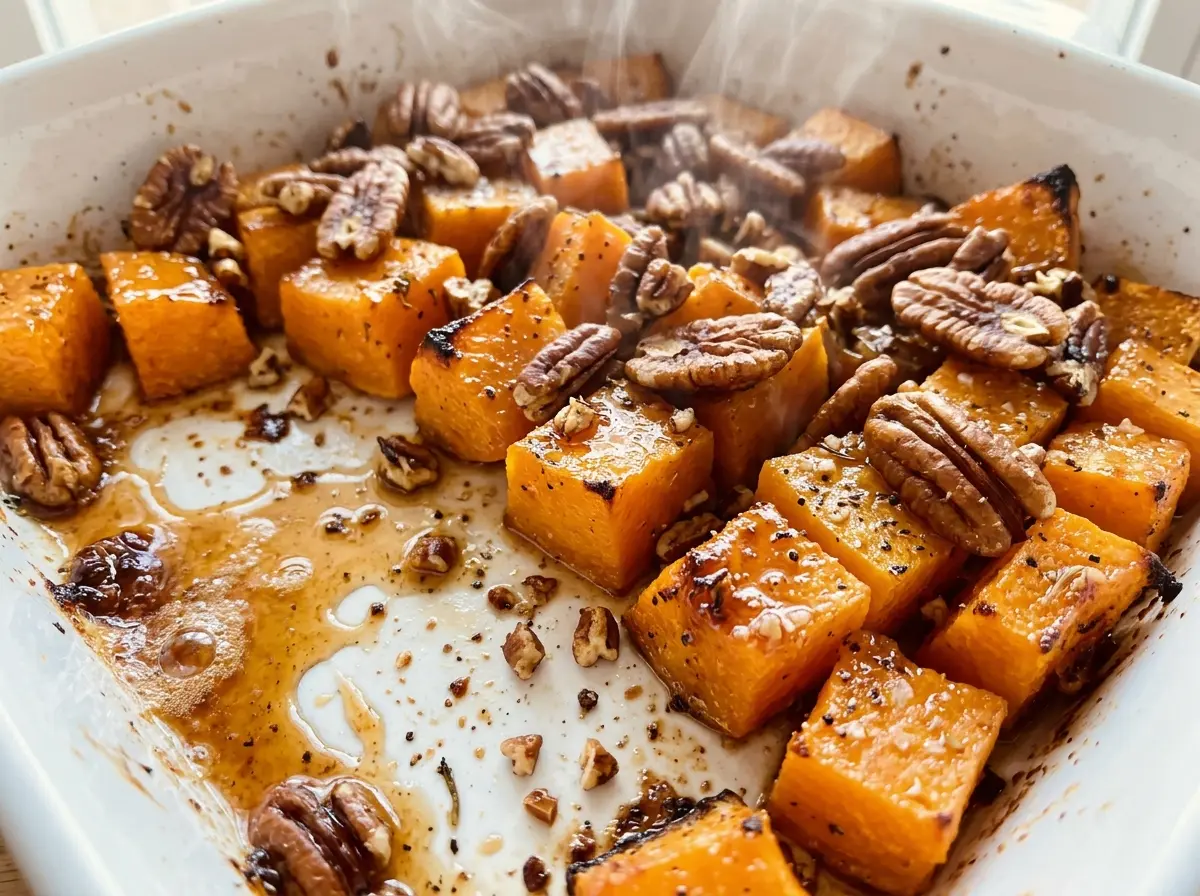
The squash goes into the oven pale and firm, but the edges turn golden and the centers soften as it roasts. That contrast is what makes maple roasted butternut squash with pecans such a satisfying side: tender pieces, a light maple coating, and toasted nuts in every scoop. It feels right at home on a holiday table, but the ingredient list is short enough that I’m just as happy to make it for an ordinary dinner.
I like this preparation because the squash stays the main event. Olive oil, salt, and pepper bring out its savory side, while pure maple syrup gives the finished pieces a gentle sweetness rather than turning them into candy. The pecans add a toasted crunch that plays against the soft squash. Serve it warm, straight from the baking sheet, while the edges are still nicely browned.
Kitchen Note
Keep the squash pieces close to the same 3/4-inch size. That way, they soften at about the same pace instead of leaving you with a mix of tender little pieces and firm, oversized ones.
Save this maple roasted butternut squash with pecans for a holiday side with tender centers, browned edges, and a light maple finish.
Why the Maple and Pecans Go on After the First Roast
Maple syrup is lovely on roasted squash, but it’s also the ingredient most likely to scorch if it spends the whole time in a hot oven. Giving the squash an initial roast before adding the syrup lets its surfaces start to brown without a sugary coating on the pan. When the maple goes on later, it has time to cling to the warm pieces and turn glossy without sitting through the full cooking time.
The pecans need that shorter finish, too. They toast quickly, and the last few minutes are enough to bring out their aroma while keeping them from getting too dark. Tossing the squash, syrup, and pecans together on the baking sheet spreads the coating across the pieces and keeps the nuts in contact with the maple. The result is a side that tastes balanced: the squash is still savory at its edges, with sweetness and crunch worked through rather than piled on top.
Choosing Squash, Maple Syrup, and Pecans for the Best Finish

- Butternut squash — Choose a firm squash that feels heavy for its size; the flesh should be dense enough to become tender without falling apart. Peeling and removing the seeds before cubing gives you pieces that roast evenly and are easy to eat. Kabocha squash can stand in, peeled and cut into the same size pieces, though it has a denser texture and a more chestnut-like taste.
- Olive oil — Use a fresh, everyday olive oil rather than saving your most delicate finishing oil for the oven. It helps the squash roast and carry the seasoning. Avocado oil works in its place if you prefer a more neutral taste.
- Pure maple syrup — Pure maple syrup brings a clear, woodsy sweetness that pancake syrup won’t fully match. A good bottle matters here because maple is one of the few finishing flavors, but there’s no need to use a rare, expensive variety. Honey can replace it measure-for-measure; it gives the squash a floral note and tends to brown faster, so keep an eye on the finish.
- Pecans — Fresh pecans taste sweet and buttery, which is why they pair so well with the squash. If yours smell stale or paint-like, they’ll bring that flavor to the finished dish, so choose a fresh package. Chopped walnuts can replace them measure-for-measure, with a slightly earthier, more assertive taste.
- Kosher salt and black pepper — These keep the squash from tasting one-note sweet. Kosher salt is the choice for the seasoning as written; fine table salt is denser by volume, so it can make the result saltier if swapped in without adjusting.
The Four Stages That Build Tender Squash and Toasted Edges
Get the Oven and Pan Ready
Heat the oven to 400°F and line a large rimmed baking sheet with parchment paper. The rim gives you room to toss the squash and pecans without pieces sliding off. Parchment also makes the maple-coated pan easier to clean afterward. Have the pan ready before you season the squash so it can go straight into the oven.
Coat the Cubes and Give Them Space
Toss the squash with the olive oil, kosher salt, and black pepper right on the baking sheet. Spread the pieces into a single layer rather than leaving them heaped together. When the cubes have room around them, the hot oven can brown their surfaces instead of trapping steam between them. Check the pan before roasting; move any pieces that are sitting on top of another.
Let the Squash Roast Before Glazing
Roast the seasoned squash for 20 minutes before adding the maple syrup and pecans. At this point, the pieces have had a head start softening and their edges are beginning to color. Stir the squash so the pieces roast more evenly, taking care not to mash the tender edges. If a few pieces look paler than the rest, spread them back across the pan rather than bunching them together.
Finish with Maple and Pecans
Drizzle the squash with the maple syrup, add the chopped pecans, and toss everything to coat. Return the pan to the oven for 8 to 10 minutes, until a fork slips into the squash easily, the edges are browned, and the pecans smell fragrant. Keep an eye on the nuts near the end; they should smell toasted, not sharp or scorched. Pull the pan when those cues come together.
Two Simple Ways to Adapt the Maple-Roasted Squash
Make It Nut-Free
Leave out the pecans for a nut-free version. The squash will still get its maple-coated, browned edges, but you’ll lose the toasted crunch, so the finished side will feel softer. If you’re cooking for someone with a nut allergy, use ingredients that are safe for their needs and avoid cross-contact.
Keep the Maple Finish Less Sweet
Use 1 tablespoon of pure maple syrup instead of 2 tablespoons, adding it at the same point in the roast. The coating will be lighter, and the squash’s natural sweetness will come through more clearly. Keep the pecans in the pan so the dish still has its toasted contrast.
Storage and Reheating
- Refrigerator: Store leftovers in an airtight container for 3 to 4 days. The squash softens as it sits, and the pecans lose some of their crunch.
- Freezer: Freeze in an airtight, freezer-safe container for up to 2 months for best quality. The squash will be softer after thawing, so freezing is best when texture matters less than having leftovers on hand.
- Reheating: Warm portions in a 350°F oven or in the microwave until they reach 165°F. Reheat only what you plan to eat; repeated heating makes the squash softer.
Questions I Get Asked About This Roasted Squash
Maple Roasted Butternut Squash With Pecans – Holiday Side Dish Recipe
Ingredients
Equipment
Method
- Heat the oven to 400°F.
- Line a large rimmed baking sheet with parchment paper.
- Toss the squash with the olive oil, salt, and pepper on the baking sheet.
- Spread the squash in a single layer.
- Roast for 20 minutes.
- Stir the squash.
- Drizzle it with the maple syrup.
- Add the pecans and toss to coat.
- Roast for 8 to 10 minutes more, until the squash is fork-tender with browned edges and the pecans are fragrant.