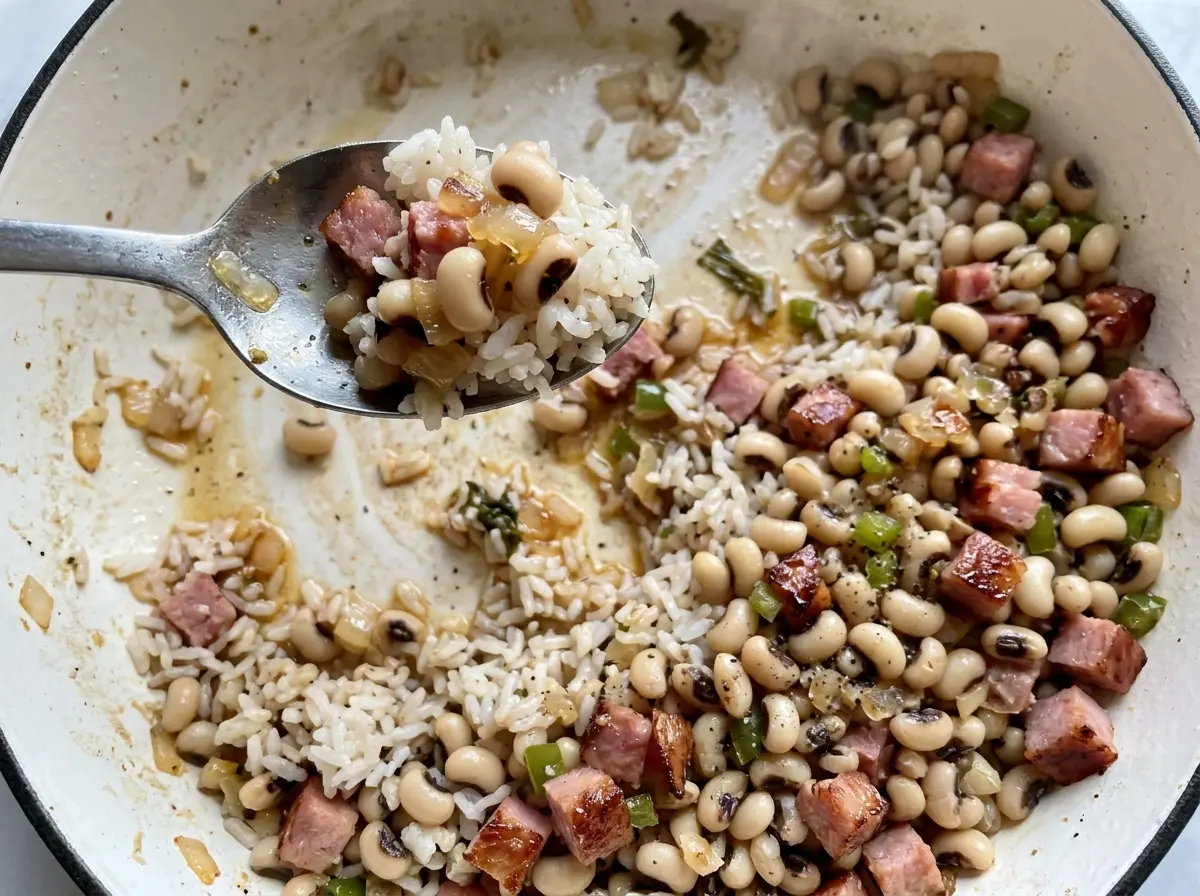
The first thing I watch in a pot of Hoppin John is the black-eyed peas: they should turn tender without collapsing while the ham hock gives the cooking liquid a deep, smoky smell. I soak the dried peas overnight, then let them simmer gently with the vegetables and seasonings. That slow pot of peas becomes the base for New Year’s Day Hoppin John, with rice cooked separately in some of the savory liquid.
Keeping the rice out of the Dutch oven while the peas cook gives each part the time it needs. The peas can simmer until tender, while the rice absorbs a measured amount of cooking liquid without getting lost in the pot. Once the ham is pulled from the hock, I fold everything together and finish with scallions. The result is a hearty bowl with distinct grains of rice, soft peas, and smoky pieces of ham.
Kitchen Note
After the rice finishes cooking, leave it covered off the heat for the full 10 minutes. That quiet rest lets the last bit of steam settle through the grains, so they fluff instead of clumping when you fold them into the peas.
Save New Year’s Day Hoppin John for a pot of tender black-eyed peas, smoky ham, and rice cooked in the savory broth.
Why the Rice Gets Its Own Pot Before It Joins the Peas
Rice and black-eyed peas don’t have the same cooking schedule. The peas need a long, gentle simmer to become tender, while long-grain white rice cooks in a much shorter window. If you put the rice into the Dutch oven with the dry peas at the start, it would be done long before the peas and would soften as the pot continued to simmer.
Instead, the peas cook with the ham hock, vegetables, herbs, and water until they’re ready. Then I strain them and measure the cooking liquid for the rice. The rice absorbs that seasoned liquid on its own, picking up the smoky, savory taste without spending an hour in the pot. When both components are cooked, folding them together combines the flavors while keeping the rice grains recognizable. It also gives you a chance to taste the finished dish and adjust the salt after the ham and cooking liquid have contributed their flavor.
What the Ham Hock, Peas, and Long-Grain Rice Each Bring

- Dried black-eyed peas — They’re the hearty base of the dish, and soaking helps them cook more evenly. Sort through them before soaking and discard any shriveled peas or debris. Canned peas aren’t a direct swap here; they’re already cooked and won’t hold up to the long simmer.
- Smoked ham hock — It brings both meat and smoky depth to the peas’ cooking liquid. Choose a hock with meat on it, since you’ll pull that meat off the bone and return it to the pot. The bone and skin are discarded after simmering.
- Long-grain white rice — Long grains stay more separate after cooking, which suits the soft peas. Short-grain rice tends to be stickier, and brown rice needs a different cooking time and liquid balance, so neither is a direct substitution in this method.
- Onion, celery, green bell pepper, and garlic — These aromatics soften in the oil before the peas go in, building a savory base. Dice the vegetables evenly so they soften at a similar pace, and mince the garlic so it can cook briefly without scorching.
- Scallions — Their fresh, mild bite gives the finished pot a contrast to the smoky ham. Slice them thinly so a little lands in each serving.
From Soaked Peas to Rice That Stays Fluffy
Soak the Peas Until They’re Ready for the Pot
Cover the black-eyed peas with several inches of cold water in a large bowl and soak them for at least 8 hours or overnight. They should look plumper after soaking, though they won’t be fully cooked yet. Drain and rinse them before adding them to the Dutch oven. Don’t count the soaking water as part of the water for cooking.
Soften the Vegetables Without Browning the Garlic
Heat the vegetable oil in a 6-quart Dutch oven over medium heat, then add the diced onion, celery, and green bell pepper. Cook for 5 to 7 minutes, stirring occasionally, until the vegetables have softened. Add the minced garlic and cook for 30 seconds. Garlic can turn bitter if it browns, so add the peas and liquid promptly after that short cook.
Simmer Gently Until the Peas Turn Tender
Add the drained peas, ham hock, water, bay leaf, thyme, salt, and black pepper. Bring the pot to a boil, then lower the heat until you have a gentle simmer and cook partially covered for 45 to 60 minutes. A hard boil can break the peas apart before they’re tender inside, so keep the bubbles calm. Check the peas for tenderness near the end of the cooking window and add more water as needed.
Pull the Ham and Save the Cooking Liquid
Lift out the ham hock and bay leaf once the peas are tender. Pull the meat from the hock, discard the bone and skin, and return the meat to the Dutch oven. Strain the peas and ham, reserving the cooking liquid, then return the solids to the pot and cover them to keep warm. Take care not to pour the flavorful liquid down the drain; you’ll use some of it for the rice.
Cook the Rice, Rest It, and Fold Everything Together
Measure 2 cups of the reserved cooking liquid, adding water if needed, and combine it with the rice in a 2-quart saucepan. Bring it to a boil, cover, and simmer over low heat for 15 to 18 minutes, until the liquid is absorbed. Take the pan off the heat and let the rice stand, covered, for 10 minutes, then fluff it with a fork. Fold the rice into the peas and ham, taste and add more salt if needed, and top with the sliced scallions.
Two Ways to Adapt the Pot Without Losing Its Character
Keep the Rice Beside the Peas
For a more separated presentation, spoon the cooked peas and ham over rice rather than folding the rice into the Dutch oven. Use the same ingredients and cook both components the same way; the bowls will have more distinct layers, and each person can choose how much rice to mix into the peas.
Make a Vegetarian Pot
Leave out the ham hock and cook the soaked peas with the vegetables, water, bay leaf, thyme, salt, and pepper. The result won’t have the hock’s smoky meatiness, but the peas and aromatics still make a satisfying base. Taste before serving and adjust the salt to suit the meat-free pot.
Storage and Reheating
- Refrigerator: Refrigerate leftovers promptly in a covered container and use them within 3 to 4 days. The rice will absorb some of the liquid as it sits, so the mixture will be thicker.
- Freezer: Freeze in airtight portions for up to 2 to 3 months. The rice may soften a little after thawing, but the peas and ham freeze well.
- Reheating: Warm gently in a covered saucepan over low heat with a splash of water, stirring now and then, or microwave covered until steaming hot throughout. Avoid high heat, which can dry the rice before the center warms; reheat leftovers to 165°F.
Questions That Come Up While the Peas Simmer
New Year's Day Hoppin John
Ingredients
Equipment
Method
- Put the black-eyed peas in a large bowl and cover them with several inches of cold water.
- Soak the peas for at least 8 hours or overnight, then drain and rinse.
- Heat the oil in a 6-quart Dutch oven over medium heat.
- Add the onion, celery, and bell pepper, and cook for 5 to 7 minutes until softened.
- Add the garlic and cook for 30 seconds.
- Add the drained peas, ham hock, 8 cups water, bay leaf, thyme, salt, and pepper.
- Bring the mixture to a boil, then reduce the heat to maintain a gentle simmer.
- Cook partially covered for 45 to 60 minutes, until the peas are tender.
- Remove the ham hock and bay leaf.
- Pull the meat from the hock, discard the bone and skin, and return the meat to the Dutch oven with the peas.
- Strain the peas, reserving the cooking liquid.
- Return the peas and ham to the Dutch oven and cover to keep warm.
- Measure 2 cups of the reserved cooking liquid, adding water if needed.
- Combine the cooking liquid with the rice in a 2-quart saucepan and bring to a boil.
- Cover and simmer over low heat for 15 to 18 minutes, until the liquid is absorbed.
- Remove the rice from the heat and let it stand, covered, for 10 minutes.
- Fluff the rice with a fork and fold it into the peas and ham.
- Taste and add more salt if needed.
- Top with the scallions.