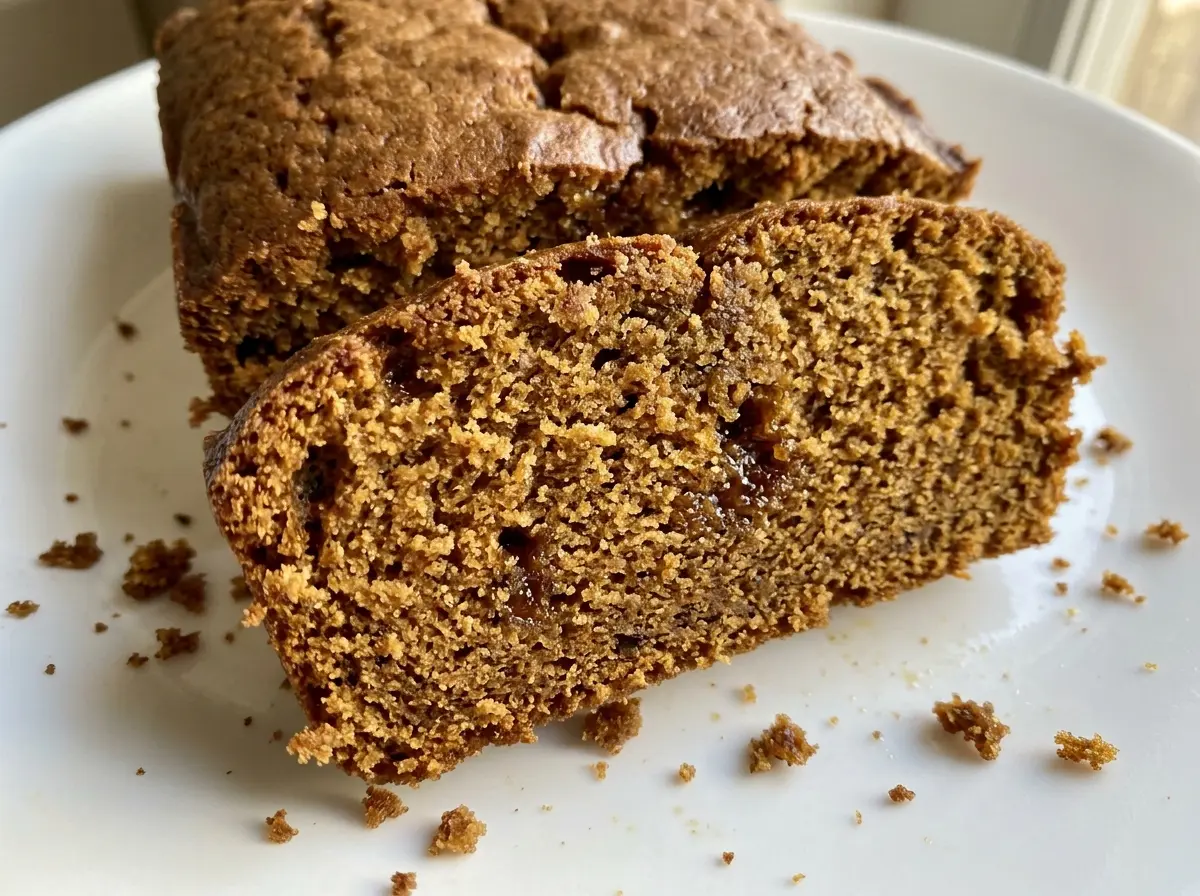
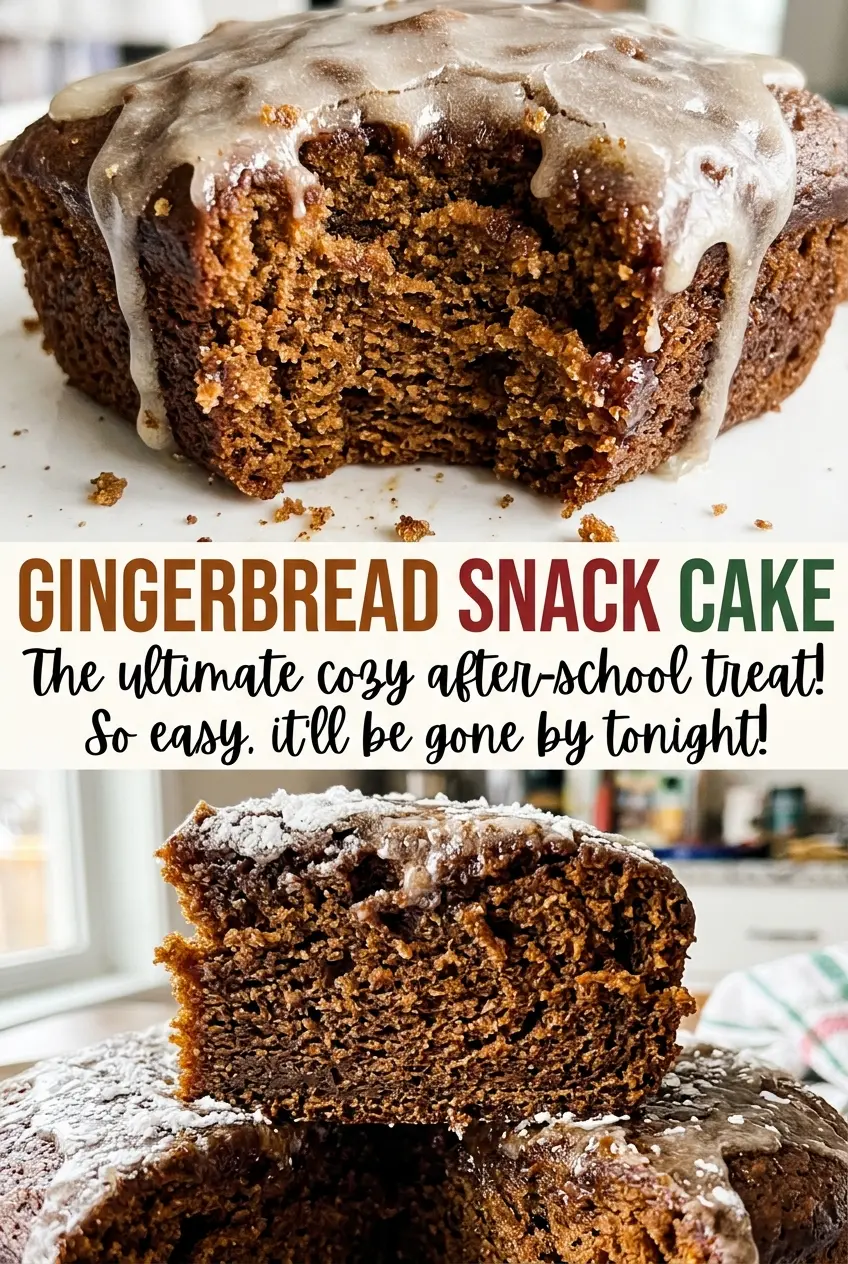
When the hot water goes into this batter, it loosens up enough to make you wonder if you missed something. You didn’t. That pourable texture is part of what gives Gingerbread Snack Cake its tender, moist crumb, and the baking soda is already dissolved so it can spread evenly through every bite.
I like this cake because it brings the warm spice of gingerbread to a simple square pan without needing a frosting or a complicated finish. The brown sugar and molasses give it a deep, rounded sweetness, while ginger, cinnamon, and cloves keep each slice unmistakably spiced. I stop stirring as soon as the flour disappears; a few seconds of restraint helps the cake stay soft instead of turning dense. Once it’s baked, the top springs back lightly and the center holds together in a plush, fragrant square.
Kitchen Note
Give the cake at least 20 minutes in the pan before serving. The crumb is delicate while hot, and that short rest lets each square hold its shape instead of crumbling as you lift it.
Save this Gingerbread Snack Cake for a soft, warmly spiced square that comes together in one pan.
Why the Batter Gets Thin After the Hot Water Goes In
The hot water is not a sign that the batter needs rescuing. Once it’s stirred in, the mixture becomes looser than a typical snack cake batter, and that’s expected. Adding extra flour to make it look thicker changes the balance and can leave the baked cake heavy or dry.
Dissolving the baking soda in the hot water first also avoids little pockets of soda in the finished crumb. Molasses brings acidity to the batter, and baking soda reacts with that acidity to help the cake rise. Stir the dissolved soda mixture through the batter until it looks even, then get the pan into the oven rather than leaving the mixed batter to sit. The finished cake should feel soft and spring back gently, not have the tight, bready texture you’d get from working the flour too much.
How Molasses and the Spice Blend Shape This Cake
- Unsulphured molasses — It brings the deep, slightly bittersweet gingerbread taste and helps keep the crumb moist. Choose a mild unsulphured molasses rather than a very dark, assertive one; the flavor of the molasses comes through clearly in this simple cake.
- Ground ginger, cinnamon, and cloves — Ginger leads, cinnamon rounds out the warmth, and cloves add a concentrated background note. Fresh, fragrant spices make a noticeable difference here, especially if the jars in your cupboard have been open for a long time. Whisk them thoroughly with the flour so the cloves don’t collect in one spot.
- Light brown sugar — Its soft texture blends smoothly with the butter and lends a gentle caramel note alongside the molasses. Dark brown sugar works as a direct swap if you want a deeper, more pronounced molasses flavor, though the cake will taste a little less delicate.
- Softened butter — Butter gives the cake richness and helps create a creamy base when beaten with the sugar. Let it soften until it yields to a light press but isn’t greasy or melted; melted butter won’t cream in the same way.
- All-purpose flour — It gives the cake enough structure to hold neat squares while keeping the crumb tender. Whisking it with the spices before adding it makes the dry mixture easier to incorporate without overworking the batter.
From Creamy Butter to a Springy Gingerbread Center
Whisk the dry ingredients evenly
Heat the oven to 350°F and grease an 8-inch square baking pan. Whisk the flour, ginger, cinnamon, cloves, and salt in a medium bowl until the spice color looks evenly distributed. This quick mixing matters because ground cloves are potent; a clump can make one bite taste much stronger than the rest. Set the bowl aside while you make the butter mixture.
Build a smooth butter-and-molasses base
Beat the softened butter and brown sugar in a large bowl until creamy, then beat in the egg and molasses. Scrape the sides of the bowl if streaks of butter or sugar cling there, so the mixture comes together evenly. It may look glossy once the molasses is incorporated. Stir in the flour mixture just until no dry patches remain; stop before the batter turns elastic or tough.
Stir in the dissolved baking soda
Dissolve the baking soda in the hot water, then stir that mixture into the batter until it’s evenly incorporated. The batter will loosen, so use a steady hand and scrape along the bottom of the bowl where thicker batter can hide. A few gentle strokes are better than beating it hard. Pour it into the prepared pan once the color and consistency look uniform.
Bake until the center springs back
Bake for 32–38 minutes. The cake is ready when the center springs back lightly when touched and a toothpick inserted in the center comes out with a few moist crumbs. If the toothpick carries wet batter, give the cake more time and check again rather than pulling it early. Cool it in the pan before cutting; the center should feel set, not wobbly.
Two Simple Ways to Adapt the Gingerbread Cake
Use dark brown sugar for a deeper note
Swap dark brown sugar for the light brown sugar, keeping the measure the same. Its extra molasses character makes the cake darker and more robust, so the gingerbread taste comes through with a little more intensity.
Make it dairy-free with baking sticks
Replace the butter with the same measure of plant-based baking sticks, choosing a firm stick-style product rather than a soft tub spread. The cake will still bake up tender, though the buttery flavor will be less pronounced. Let the sticks soften before beating them with the sugar.
Storage and Reheating
- Refrigerator: Keep the cooled cake covered for up to 5 days. The crumb firms up when chilled, so let a piece sit briefly at room temperature before eating if you prefer it softer.
- Freezer: Freeze individual squares tightly wrapped, then place them in a freezer-safe container for up to 2 months. Thaw a piece, still wrapped, at room temperature so condensation forms on the wrapping rather than the cake.
- Reheating: Warm an individual slice in the microwave for about 10 seconds, then add a few seconds if needed. Long bursts can dry the edges before the center warms.
Questions That Come Up While Baking Gingerbread Snack Cake
Gingerbread Snack Cake
Ingredients
Equipment
Method
- Heat the oven to 350°F.
- Grease an 8-inch square baking pan.
- Whisk together the flour, ginger, cinnamon, cloves, and salt in a medium bowl.
- Beat the butter and brown sugar in a large bowl until creamy.
- Beat in the egg and molasses.
- Stir the flour mixture into the butter mixture just until combined.
- Dissolve the baking soda in the hot water.
- Stir the baking soda mixture into the batter until evenly incorporated.
- Pour the batter into the prepared pan.
- Bake for 32–38 minutes, until the center springs back lightly when touched and a toothpick inserted in the center comes out with a few moist crumbs.
- Cool the cake in the pan for at least 20 minutes before serving.