The syrup bubbles steadily, then changes quickly once the peanuts go in; that’s the moment a thermometer earns its place beside the stove. Without one, it’s easy to pull the pan too soon and end up with chewy candy instead of brittle that snaps. I make this Old Fashioned Peanut Brittle in two temperature stages, so the sugar syrup is ready before the peanuts cook all the way to its hard, crisp finish.
There’s a useful difference between the two stages: the syrup cooks without stirring at first, but once the peanuts are added, it needs constant stirring. Butter, baking soda, and vanilla go in after the pan leaves the heat, and the foaming mixture needs to be poured right away. Keep the prepared pan close, and you’ll have a thin, even sheet of golden brittle ready to cool and break into pieces.
Kitchen Note
Before the syrup reaches its final temperature, I have the butter, baking soda, vanilla, and prepared pan within reach. The last part moves too quickly to stop and measure once the pan comes off the heat.
Save this Old Fashioned Peanut Brittle for crisp, golden candy with plenty of peanuts and a clean snap.
Why Brittle Needs Two Different Stirring Rules
Peanut brittle asks you to change how you handle the syrup midway through cooking. Stir while the sugar, corn syrup, water, and salt are heating so the sugar dissolves. Once the mixture boils, leave it alone until it reaches 240°F. Stirring during that stretch can encourage sugar crystals to form along the sides of the pan, which can leave the finished candy grainy instead of smooth and glassy.
After the peanuts go in, the goal changes. Stir constantly as the mixture cooks to 300°F, keeping the peanuts moving through the hot syrup rather than letting them sit against the bottom of the pan. The thermometer gives you a clear endpoint for both stages; color alone can be hard to judge in a bubbling mixture. That contrast—hands off first, steady stirring next—is what helps the candy set with an even crunch instead of a sandy or uneven texture.
What the Peanuts and Syrup Bring to This Brittle
- Granulated sugar — White sugar gives the syrup a clean sweetness and a neutral base for the peanuts. Brown sugar isn’t a direct swap; its molasses changes the flavor and can affect the candy’s texture.
- Light corn syrup — This helps keep the sugar mixture from crystallizing as it cooks. Honey has a stronger taste and behaves differently at high heat, so it isn’t a one-for-one replacement for this batch.
- Raw shelled peanuts — Starting with raw peanuts gives them time to cook in the syrup as the mixture rises to its final temperature. Roasted peanuts have already been cooked, so they can taste overdone after that additional time in the hot candy.
- Unsalted butter — Butter adds richness after the syrup is cooked and lets you control the salt separately. Unsalted is the better choice here; salted butter would add salt on top of the measured salt in the syrup.
- Baking soda — This is what makes the hot candy foam when it’s stirred in, helping create a lighter, less solid sheet than cooked sugar alone. Measure it before you start, since the mixture needs to be poured soon after it’s added.
- Vanilla extract — Vanilla rounds out the cooked-sugar flavor. Use an extract you like, since its aroma comes through clearly in a candy with a short ingredient list.
- Vegetable oil — A light coating on the parchment and spatula helps the candy release and spread. A neutral vegetable oil works well without adding a competing flavor.
From Dissolved Sugar to a Thin, Snappy Sheet
Prepare the Pan Before the Syrup Starts
Line an 18×13-inch rimmed baking sheet with parchment and brush the parchment with 1 teaspoon vegetable oil. Set the pan where you can reach it easily, and keep a heatproof spatula nearby for spreading. Use a 3-quart heavy-bottomed saucepan for the syrup. That gives the bubbling mixture room while it cooks.
Dissolve the Sugar, Then Let the Syrup Boil
Combine the sugar, light corn syrup, water, and salt in the saucepan over medium heat. Stir until the sugar dissolves, then bring the syrup to a boil and stop stirring. Cook until the candy thermometer reads 240°F; this usually takes about 8 to 12 minutes. Keep the thermometer in view so you can catch the temperature rather than guessing from the bubbles.
Stir the Peanuts Through the Hot Syrup
Add the raw peanuts and stir constantly as the mixture cooks. Continue until the thermometer reads 300°F, which takes about 10 to 15 minutes. The mixture will thicken as it heats, so keep scraping and moving the peanuts through it rather than letting them settle. If the temperature is climbing but the peanuts are sitting still, keep stirring until they’re moving through the syrup again.
Foam, Pour, and Spread Without Pausing
Remove the pan from the heat and stir in the butter until it melts. Quickly stir in the baking soda and vanilla; the mixture will foam. Pour it immediately onto the prepared baking sheet, then spread it into an even layer with a heatproof spatula lightly coated with the remaining 1 teaspoon vegetable oil. Don’t try to make the layer paper-thin; focus on spreading the candy evenly across the pan.
Let the Sheet Turn Fully Hard
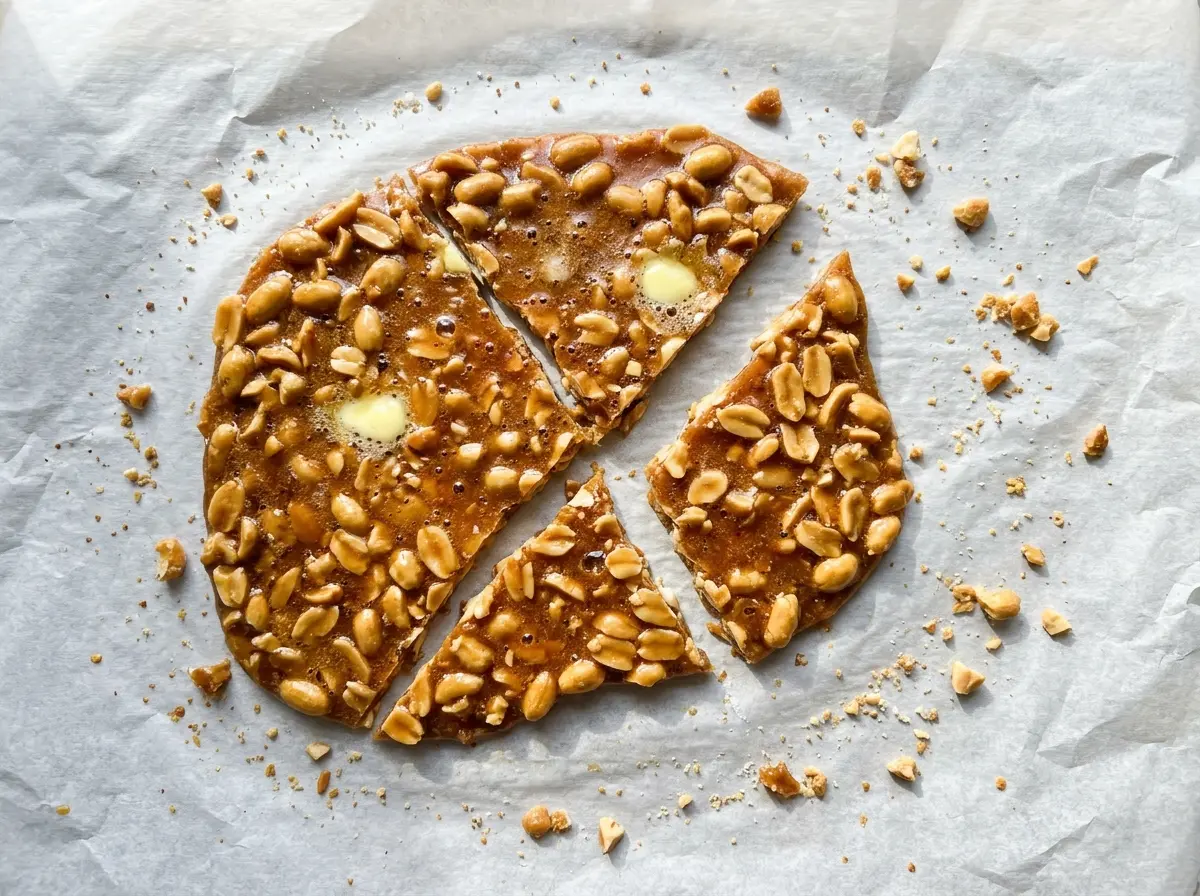
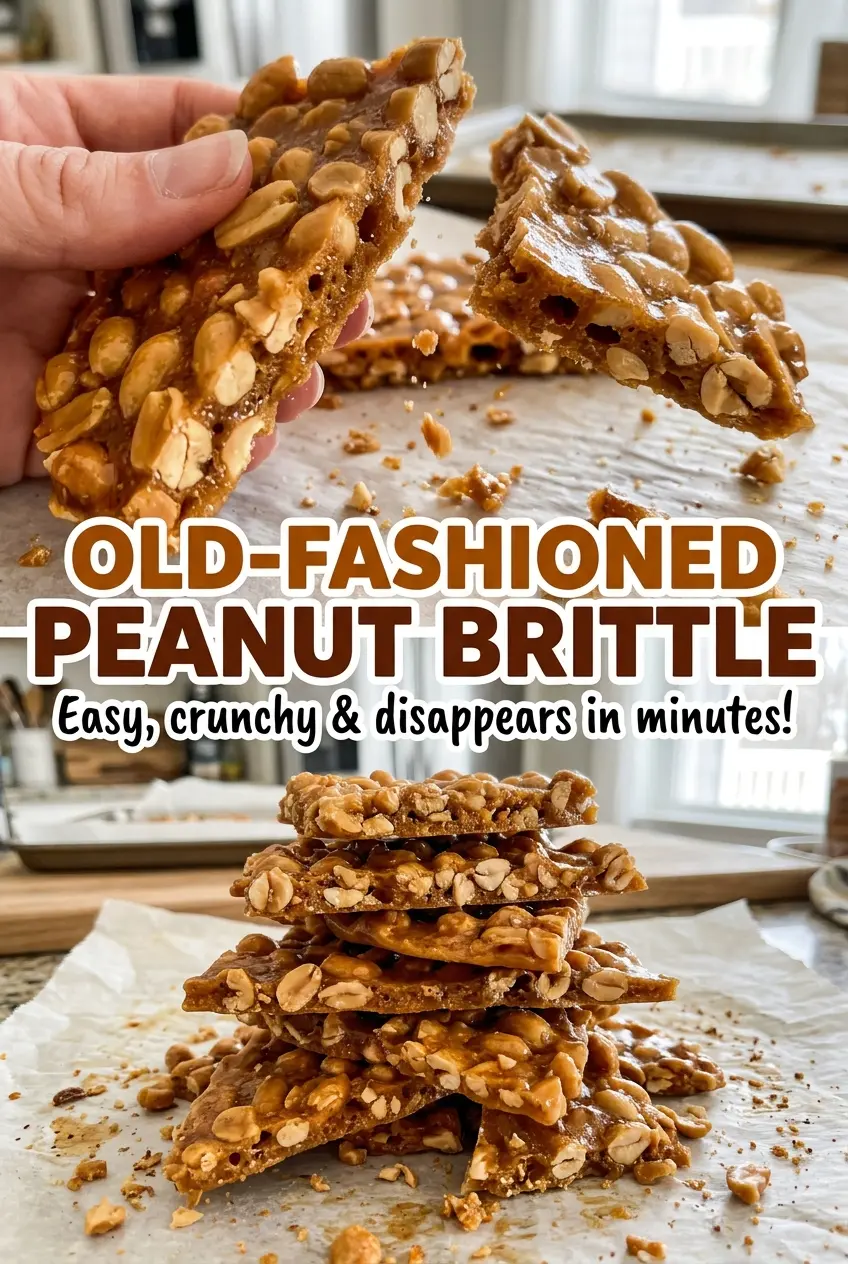
Leave the brittle at room temperature for 30 to 45 minutes, until it’s completely hard. If the center still bends or feels tacky, give it more time rather than breaking it early. Once the whole sheet is firm, break it into pieces. The finished pieces should snap cleanly rather than flex.
Two Nut Swaps That Keep the Brittle’s Crunch
Make It with Raw Almonds
Replace the peanuts with the same volume of raw shelled almonds. They keep the crisp candy texture but give each piece a firmer, more distinctly almond-like bite; stir them constantly just as you would the peanuts.
Try Raw Cashews Instead
Use the same volume of raw shelled cashews in place of the peanuts for a milder, buttery-tasting brittle. Keep the cooking temperature targets the same; the candy’s temperature, not the nut’s color, is the endpoint to watch.
Use a Peanut and Cashew Mix
Divide the peanut amount between raw peanuts and raw cashews, keeping the combined volume the same. The pieces have a little more variety in each bite, while the familiar peanut flavor still comes through.
Keeping Brittle Crisp
- Room temperature: Store the fully cooled pieces in an airtight container in a cool, dry place for up to 2 weeks. Humidity can make the candy sticky.
- Refrigerator: Skip it; the moisture and condensation can soften the brittle.
- Freezer: Freezing isn’t recommended because condensation as it thaws can make the candy sticky.
Questions That Come Up When Making Peanut Brittle
Old Fashioned Peanut Brittle
Ingredients
Equipment
Method
- Line an 18x13-inch rimmed baking sheet with parchment paper.
- Brush the parchment with 1 teaspoon vegetable oil.
- In a 3-quart heavy-bottomed saucepan, combine the sugar, corn syrup, water, and salt over medium heat, stirring until the sugar dissolves.
- Bring the syrup to a boil.
- Cook without stirring until a candy thermometer reads 240°F, about 8-12 minutes.
- Stir in the peanuts.
- Cook, stirring constantly, until the thermometer reads 300°F, about 10-15 minutes.
- Remove the pan from the heat and stir in the butter until melted.
- Quickly stir in the baking soda and vanilla; the mixture will foam.
- Immediately pour the mixture onto the prepared baking sheet.
- Spread it into an even layer with a heatproof spatula lightly coated with the remaining 1 teaspoon oil.
- Cool at room temperature for 30-45 minutes, until completely hard.
- Break into pieces.