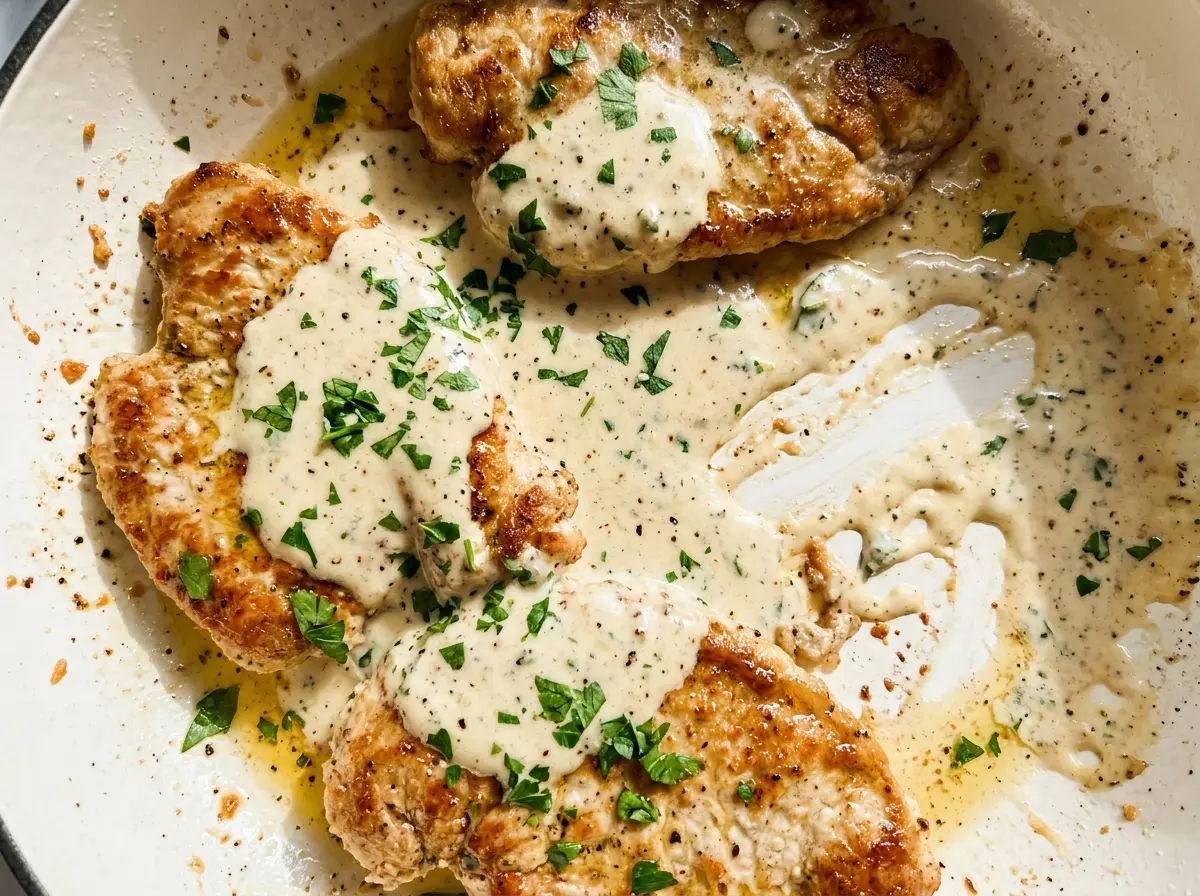
The first side of a turkey cutlet should turn golden while the center is still tender, not dry and stiff. Since these cutlets are only about half an inch thick, the window between browned and overcooked is short. I watch the pan closely and check the thickest cutlet rather than assuming every piece is ready at the same moment.
After the turkey comes out, the same skillet becomes the start of a quick cream sauce. The browned bits left behind are worth keeping: chicken broth loosens them, and butter-softened shallot, cream, Dijon, and fresh herbs turn them into a sauce that clings without covering up the turkey. Spoon it over the rested cutlets while it’s warm, and you get a simple one-pan dinner with a silky, thyme-flecked finish.
Kitchen Note
Set out a clean plate before you start searing. The cooked cutlets need a place to rest while the sauce comes together, and they shouldn’t go back onto a plate that held raw turkey.
Save these one-pan turkey cutlets with creamy herb sauce for a night when you want golden turkey and a quick, silky skillet sauce.
Why the Brown Bits Matter More Than Extra Seasoning
Those browned marks left in the skillet after searing aren’t burnt scraps to clean away. They’re concentrated turkey flavor, and the sauce gets its depth from lifting them into the broth. That’s what makes this feel like a pan sauce rather than cream poured over plain meat.
Keep the sequence intact: soften the shallot in butter, add the broth, then scrape the skillet as the liquid simmers. The broth loosens the fond before the cream goes in, so it can blend into the sauce instead of leaving dark flecks stuck to the pan. A 12-inch skillet gives the cutlets room to brown in one layer, while also leaving enough surface area for the broth to reduce slightly. Wiping the pan or moving the sauce to a clean pot would discard the most savory part of the dish.
The Ingredients That Give This Sauce Its Herby, Creamy Balance

- Turkey breast cutlets — Cutlets about half an inch thick cook quickly and evenly. Pat them dry before seasoning; moisture on the surface makes it harder to get a browned exterior. Choose pieces that are close in thickness so they finish at roughly the same time.
- Olive oil and unsalted butter — Olive oil handles the hotter sear, then butter gives the shallot a rounded base once the heat comes down. Unsalted butter lets the salt level stay in your hands alongside the low-sodium broth.
- Shallot — Its mild, savory sweetness sits neatly between the browned turkey and the cream. Chop it finely so the pieces soften in the brief time they cook in the skillet.
- Low-sodium chicken broth — Broth deglazes the pan and brings enough savory flavor without making the sauce too salty as it reduces. The low-sodium version is useful here because the liquid concentrates before the cream is added.
- Heavy cream — This gives the sauce its body and helps it coat the turkey. It’s the ingredient that makes the sauce creamy, so there isn’t a like-for-like swap among the other ingredients in this dish.
- Dijon mustard — A small amount adds gentle tang and helps keep the cream from tasting flat. It should blend into the sauce, not make it taste sharply of mustard.
- Fresh thyme and parsley — Thyme brings an earthy note, while parsley gives the finished sauce a brighter, greener taste. Chop both before they go into the pan; adding them at the end keeps their flavor distinct.
- Lemon juice — Stirred in at the finish, it lifts the cream and herbs with a little acidity. Add it after the sauce has simmered rather than cooking it down with the broth.
Sear the Turkey, Then Build the Sauce in the Same Skillet
Dry and Season the Cutlets
Blot the turkey cutlets dry, then season both sides with kosher salt and black pepper. Dry surfaces brown more readily than damp ones, so take a moment to pat them well. Keep the cutlets close by while the olive oil heats in a 12-inch skillet over medium-high heat. The pan should be ready before the turkey goes in, rather than leaving the cutlets to sit in oil that’s still warming.
Brown the Turkey Without Crowding
Arrange the cutlets in a single layer and cook for 2–4 minutes per side. Look for a browned surface before turning them; if the cutlets are crowded, they won’t sear as evenly. Check the thickest part of each cutlet with an instant-read thermometer and cook until it reads 165°F. Move the turkey to a clean plate and let it rest while you make the sauce.
Soften the Shallot and Loosen the Fond
Lower the heat to medium and melt the butter in the skillet you used for the turkey. Add the finely chopped shallot and stir for about 1 minute, until it softens without taking on much color. Pour in the chicken broth and scrape the browned bits from the bottom as it simmers. Give it 2–3 minutes to reduce slightly; you should see the liquid settle into a more concentrated base, not disappear.
Finish the Cream Sauce Gently
Stir in the heavy cream and Dijon mustard, then let the sauce simmer gently for 3–5 minutes, stirring often. A hard boil can make a cream sauce less smooth, so keep the heat controlled. It’s ready when it lightly coats a spoon, rather than running off like broth. Stir in the thyme, parsley, and lemon juice, then spoon the sauce over the rested turkey.
Small Changes That Keep the Turkey and Herb Sauce in Balance
A Milder Sauce Without Dijon
Leave out the Dijon if you prefer a less tangy sauce. The cream and herbs will still make a smooth topping, but it will taste rounder and less sharp, with a little less savory complexity.
A More Thyme-Forward Finish
Omit the parsley and keep the thyme. The sauce will lean earthier and less fresh-tasting, which suits anyone who prefers a quieter herb note without changing the way the sauce cooks.
Slice the Cutlets Before Saucing
After the cutlets have rested, slice them into strips and arrange them on the plate before spooning over the sauce. That changes the presentation and makes each piece easy to coat, while keeping the same seared turkey and creamy herb sauce.
Storage and Reheating
- Refrigerator: Store leftovers in a covered container for 3–4 days. The sauce will thicken as it chills.
- Freezer: The cooked turkey can be frozen, but the cream sauce may separate and lose its silky texture after thawing. Freeze in an airtight container and thaw in the refrigerator before reheating.
- Reheating: Warm gently in a covered skillet over low heat until hot throughout, stirring the sauce carefully. High heat can make the cream sauce separate, so avoid bringing it to a vigorous boil.
Questions That Come Up While the Sauce Is Simmering
One Pan Turkey Cutlets with Creamy Herb Sauce
Ingredients
Equipment
Method
- Pat the turkey cutlets dry.
- Season both sides of the cutlets with the salt and pepper.
- Heat the olive oil in a 12-inch skillet over medium-high heat.
- Add the cutlets in a single layer and cook for 2–4 minutes per side, until browned and an instant-read thermometer inserted into the thickest part of each cutlet reads 165°F.
- Transfer the cutlets to a clean plate and let them rest while you make the sauce.
- Reduce the heat to medium and melt the butter in the same skillet.
- Add the shallot and cook for about 1 minute, stirring, until softened.
- Pour in the chicken broth and scrape up the browned bits.
- Simmer for 2–3 minutes, until reduced slightly.
- Stir in the heavy cream and Dijon mustard.
- Simmer gently for 3–5 minutes, stirring often, until the sauce lightly coats a spoon.
- Stir in the thyme, parsley, and lemon juice.
- Spoon the sauce over the rested turkey cutlets.