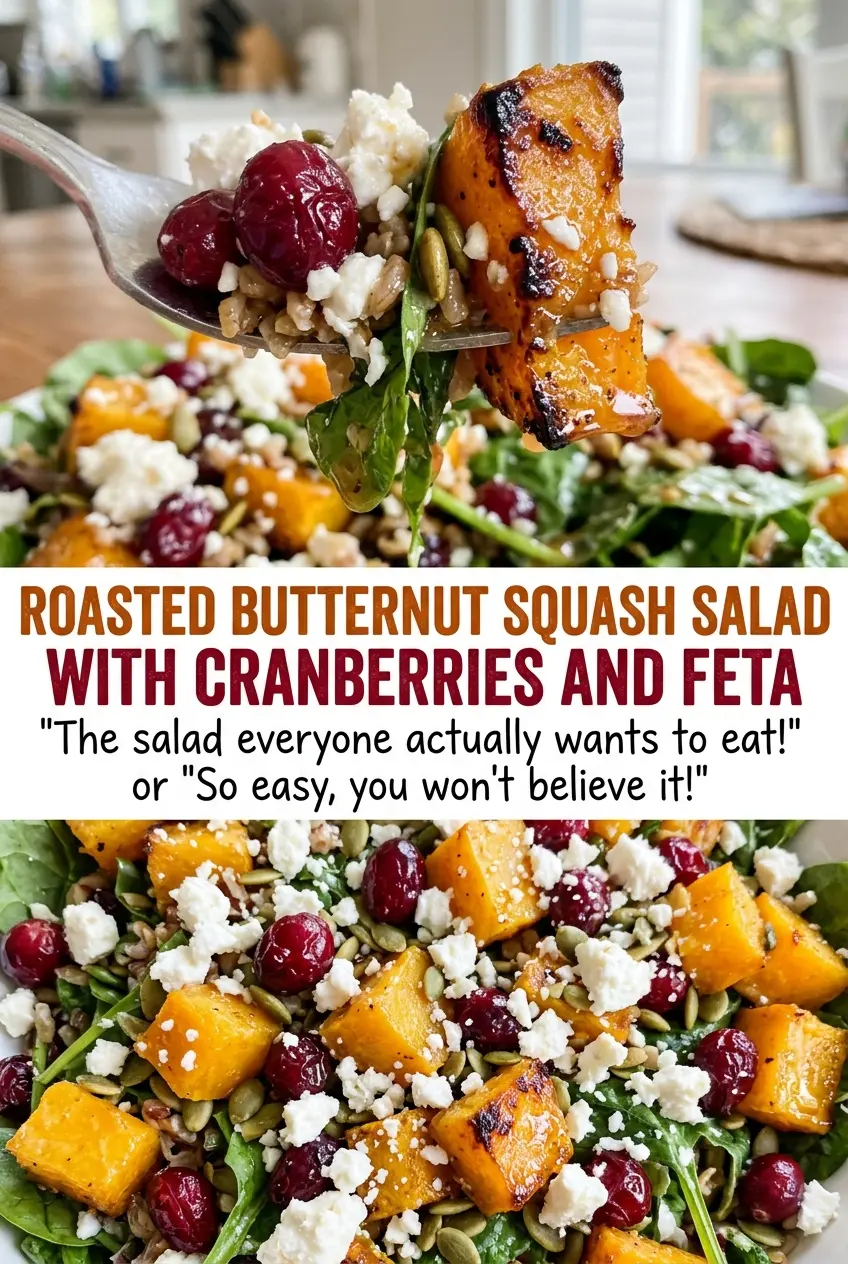
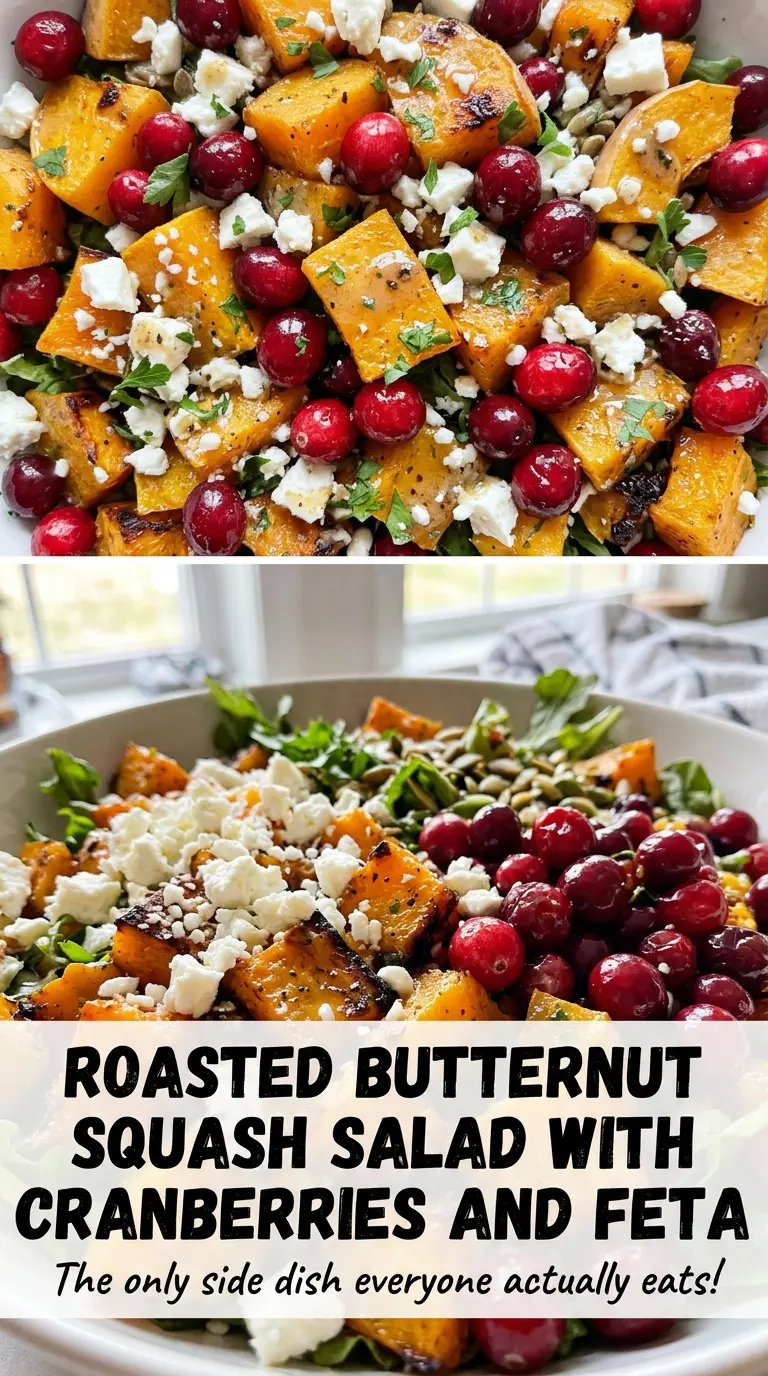
The squash is the first thing I check when the baking sheet comes out: the edges should be browned, and the centers should give easily when pierced. When it roasts that way, it brings a warm, tender bite to a bowl of crisp spring mix without turning the salad into a pile of soft greens. That contrast is what makes this roasted butternut squash salad with cranberries and feta feel satisfying as well as fresh.
I build the rest of the bowl around the squash’s natural sweetness. Dried cranberries add a tart chew, feta brings a salty note, and toasted pecans give the salad a crisp finish. The apple cider vinegar and Dijon dressing keeps each bite lively, while a little maple syrup ties the sweet and tangy parts together. Serve it as soon as the greens are dressed, with the squash and toppings scattered over the top.
Kitchen Note
Keep the squash pieces close to the same 3/4-inch size. Smaller pieces can dry out before the centers turn tender, while larger ones may need longer than the stated roasting window.
Save this roasted butternut squash salad for its sweet-tart cranberries, salty feta, and crisp pecans all in one bowl.
Why This Salad Needs Both Sweet Cranberries and Salty Feta
Butternut squash has a gentle sweetness that can make a salad feel one-note if everything around it is mild. The cranberries and feta pull in opposite directions: the fruit is sweet-tart, while the cheese adds a salty, tangy bite. That push and pull is what keeps the squash from dominating the bowl. The pecans add another kind of contrast, so each forkful has more going on than soft squash and leaves.
Think about getting a little of each component into the same bite rather than leaving the toppings in separate piles. The spring mix gives you a fresh base, and the dressing brings the components together without covering up the squash. I toss the leaves with the dressing first, then add the toppings so they stay visible and easy to distribute. If you only get squash and greens on your fork, reach for a few cranberries and a crumble of feta before the next bite.
This balance also makes the salad flexible at the table. A bite with more squash tastes sweeter; one with feta and cranberry feels sharper and saltier. The pecans give the softer parts a crisp counterpoint. You don’t need an extra garnish or a second dressing to make the bowl feel complete.
What to Choose for the Best Squash, Dressing, and Toppings
- Butternut squash — Choose a firm squash without soft spots, and peel and seed it before cutting. Sweet potato is the closest easy swap: peel it, cut it into similarly sized cubes, and expect the flavor to be sweeter and less earthy.
- Avocado oil — Its mild taste lets the squash’s flavor come through at high oven heat. Canola or grapeseed oil works in the same quantity if that’s what you have; either is a practical pantry choice.
- Olive oil, apple cider vinegar, maple syrup, and Dijon — Use an extra-virgin olive oil you enjoy the taste of, since it’s a main part of the dressing. Red wine vinegar can replace the apple cider vinegar for a sharper finish, and honey can replace maple syrup in the same quantity for a more floral sweetness. Whole-grain mustard can stand in for Dijon in the same quantity, though the dressing will have visible mustard grains.
- Spring mix — Use leaves that are fresh and dry so the dressing can coat them rather than collect in the bottom of the bowl. Baby spinach is an easy replacement, but its leaves are more delicate and soften faster once dressed.
- Dried cranberries — They bring concentrated fruitiness without adding extra moisture to the salad. Dried cherries work in their place and taste a little less tart, so the finished bowl will lean sweeter.
- Feta — The tangy, salty taste is a useful counterweight to the squash. Crumbled goat cheese is a good substitute, with a softer texture and a creamier, less briny flavor.
- Toasted pecans — Choose pecans that smell fresh, not stale or oily; there’s no need for a premium brand if they taste good. Toasted walnuts can replace them in the same quantity, bringing a slightly more bitter edge.
Roast the Squash First, Then Assemble the Salad
Get Browning on the Squash
Heat the oven to 425°F and line a rimmed baking sheet with parchment paper. Toss the peeled, seeded, cubed squash on the sheet with avocado oil, kosher salt, and black pepper so the pieces are evenly coated. Spread them in a single layer; overlapping pieces trap steam and brown less readily. Roast for 25–30 minutes, flipping halfway through, until the squash is tender and browned at the edges.
Whisk the Tangy Maple Dressing
While the squash roasts, whisk the extra-virgin olive oil, apple cider vinegar, maple syrup, and Dijon mustard in a small bowl. Keep whisking until the mixture looks evenly combined, with no streaks of syrup or mustard sitting at the bottom. The dressing should taste bright, lightly sweet, and sharp enough to balance the squash. If it separates while it waits, give it another whisk before dressing the leaves.
Dress the Greens Before Adding Toppings
Put the spring mix in a large serving bowl and pour the dressing over the leaves. Toss until the leaves have a light, even coating rather than a puddle of dressing at the bottom. Dressing the greens first makes it easier to spread the vinaigrette throughout the salad. Add the squash only after the leaves are coated.
Finish with Cranberries, Feta, and Pecans
Top the dressed spring mix with the roasted squash, dried cranberries, crumbled feta, and toasted pecans. Scatter the toppings across the bowl instead of leaving them in one central mound, so they’re easier to pick up with the greens. Bring the salad to the table and serve it right away. Once the leaves are dressed, they’re at their best before they have time to soften.
Two Easy Swaps for Different Tables
Make It Dairy-Free with Plant-Based Feta
Replace the feta with a plant-based feta-style crumble, using the package amount that matches the cheese you’re replacing. It keeps the salty, tangy note in the salad, though the taste and crumble vary by brand. Check the package flavor before dressing the greens, since some alternatives are milder than dairy feta.
Make It Nut-Free with Toasted Pepitas
Replace the toasted pecans with toasted pepitas in the same quantity. They keep a crisp finish in the salad, with a more savory, seed-like flavor instead of the pecans’ buttery taste. This is a useful change for a nut-free table; check the pepita packaging if cross-contact is a concern.
Storage and Reheating
- Refrigerator: Store the squash, dressing, and undressed greens in separate airtight containers and use within 3 days. Once dressed, the spring mix softens quickly, so keep leftover components separate when possible.
- Freezer: The assembled salad doesn’t freeze well because the greens and feta lose their texture. Roasted squash can be frozen in an airtight container for up to 2 months, though it will be softer after thawing.
- Reheating: Don’t microwave the assembled salad; the leaves wilt and the cheese softens. If you want warm squash, warm that portion separately and add it to the greens just before serving.
Questions That Come Up When Making This Squash Salad
Roasted Butternut Squash Salad with Cranberries and Feta
Ingredients
Equipment
Method
- Heat the oven to 425°F.
- Line a rimmed baking sheet with parchment paper.
- Toss the squash with the avocado oil, kosher salt, and black pepper on the prepared baking sheet.
- Spread the squash in a single layer.
- Roast for 25–30 minutes, flipping halfway through, until tender and browned at the edges.
- Whisk the olive oil, apple cider vinegar, maple syrup, and Dijon mustard in a small bowl until combined.
- Put the spring mix in a large serving bowl and toss it with the dressing.
- Top with the roasted squash, dried cranberries, feta, and pecans, then serve.