When brown sugar and molasses warm together in a small saucepan, the kitchen gets that unmistakable gingerbread smell before you’ve even pulled the espresso shots. I used to stir the spices straight into coffee, and they never quite behaved: some clung to the mug, while the cinnamon gathered on top. For this Gingerbread Latte, I cook the spices into a quick syrup first, so each spoonful carries the ginger, cinnamon, and nutmeg instead of leaving them behind.
The syrup comes together in about two minutes, and you don’t need any special equipment beyond a small saucepan. I keep the espresso and milk separate until the mugs are ready: the syrup gets stirred with the shots, then steaming milk is frothed and poured over. That order gives the coffee a fragrant base and leaves a soft cap of foam on top. The finished drink is warmly spiced, with the espresso still coming through.
Kitchen Note
Don’t cook the syrup down until it turns sticky; it should stay loose enough to stir into the espresso. A gentle simmer is all it needs, and a hard boil can leave this small batch too concentrated.
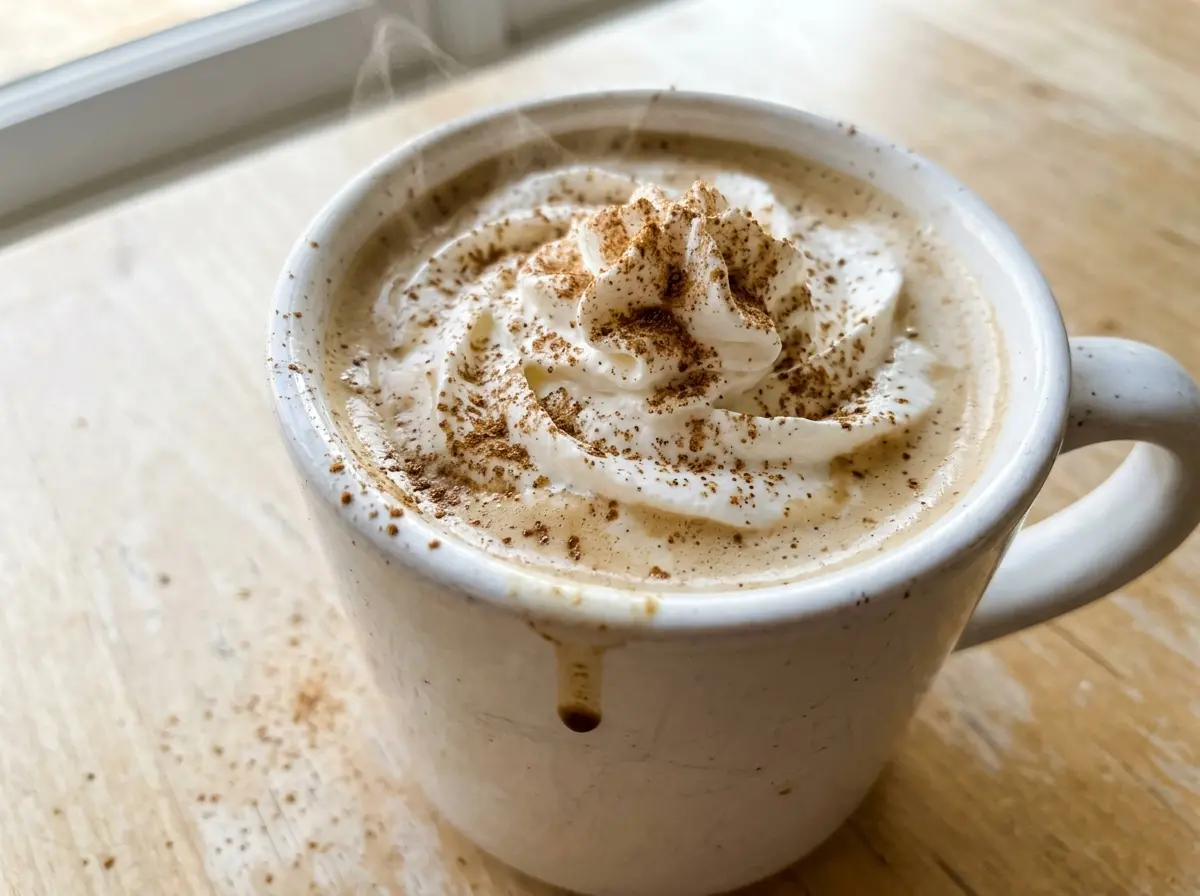
Save this Gingerbread Latte for a cozy coffee break, with homemade gingerbread syrup and a soft cap of milk foam.
Why Dry Ginger in a Mug Turns Into a Clumpy Latte
Ground spices don’t dissolve the way sugar does. Stir ginger or cinnamon straight into a finished latte and some particles can float, cling to the sides, or collect at the bottom. That’s where the dusty first sip comes from, even when the drink smells wonderful.
In this version, the spices are stirred into the brown sugar, molasses, and water before the coffee goes in. The syrup gives the fine spices a small amount of liquid to disperse through, and stirring it with the espresso makes a more even base before the milk dilutes everything. You still get the character of ground spices, not a perfectly clear syrup, but they’re far less likely to sit in a dry clump.
If the mug looks uneven before you pour the milk, give the espresso and syrup another stir. Don’t expect the spices to vanish completely; the goal is an aromatic, evenly mixed coffee base rather than a powder-free drink. It’s a small change in order that makes each sip taste more consistent.
Brown Sugar and Molasses Build the Gingerbread Base

- Brown sugar — It brings a mild caramel note that makes the syrup taste rounded rather than just sweet. Packed brown sugar is the right choice; if you’re out, granulated sugar works in its place, but the syrup will taste less deep.
- Unsulphured molasses — This supplies the dark, unmistakable gingerbread note. Its milder taste fits the espresso better than a much more forceful blackstrap molasses, so use the unsulphured kind if you can.
- Ground ginger, cinnamon, and nutmeg — Fresh-smelling spices give this small syrup its character. A jar that’s been open for ages can leave the drink flat, but there’s no need to buy specialty brands; ordinary ground spices work well.
- Espresso — The concentrated coffee flavor keeps the drink from tasting like sweetened milk. Decaf espresso is an easy one-for-one swap if you want the same coffee character without the caffeine.
- Whole milk — Its body makes a creamier latte and gives you a soft, foamy finish. Standard grocery-store whole milk works just fine; the technique matters more than buying a special brand.
- Vanilla extract — It rounds out the spice and molasses without taking over. Pure or imitation extract will both work; pure extract gives the syrup a fuller aroma.
From Two-Minute Syrup to Foamy Milk
Let the spices simmer gently
Combine the water, brown sugar, molasses, ginger, cinnamon, and nutmeg in a small saucepan. Cook over medium-low heat, stirring, until the sugar dissolves and the syrup gently simmers, about 2 minutes. Take the pan off the heat and stir in the vanilla extract.
Stir the syrup into the espresso
Divide the syrup between two mugs, then add 2 shots of espresso to each mug. Stir until the syrup is distributed through the coffee before moving on to the milk. This gives both servings an even gingerbread base instead of leaving the syrup gathered at the bottom.
Steam and froth the milk
Pour the milk into the saucepan and heat it over medium-low until steaming, about 3 to 5 minutes. Watch for steam rather than a rolling boil; boiling milk can develop an unpleasant cooked taste. Froth it with a handheld milk frother or a whisk until foamy, divide it between the mugs, and serve.
A Dairy-Free Swap and Two Ways to Shift the Spice
Use barista-style oat milk for a dairy-free latte
Replace the whole milk with the same volume of barista-style oat milk. It froths well and keeps the drink creamy, though the foam and finish won’t be quite as rich as they are with whole milk.
Leave out the molasses for a lighter spice latte
Make the syrup with the brown sugar, water, spices, and vanilla, leaving out the molasses. The result is lighter and less richly flavored, with the ginger and cinnamon coming forward more clearly.
Choose 2% milk for a less-rich cup
Use the same volume of 2% milk instead of whole milk. The latte will be lighter, and the foam won’t feel as creamy, but the gingerbread syrup and espresso still come through.
Make-Ahead and Serving
- Syrup: You can prepare it ahead, cool it, then cover and refrigerate it. Stir before dividing because the ground spices can settle.
- Milk: Heat and froth the milk just before serving; foam loses volume as it sits.
- Leftovers: These lattes are best assembled to order. Refrigerate any leftover drink promptly, then reheat gently in a saucepan until steaming; don’t boil it.
Questions That Come Up While Making This Gingerbread Latte
Gingerbread Latte
Ingredients
Equipment
Method
- Combine the water, brown sugar, molasses, ginger, cinnamon, and nutmeg in a small saucepan.
- Cook over medium-low heat, stirring, until the sugar dissolves and the syrup gently simmers, about 2 minutes.
- Remove the saucepan from the heat and stir in the vanilla extract.
- Divide the syrup between two mugs, add 2 shots of espresso to each, and stir.
- Pour the milk into the saucepan and heat over medium-low heat until steaming, about 3 to 5 minutes; do not let it boil.
- Froth the milk with a handheld milk frother or whisk until foamy.
- Divide the milk between the mugs and serve.