When a gingerbread cutter lifts cleanly from the dough, the little details stay sharp: the points of a star, the curve of a bell, the edge of a tiny tree. These soft gingerbread cookies are rolled thin, cut into shapes, and baked just until their edges set. The centers stay tender instead of turning crisp and snappy.
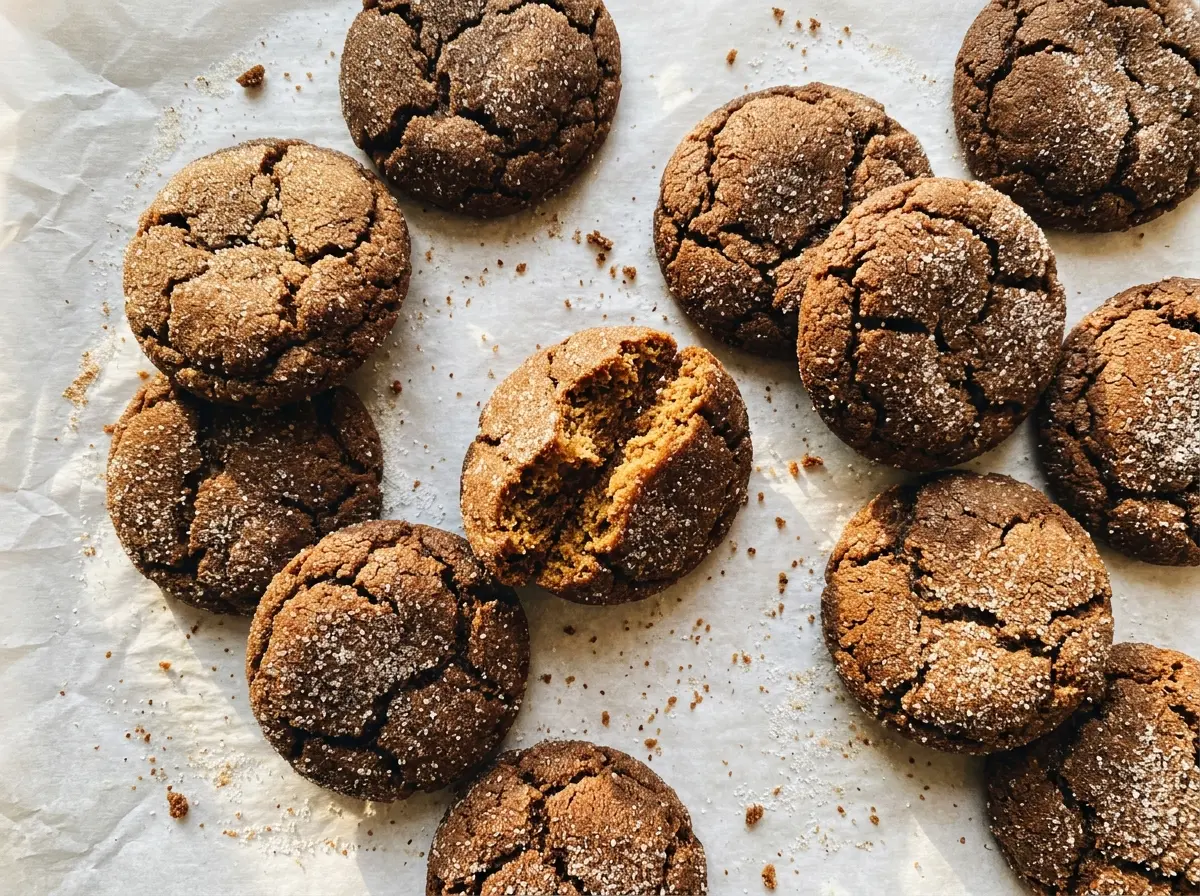
Unsulphured molasses gives the cookies their familiar deep gingerbread taste, while brown sugar keeps the dough soft and easy to work once it’s chilled. I like that the spice blend is assertive without drowning out the molasses. Each cookie comes out warmly spiced, with a gentle chew and a surface that’s sturdy enough to pick up once it cools.
They’re a batch of 24, which is plenty for a plate of assorted cutouts or a tin of one favorite shape. A little patience with the dough pays off in neat edges and soft, fragrant cookies.
Kitchen Note
Roll between sheets of parchment instead of adding flour to the counter. The dough stays at the right thickness without picking up extra flour, and the cutouts are easier to lift.
Save these soft gingerbread cookies for a batch of tender, warmly spiced cutouts with neat edges and a gentle chew.
Why Gingerbread Dough Needs a Long Chill Before You Cut It
Soft cookie dough is lovely to eat, but it’s a nuisance under a cutter. Before chilling, this dough is soft from the butter and molasses, so it can cling to the parchment and blur the outline of a small shape. Refrigerating it for at least two hours firms the dough enough to roll and cut with more control.
That rest also gives the flour time to absorb moisture from the molasses and egg. The dough feels more cohesive when you press it, rather than greasy or loose. This matters with gingerbread because clean cutouts depend on a dough that holds together as you lift and arrange each shape. If the cutouts look ragged or stretch out of shape, the dough likely needs more time to firm up; chilling is more helpful than trying to work quickly with soft dough.
Plan the chill before you start cutting. Once the dough is ready, you can focus on an even sheet and clean outlines instead of fighting a sticky mass.
What Molasses, Brown Sugar, and the Spice Blend Bring to These Cookies

- Unsulphured molasses — It supplies the deep, bittersweet note that makes these gingerbread cookies taste like gingerbread, as well as moisture that helps keep the centers soft. A standard unsulphured molasses is right for this batch; I wouldn’t replace it with a different sweetener, because the flavor and dough texture would change.
- Light brown sugar — Its molasses content supports the soft, chewy texture and rounds out the stronger molasses flavor. Pack it firmly so the amount is consistent; an ordinary grocery-store brown sugar works well.
- Ground ginger — Ginger leads the spice blend, so freshness matters more here than buying a premium brand. If the jar smells faint when you open it, the finished cookies will taste less lively.
- Cinnamon and ground cloves — These deepen the warm spice notes without taking over the ginger. Keep the amounts balanced as written; cloves are potent, and a heavy hand can make the cookies taste medicinal.
- Unsalted butter — Softened butter creams smoothly with the brown sugar and gives the dough its richness. A standard unsalted butter is fine; the softened texture matters more than the brand.
- All-purpose flour — This provides the structure that lets the cookies hold their cut shapes. Use ordinary all-purpose flour rather than changing flour types, which can alter how the dough rolls and bakes.
- Large egg and baking soda — The egg helps bind the dough, and the baking soda gives the cookies lift. Use a large egg as listed and fresh baking soda for a predictable result.
From Soft Dough to Clean Gingerbread Cutouts
Blend the Flour and Spices Evenly
Whisk the flour, baking soda, salt, ginger, cinnamon, and cloves in a medium bowl. Take a moment to break up any small spice clumps so the flavor is spread through the flour instead of concentrated in a few bites. The mixture should look evenly colored, with no visible pockets of cinnamon or ginger. Set it aside while you cream the butter and sugar.
Cream the Butter, Sugar, Molasses, and Egg
Beat the softened butter and packed brown sugar in a large bowl until creamy, about 2 minutes. Scrape the bowl if butter or sugar is clinging to the sides, then beat in the molasses and egg until combined. The mixture may look glossy and dark from the molasses; that’s expected. Don’t worry if it isn’t fluffy like a pale cake batter.
Mix Gently, Then Chill
Add the flour mixture and mix on low just until no dry streaks remain. Stop once the dough comes together; mixing past that point can make cutout cookies tougher. Cover the bowl and refrigerate the dough for at least 2 hours. It should feel firmer and easier to handle when it’s ready to roll.
Roll, Cut, and Bake in Batches
Heat the oven to 350°F and line a baking sheet with parchment paper. Roll the dough between sheets of parchment to 1/4-inch thickness, then cut shapes about 3 inches across and reroll scraps as needed. Arrange the cookies about 1 inch apart on the prepared sheet, working in batches. Bake for 8–10 minutes, until the edges are set while the centers still look slightly soft.
Let the Cookies Finish Setting
Leave the cookies on the baking sheet for 5 minutes before moving them to a wire rack. They’re delicate while hot, and that short rest lets them firm enough to transfer without bending or tearing. Use a thin spatula to lift them gently, then let them cool completely on the rack. The centers will settle as they cool, leaving the cookies soft rather than raw.
Shape Ideas and Smart Ways to Keep the Batch Soft
A Mixed Cutout Assortment
Use a few different cutters, such as stars, trees, and bells, keeping each shape about 3 inches across. The dough and baking method stay the same, but a mix of silhouettes makes the batch look varied without adding another ingredient or changing the spice balance.
A Uniform Shape for an Even-Looking Tin
Cut the whole batch with one shape of cutter, still aiming for cookies about 3 inches across. A single silhouette gives the finished batch a tidy, consistent look, while the same soft gingerbread texture and warm spice remain unchanged.
Storage and Reheating
- Room temperature: Store completely cooled cookies in an airtight container for up to 5 days. Keeping air out helps the centers stay soft.
- Freezer: Freeze the cooled cookies in an airtight container, separating layers with parchment, for up to 2 months. Thaw them at room temperature while still covered so condensation doesn’t settle on the cookies.
- Reheating: These cookies are best at room temperature and don’t need reheating. Warming them in the oven can dry the edges before the centers soften.
Questions That Come Up While Making Gingerbread Cutouts
Soft Gingerbread Cookies – Holiday Recipe
Ingredients
Equipment
Method
- Whisk the flour, baking soda, salt, ground ginger, ground cinnamon, and ground cloves together in a medium bowl.
- Beat the butter and brown sugar in a large bowl until creamy, about 2 minutes.
- Beat in the molasses and egg until combined.
- Add the flour mixture and mix on low just until no dry streaks remain.
- Cover the dough and refrigerate for at least 2 hours.
- Heat the oven to 350°F and line a baking sheet with parchment paper.
- Roll the dough between sheets of parchment to 1/4-inch thickness and cut into shapes about 3 inches across, rerolling scraps as needed.
- Arrange the cookies about 1 inch apart on the prepared baking sheet.
- Bake for 8–10 minutes, until the edges are set and the centers still look slightly soft; bake in batches.
- Let the cookies cool on the baking sheet for 5 minutes.
- Transfer the cookies to a wire rack to cool completely.