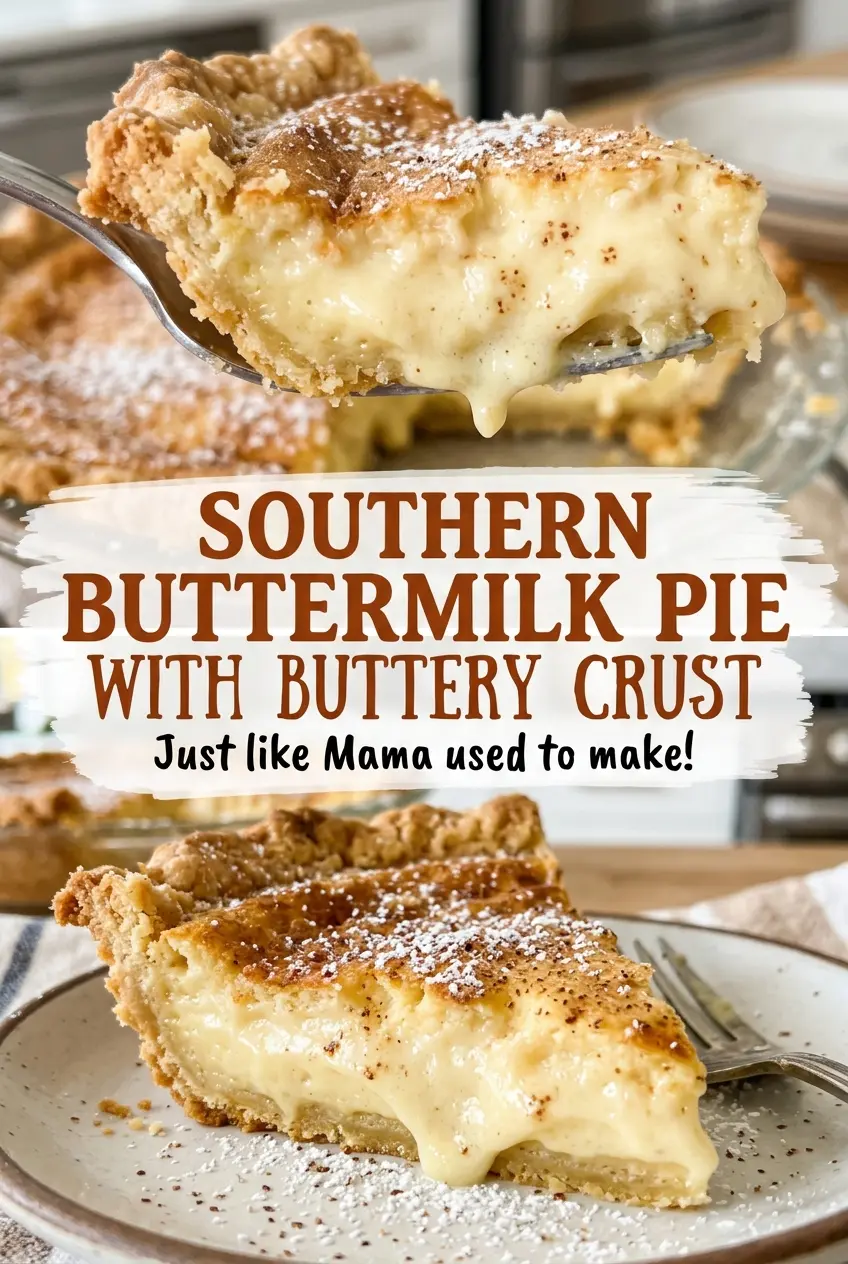
As this pie bakes, the buttery crust gives off a warm pastry smell while lemon and nutmeg lift the custard’s gentle tang. The center stays softer than the edges, which can make it hard to judge at a glance. Southern buttermilk pie with buttery crust is a classic custard pie, but its balance depends on that bright buttermilk flavor and a crust that tastes like real butter.
I make the pastry from scratch here, so the crust is tender and flaky rather than an afterthought under the filling. A little lemon juice keeps the sweetness from feeling heavy, and nutmeg adds a quiet warmth without taking over. Once the pie has cooled fully, each slice holds its shape while the custard stays smooth and soft.
Kitchen Note
Room-temperature eggs and buttermilk blend smoothly with the melted butter. Cold ingredients can make that butter firm into little flecks, so take the chill off before you start mixing.
Save this Southern buttermilk pie for a day when you want a flaky homemade crust and a tangy, softly set custard.
Why This Buttermilk Pie Goes Into an Unbaked Crust
This pie doesn’t need a separate blind-baking step. The filling and pastry bake together, so the crust has time to cook as the egg custard sets. Starting with a chilled shell gives the butter in the dough a better chance of holding its shape as it goes into the oven, and it keeps the crimped edge neat while you pour in the filling.
Pre-baking would give the crust extra oven time before the full bake, making the edges more likely to get too dark. That matters because the pie needs a long, steady bake for the center to set. If the rim starts browning faster than the filling is ready, foil over the edge protects it without interrupting the custard’s bake. The result is a pastry shell that supports the filling instead of turning brittle around the rim.
What Buttermilk, Flour, and Lemon Each Do in the Filling

- All-purpose flour — In the crust, it gives the butter a structure to coat; in the filling, it helps the custard set without turning rubbery. For a gluten-free pie, use a cup-for-cup gluten-free baking blend in both parts. The crust may feel more delicate, so handle it gently.
- Unsalted butter — Cold butter creates small pockets in the pastry that bake into a flaky crust, while melted butter gives the filling its rounded, rich texture. Unsalted butter lets the measured salt stay balanced. A butter substitute won’t give the crust quite the same flavor or texture.
- Buttermilk — Its cultured tang is what distinguishes this filling from a plain sweet custard. Regular milk isn’t a close swap; it lacks the same acidity and body. Choose fresh buttermilk, and shake the container before measuring so it’s evenly mixed.
- Eggs — They provide the structure that lets the filling set into slices. Room-temperature eggs blend more evenly into the sugar mixture than cold ones. There isn’t a dependable egg-free replacement for this custard.
- Granulated sugar — Sugar sweetens the filling and contributes to its tender, custardy texture. Keep it granulated; liquid sweeteners change the balance of moisture and can leave the center too loose.
- Lemon juice and vanilla — Lemon cuts through the sweetness, while vanilla rounds out the dairy and egg flavors. Fresh or bottled lemon juice works here; use the same amount. Choose a vanilla extract you like, since its aroma comes through in a simple filling.
- Ground nutmeg — A small amount lends a warm background note without making the pie taste strongly spiced. Buy it fresh enough to smell fragrant when you open the jar; if you don’t care for nutmeg, it can be left out.
From Pea-Size Butter to a Set Custard Center
Cut the Butter Into the Flour
Whisk 1 1/4 cups flour with 1 tablespoon sugar and 1/2 teaspoon salt in a medium bowl. Cut in 1/2 cup cold butter until the pieces are about pea-size; a few uneven pieces are fine, but don’t work the mixture until it looks like sand. Sprinkle in 3 tablespoons ice water and toss with a fork. Add up to 1 tablespoon more, 1 teaspoon at a time, only until the dough holds together when squeezed.
Chill, Roll, and Shape the Shell
Shape the dough into a disk, wrap it, and refrigerate for 1 hour. Roll it between sheets of parchment into a 12-inch round, then fit it into a 9-inch pie plate. Trim the edge, fold it under, and crimp; if the dough tears, press the pieces together rather than stretching the pastry thin. Refrigerate the shaped crust for 20 minutes while the oven preheats to 350°F.
Whisk a Smooth Filling
In a medium bowl, whisk 1 1/2 cups sugar with 3 tablespoons flour and 1/4 teaspoon salt. Add 3 large eggs and whisk until smooth, scraping the sides and bottom of the bowl so no flour pockets remain. Whisk in 1/2 cup melted and cooled butter, 1 cup buttermilk, 1 tablespoon lemon juice, 1 teaspoon vanilla extract, and 1/4 teaspoon ground nutmeg. Pour the filling into the chilled crust.
Bake Until the Center Just Wobbles
Bake at 350°F for 50 to 60 minutes. The edges should look set, but the center should still have a slight jiggle; it should reach 175°F. If the crust edge browns too quickly, cover it with foil and let the filling finish baking. Set the pie on a wire rack and cool completely for at least 2 hours before slicing, so the custard has time to firm up.
Two Thoughtful Ways to Adapt This Buttermilk Pie
Use a Cup-for-Cup Gluten-Free Flour Blend
Replace the all-purpose flour with a 1:1 gluten-free baking blend in both the crust and filling, using the same quantities. A blend that includes xanthan gum is the easiest choice for pastry structure. The dough can be more fragile than wheat dough, but rolling it between parchment helps keep it together.
Leave Out the Nutmeg
Omit the nutmeg if you prefer the buttermilk and lemon to come through without a warm spice note. The custard still sets the same way, with a cleaner, tangier flavor.
Storage and Reheating
- Refrigerator: Cover and refrigerate the cooled pie for 3 to 4 days. The custard firms up when cold, so slices will be neater than when the pie is freshly cooled.
- Freezer: Freezing isn’t recommended. The custard can separate and turn watery as it thaws, and the crust loses some of its flaky texture.
- Reheating: This pie is best served chilled or at room temperature, so it doesn’t need reheating. Avoid microwaving slices; uneven heat can soften the custard before the center warms.
Questions That Come Up Before Slicing Buttermilk Pie
Southern Buttermilk Pie with Buttery Crust
Ingredients
Equipment
Method
- In a medium bowl, whisk 1 1/4 cups flour with 1 tablespoon sugar and 1/2 teaspoon salt.
- Cut in 1/2 cup cold butter until the pieces are about pea-size.
- Sprinkle in 3 tablespoons ice water and toss with a fork; add up to 1 tablespoon more, 1 teaspoon at a time, until the dough holds together when squeezed.
- Shape the dough into a disk, wrap, and refrigerate for 1 hour.
- Roll the dough between sheets of parchment into a 12-inch round and fit it into a 9-inch pie plate.
- Trim the edge, fold it under, and crimp.
- Refrigerate for 20 minutes while preheating the oven to 350°F.
- In a medium bowl, whisk 1 1/2 cups sugar with 3 tablespoons flour and 1/4 teaspoon salt.
- Add the eggs and whisk until smooth.
- Whisk in the melted butter, buttermilk, lemon juice, vanilla, and nutmeg until combined.
- Pour the filling into the chilled crust.
- Bake at 350°F for 50 to 60 minutes, covering the crust edge with foil if it browns too quickly.
- Bake until the edges are set and the center still has a slight jiggle; the center should reach 175°F.
- Cool completely on a wire rack for at least 2 hours before slicing.