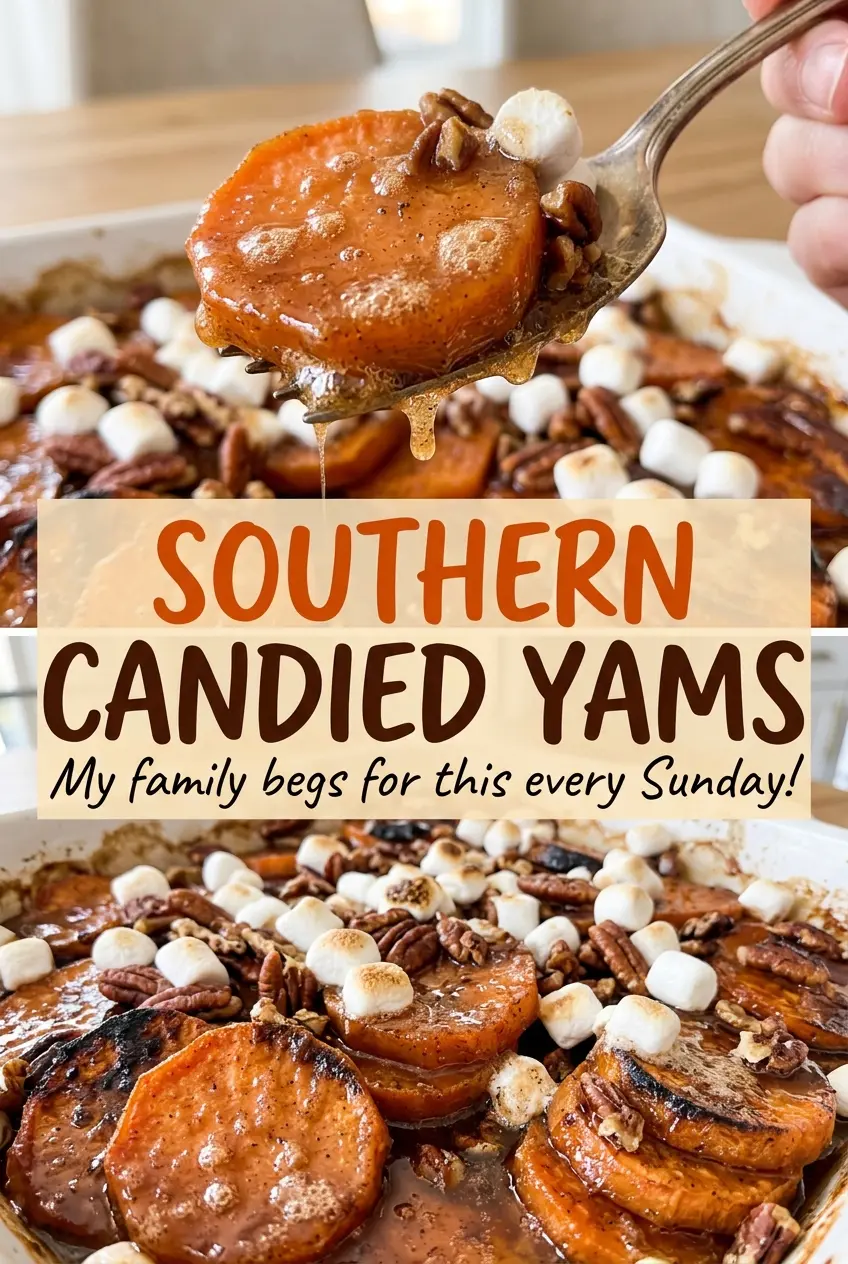
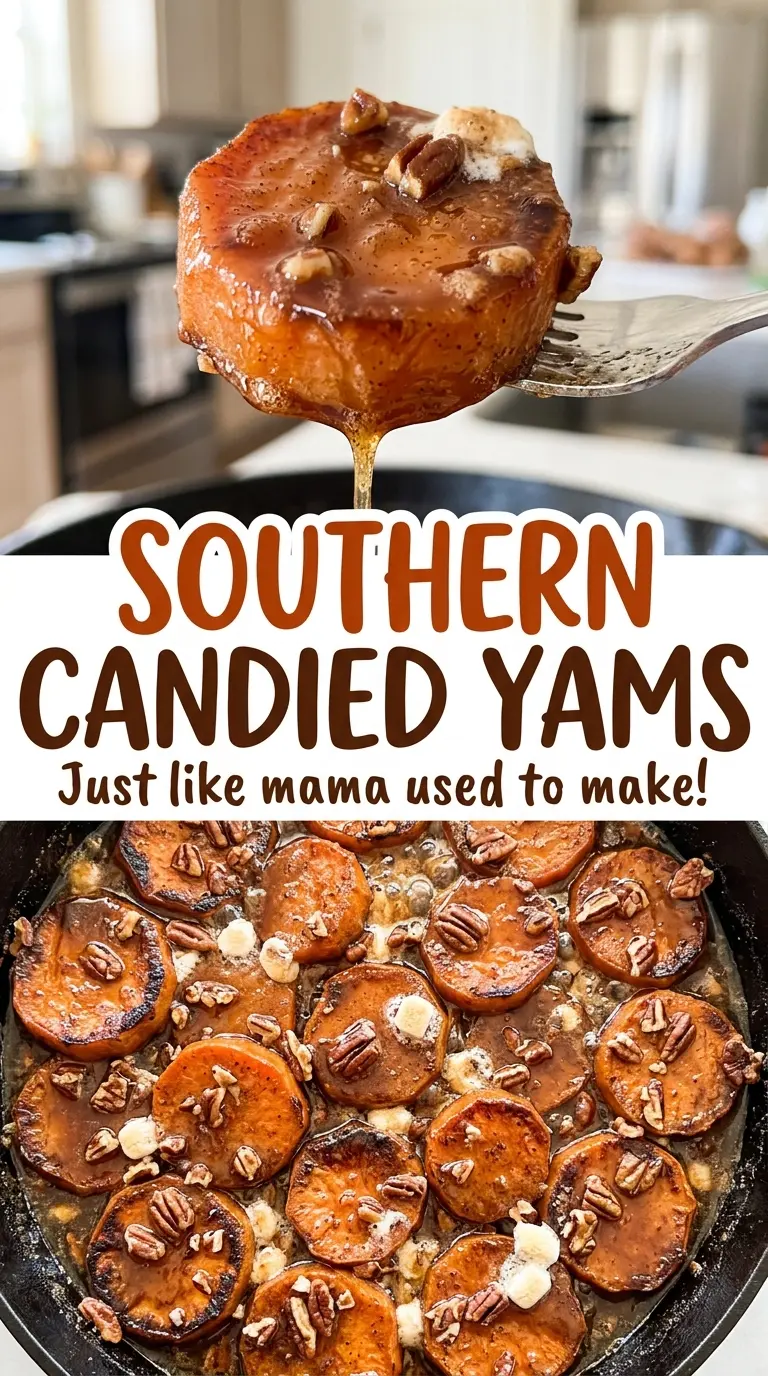
When the foil comes off the baking dish, the sweet potatoes should be tender, but the syrup still looks a little loose. That’s the moment to baste them and let the uncovered bake turn the buttery sugar mixture into a glossy coating. I like this two-part finish for Southern candied yams because the rounds soften without drying out, then take on that sticky glaze.
Orange-fleshed sweet potatoes—often sold under the name yams—are the right choice here. Their soft, creamy centers hold together as rounds, and the brown sugar, granulated sugar, butter, and warm spices settle around them as they bake. Cut the rounds evenly so they soften at about the same pace.
The syrup comes together on the stovetop before it goes into the dish, so there’s no guesswork about whether the sugars have dissolved. Once it’s smooth, pour it over the potatoes and let the oven do the rest. The finished rounds are tender under a cinnamon-scented glaze, with syrup ready to spoon over each serving.
Kitchen Note
Take the saucepan off the heat before you stir in the vanilla. That small pause keeps the vanilla’s aroma bright, and the syrup is ready to pour as soon as it’s mixed.
Save these Southern candied yams for a holiday table or Sunday supper—the soft sweet potato rounds bake under a buttery cinnamon glaze.
Why These Yams Bake Covered First, Then Glaze Uncovered
Sweet potatoes need time to soften all the way through, and a sugar syrup can thicken before their centers are tender if it’s exposed to the oven for the entire bake. Covering the dish tightly for the first part traps moisture around the rounds. They cook gently in the syrup instead of losing moisture at the edges while the middle stays firm.
Taking off the foil changes the job. The sweet potatoes are already on their way to tenderness, so the remaining bake lets moisture escape and the syrup cling more closely to the surface. Basting at that point moves the syrup back over the tops, including any rounds that have stayed a little drier above the liquid. The useful cue isn’t a deeply browned top; it’s rounds that yield to a fork and look glazed. If they’re still firm, give them more time in the oven rather than serving them with a crisp center.
This method also gives you a clear way to judge progress. The first bake is about softening; the final bake is about tenderness and glaze. Keep the foil snug for the first stage, then remove it so the syrup can reduce around the potatoes.
How the Sweet Potatoes and Syrup Build Their Glaze
- Orange-fleshed sweet potatoes — They turn creamy and tender while holding their shape as rounds. Choose firm potatoes with unblemished skins; the word “yams” on a grocery label often refers to this type. Pale-fleshed sweet potatoes won’t give the same color or soft texture, so stick with orange-fleshed ones for this dish.
- Unsalted butter — Butter gives the syrup its rich, smooth body and helps it coat the potatoes. Unsalted butter lets you control the seasoning. If salted butter is what you have, use it and leave out the kosher salt; the result will taste a little more seasoned.
- Light brown and granulated sugars — Light brown sugar brings a mellow molasses note, while granulated sugar keeps that sweetness from becoming too heavy. Dark brown sugar can replace light brown sugar one-for-one for a deeper, more pronounced molasses flavor. Keeping both kinds gives the intended balance.
- Cinnamon and nutmeg — Ground cinnamon provides the main warm spice, and nutmeg gives it a quieter, rounded aroma. Freshly opened spices smell more vivid, but a standard grocery-store jar works well here. If you’re out of nutmeg, leave it out rather than adding another spice; the cinnamon will still carry the syrup.
- Vanilla extract — Vanilla rounds out the buttery syrup without making it taste like a dessert topping. Use the extract you keep for baking; there’s no need for a specialty bottle. It can be omitted if needed, though the finished syrup will have less fragrance.
From Even Potato Rounds to a Glossy Syrup
Cut and Arrange the Sweet Potatoes
Heat the oven to 350°F and grease a 9×13-inch baking dish with 1 tablespoon of the butter. Peel the sweet potatoes and cut them into 1/2-inch rounds; keeping them close to the same thickness helps them cook evenly. Arrange the rounds in the dish, overlapping them slightly where they need to fit. If the pieces are much thicker or thinner in spots, they won’t become fork-tender together.
Stir the Syrup Until Smooth
Melt the remaining butter in a small saucepan over medium heat. Stir in the brown sugar, granulated sugar, water, cinnamon, nutmeg, and kosher salt, cooking for 2 to 3 minutes. Keep stirring until the sugar dissolves and the mixture looks smooth, not sandy around the edges. Take the pan off the heat, stir in the vanilla, and pour the syrup evenly over the sweet potatoes.
Soften the Rounds Under Foil
Cover the baking dish tightly with foil and bake for 40 to 45 minutes. A snug cover holds in the moisture that helps the sweet potatoes soften. When you lift the foil, watch for escaping steam and handle the dish carefully. The rounds should be starting to soften, but they’ll finish cooking during the uncovered stage.
Baste, Glaze, and Rest
Baste the sweet potatoes with the syrup, then bake uncovered for another 20 to 25 minutes, until they’re fork-tender and glazed. If a fork meets resistance in the center, they need more oven time; check again as they continue baking. Let the dish rest for 10 minutes before serving so the syrup settles around the rounds. Spoon some of that syrup over the top when you serve them.
Small Changes That Shift the Syrup’s Flavor
A deeper brown-sugar finish
Swap the light brown sugar for dark brown sugar in the same amount. The glaze takes on a stronger molasses note and tastes a little less delicate, while the rest of the method stays the same.
A cinnamon-led version without nutmeg
Leave out the nutmeg and keep the cinnamon as written. The syrup will taste more directly cinnamon-forward, with less of the rounded, earthy note that nutmeg brings.
A quieter vanilla note
Leave out the vanilla extract for a simpler, more spice-focused syrup. The sweet potatoes will still bake in the same buttery sugar glaze, but the aroma will be less rounded.
Storage and Reheating
- Refrigerator: Keep leftovers covered in an airtight container for 3 to 4 days. The syrup thickens when cold and loosens again as it warms.
- Freezer: Freeze cooled yams with their syrup in an airtight freezer-safe container for up to 3 months. Thaw overnight in the refrigerator; the sweet potato rounds may be softer after thawing.
- Reheating: Warm in a covered baking dish at 325°F until heated through, spooning syrup over the rounds before serving. Uncovering the dish too early can dry the exposed tops before the centers warm.
Questions That Come Up Before the Yams Go in the Oven
Southern Candied Yams
Ingredients
Equipment
Method
- Heat the oven to 350°F.
- Grease a 9x13-inch baking dish with 1 tablespoon of the butter.
- Arrange the sweet potato rounds in the prepared dish, overlapping them slightly as needed.
- Melt the remaining butter in a small saucepan over medium heat.
- Stir in the brown sugar, granulated sugar, water, cinnamon, nutmeg, and salt; cook, stirring, for 2 to 3 minutes until the sugar dissolves and the mixture is smooth.
- Remove the saucepan from the heat and stir in the vanilla.
- Pour the syrup evenly over the sweet potatoes.
- Cover the dish tightly with foil and bake for 40 to 45 minutes.
- Remove the foil, baste the sweet potatoes with the syrup, and bake for 20 to 25 minutes more until fork-tender and glazed.
- Let the yams rest for 10 minutes before serving.