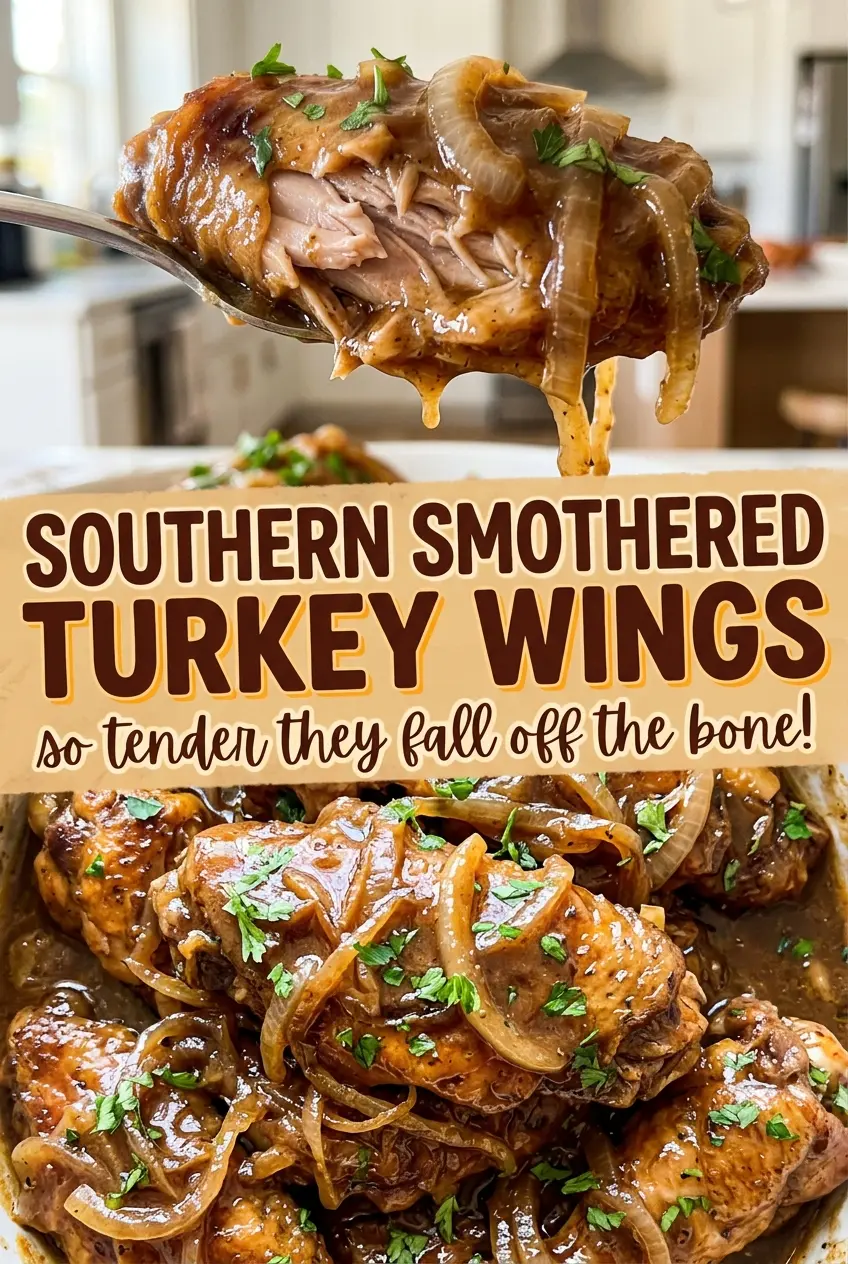
The wings start browning with a steady sizzle, then the onion, bell pepper, and celery soften in the same pot. That’s where Southern Smothered Turkey Wings begin to smell like the kind of dinner you want to give time to. I brown the turkey in batches so each piece gets color instead of steaming against its neighbor.
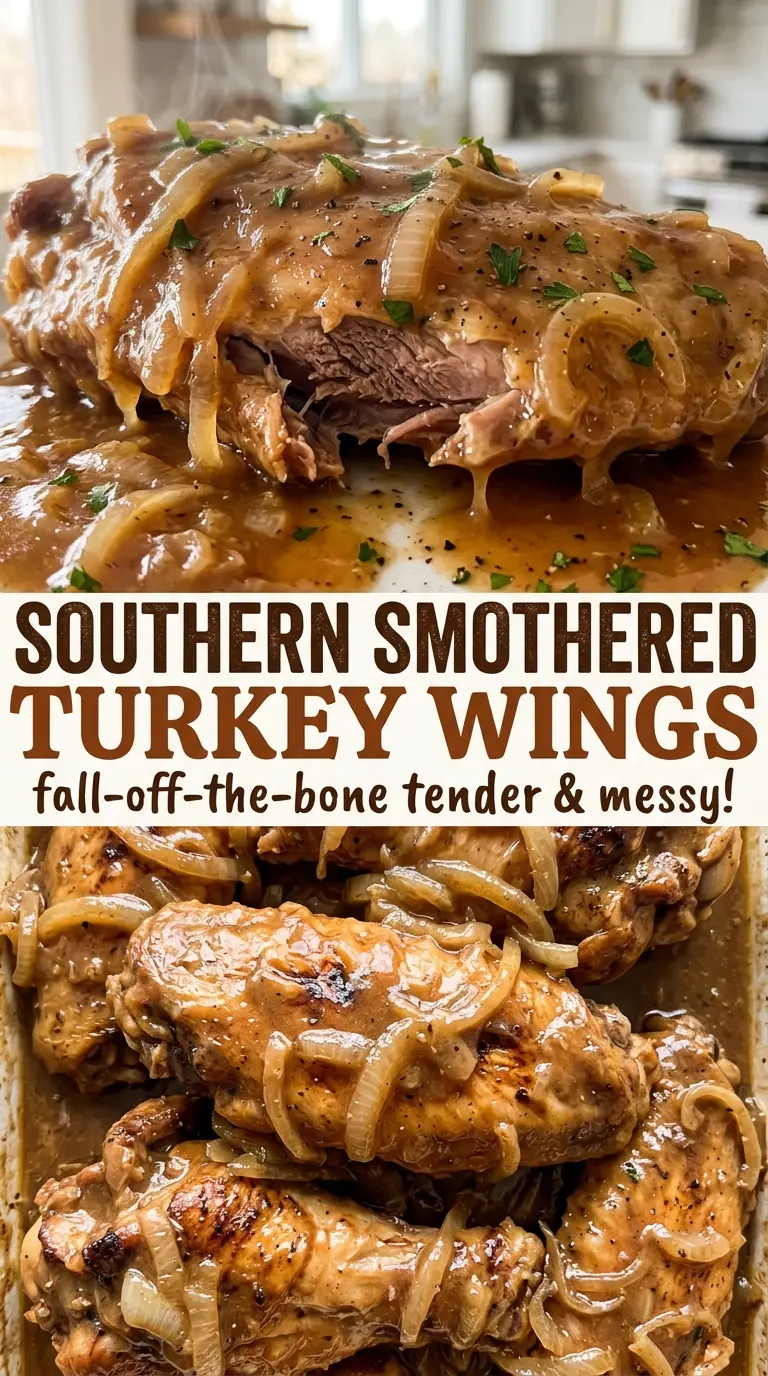
Once the gravy is smooth, the covered Dutch oven does the slow work. The wings cook right in that savory gravy until the meat gives easily to a fork, and the vegetables melt into the sauce. Letting the wings rest in the gravy before serving gives every piece a generous coating, with tender meat underneath.
Kitchen Note
I leave the wings in the gravy for the full 10-minute rest after baking. Taking them straight to the plate means the sauce runs off before it has a chance to cling to the tender meat.
Save these Southern Smothered Turkey Wings for a slow-cooked dinner with tender meat and rich, savory gravy.
Smothered Doesn’t Mean the Wings Need to Be Submerged
It’s easy to think the wings should disappear under the gravy, but that isn’t what happens here. The gravy is built in the Dutch oven, and the wings are turned in it so their surfaces are coated. They sit in the sauce while the covered pot goes into the oven; they don’t need to be fully underwater.
That distinction matters because the pot is doing two jobs at once. The tight cover keeps the cooking environment moist, while the gravy stays around the meat instead of being cooked down uncovered. Flour gives the broth body before the wings go back in, so you start the oven braise with a gravy rather than a thin liquid. Each piece gets seasoned, browned, coated, and then left to become fork-tender in that enclosed heat. You get the deep, cozy character of smothered wings without thinning the gravy to cover every part of them.
Why the Aromatics, Broth, and Flour Belong Together
- Turkey wings — The separated joints are easier to brown on all sides and coat in gravy than a whole wing. Choose pieces with a good amount of meat around the bones; there’s no need to seek out a specialty brand.
- Onion, green bell pepper, and celery — These aromatics soften into the gravy’s savory base. Fresh vegetables matter more than fancy ones here; cut the pepper and celery to a similar size so they soften at about the same pace.
- All-purpose flour — Flour gives the broth enough body to cling to the wings. For a gluten-free adaptation, use a gluten-free all-purpose blend labeled as a one-to-one replacement; the gravy may be a little less silky.
- Low-sodium chicken broth — This keeps the broth savory without pushing the seasoning too far. Regular broth can make the finished gravy saltier, so low-sodium is the better choice for the seasoning balance here.
- Garlic, dried thyme, and bay leaf — Garlic adds a fresh aromatic note, while thyme and bay leaf season the gravy as it cooks. The bay leaf is there to infuse the pot, not to stay in the serving bowl.
- Paprika, garlic powder, onion powder, and black pepper — These season the wings directly before browning, giving the meat flavor underneath the gravy as well as on its surface.
- Neutral oil — A neutral oil lets the seasoned turkey brown without adding a competing flavor. A basic bottle from the pantry works well.
Brown First, Then Let the Covered Pot Do the Slow Work
Season and Brown the Wings
Heat the oven to 350°F, then pat the turkey wings dry and season all over with the salt, pepper, paprika, garlic powder, and onion powder. Heat the neutral oil in a 6-quart Dutch oven over medium-high heat. Brown the wings in batches for 8 to 10 minutes total, turning so all sides take on color, then transfer them to a plate. If the pot is crowded, the wings won’t brown as evenly, so give each batch room.
Soften the Vegetables
Add the sliced onion, diced bell pepper, and diced celery to the pot and cook over medium heat, stirring occasionally. Give them 5 to 7 minutes, until softened; they should look less crisp but not browned or scorched. Stir in the minced garlic and cook for 30 seconds. Keep it moving during that short stretch so the garlic doesn’t catch on the bottom of the pot.
Whisk the Gravy Smooth
Sprinkle the flour over the softened vegetables and stir for 1 minute. Gradually whisk in the chicken broth, taking a moment to smooth out each addition before pouring in more. Stir in the thyme and bay leaf, then bring the gravy to a simmer; look for gentle bubbling rather than a hard boil. A gradual pour and steady whisk are what keep the gravy smooth.
Cover and Bake Until Fork-Tender
Return the browned wings to the pot and turn them to coat in the gravy. Cover tightly and bake for 2 to 2 1/2 hours, until the thickest part of each wing reaches at least 165°F and the meat is fork-tender. The exact texture matters alongside the temperature: a fork should meet little resistance in the meatiest part. Remove the bay leaf and let the wings rest in the gravy for 10 minutes before serving.
Simple Ways to Adapt the Gravy
Make the Gravy Gluten-Free
Replace the all-purpose flour with the same amount of a one-to-one gluten-free all-purpose flour blend, and use gluten-free low-sodium chicken broth. Whisk the broth in gradually as usual; the gravy may have a slightly different texture, but it still gives the wings a savory coating.
Go Lighter on the Green Pepper
Leave out the green bell pepper if you prefer a less vegetal gravy. The onion and celery still make a savory base, though you’ll lose the pepper’s distinct flavor and a little of the vegetable sweetness.
Storage and Reheating
- Refrigerator: Store the wings with the gravy in an airtight container for 3 to 4 days. The chilled gravy will firm up, then loosen as it warms.
- Freezer: Freeze wings covered with gravy in an airtight freezer-safe container for up to 3 months for best quality. Thaw in the refrigerator before reheating.
- Reheating: Warm the wings gently in their gravy, covered, over low heat on the stovetop until steaming hot. Avoid high heat, which can make the gravy catch on the bottom before the wings warm through.
Questions About Making Smothered Turkey Wings
Southern Smothered Turkey Wings
Ingredients
Equipment
Method
- Heat the oven to 350°F.
- Pat the turkey wings dry, then season all over with the kosher salt, black pepper, paprika, garlic powder, and onion powder.
- Heat the neutral oil in a 6-quart Dutch oven over medium-high heat.
- Brown the wings in batches for 8 to 10 minutes total, turning to brown all sides, then transfer them to a plate.
- Add the yellow onion, green bell pepper, and celery to the pot and cook over medium heat, stirring occasionally, until softened, 5 to 7 minutes.
- Add the garlic and cook for 30 seconds.
- Sprinkle in the all-purpose flour and cook, stirring, for 1 minute.
- Gradually whisk in the chicken broth until smooth.
- Stir in the dried thyme and bay leaf, then bring the gravy to a simmer.
- Return the wings to the pot, turning them to coat in the gravy.
- Cover tightly and bake for 2 to 2 1/2 hours, until the thickest part of each wing reaches at least 165°F and the meat is fork-tender.
- Remove the bay leaf and let the wings rest in the gravy for 10 minutes before serving.