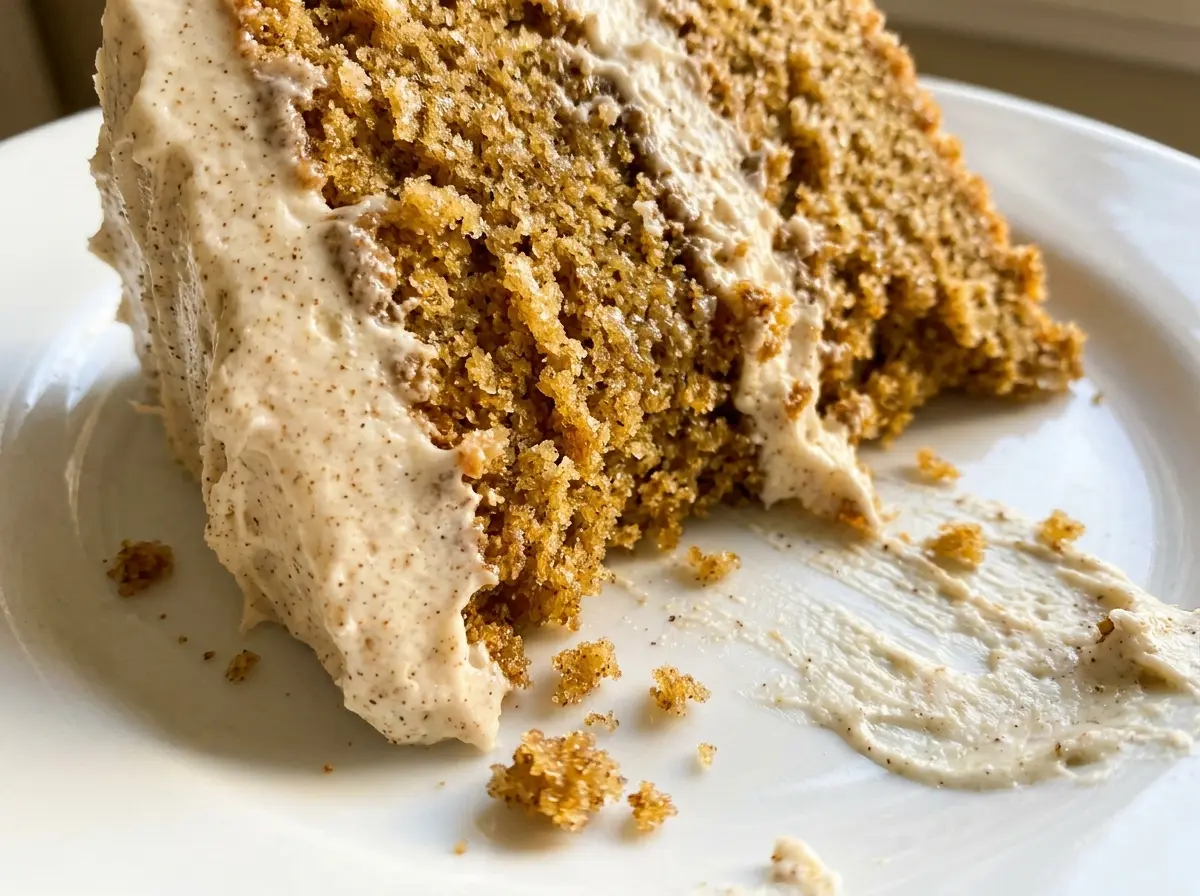
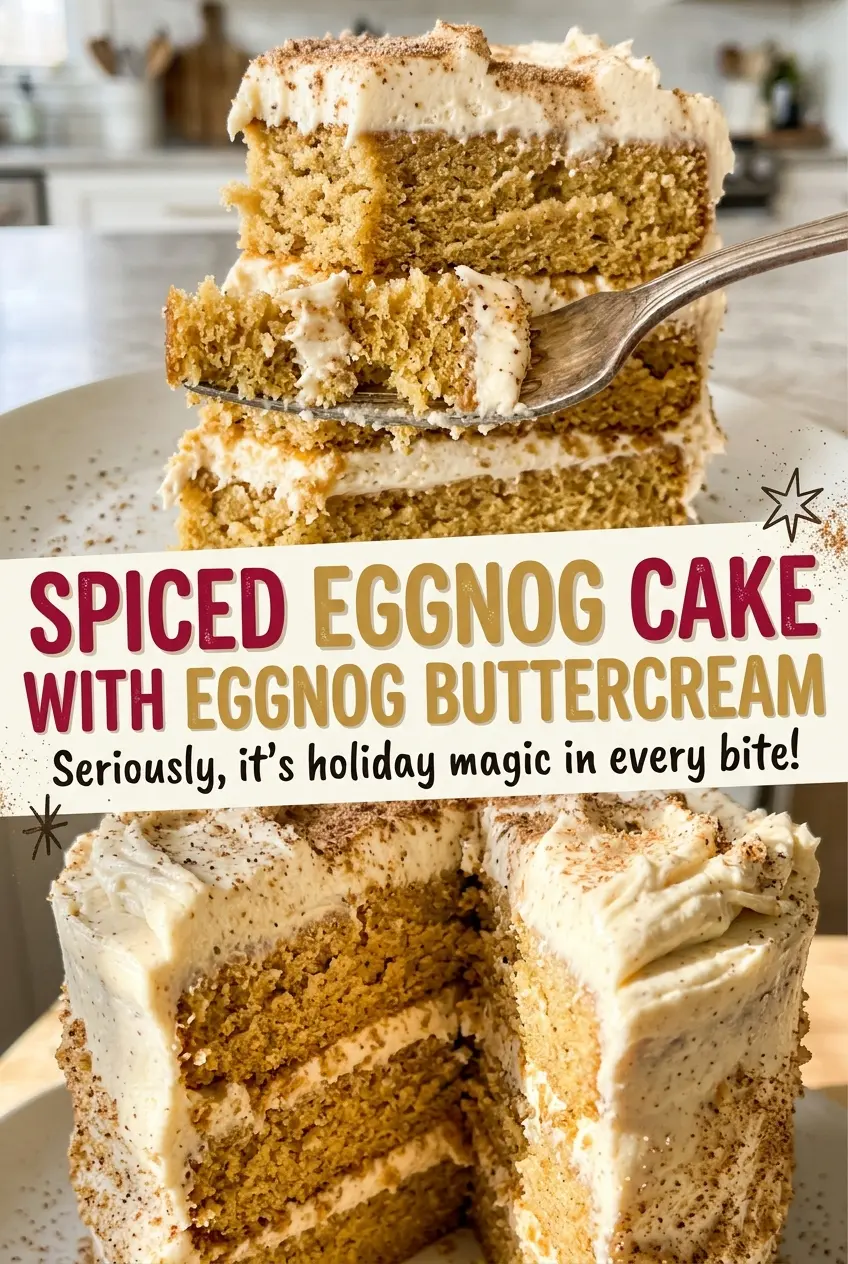
The batter spreads slowly across the pan, and the first hint of cinnamon and nutmeg comes through before the cake even reaches the oven. I like this spiced eggnog cake because it bakes as one easy-to-slice layer, with a soft crumb that can handle a generous blanket of eggnog buttercream.
Eggnog brings sweetness and richness, so the spices stay warm and gentle rather than overpowering. I keep the mixing controlled once the flour goes in; that’s what helps the cake stay tender instead of turning heavy. The frosting carries another touch of eggnog, which gives each bite a clear eggnog flavor without making the cake batter too loose. Cut into squares, it’s soft cake, creamy frosting, and just enough spice in every bite.
Kitchen Note
Wait until the cake is cool all the way through before frosting it. A pan can feel cool on the edges while the center still holds warmth, and that warmth will soften the buttercream.
Save this spiced eggnog cake with its creamy eggnog buttercream for a tender, warmly spiced sheet cake that’s easy to share.
Why Overmixing Turns Eggnog Cake Heavy
This cake gets its soft texture from a straightforward butter-cake batter, not from a complicated technique. Once flour meets the wet ingredients, mixing starts developing gluten. A little structure helps the cake hold together, but too much mixing can make the crumb tight and chewy instead of tender.
That’s especially easy to do when the batter looks thick and you’re tempted to keep beating until it seems perfectly smooth. It doesn’t need that kind of polishing. Stop when the flour has disappeared and the batter is evenly combined; a few small, soft-looking ridges are less troublesome than a long bout of mixing. The flour additions are there to help the ingredients come together without asking the batter to take all the liquid at once. Keep the mixer on low for those additions, and you’ll have a cake that slices neatly while still feeling soft on the fork.
What Eggnog, Butter, and Spice Each Bring to This Cake
- Eggnog — It supplies the cake’s signature creamy flavor and moisture, while the portion for the buttercream lets that flavor carry through the topping too. Use eggnog you enjoy drinking; a thin or strongly flavored substitute can change both the taste and texture.
- Unsalted butter — Softened butter creams with the sugar and gives the cake its tender richness; it also forms the base of the frosting. Softened means pliable enough to press, not shiny or melting, so it can trap air as you beat it.
- All-purpose flour — This gives the cake enough structure to support the frosting and cut into squares. Spoon it into the measuring cup and level it rather than packing it down, which can add too much flour and make the cake dry.
- Eggs — Room-temperature eggs blend more evenly into the creamed butter and sugar than cold ones. Add them individually so each one has a chance to mix in before the next goes into the bowl.
- Cinnamon and nutmeg — Cinnamon brings a familiar warmth, while nutmeg gives the cake its distinct eggnog-style spice. Ground spices lose their fragrance with age, so fresh, aromatic jars make a noticeable difference here.
- Powdered sugar — Fine powdered sugar gives the buttercream its structure and smooth finish. Add it gradually on low speed to keep a cloud of sugar from escaping the bowl.
Build the Batter Gently, Then Frost Only a Cool Cake
Get the Pan and Dry Ingredients Ready
Heat the oven to 350°F and coat a 9×13-inch baking pan with nonstick cooking spray. Whisk the flour, baking powder, cinnamon, nutmeg, and salt together in a medium bowl so the leavening and spices are distributed throughout. Breaking up any visible clumps now saves you from overmixing later. Set the bowl nearby before you start creaming the butter.
Cream the Butter and Sugar Until Pale
Beat the softened cake butter with the granulated sugar on medium speed for about 3 minutes. It should look paler and fluffier than it did at the start, with no dense-looking pockets of butter around the bowl. Add the eggs one at a time, then mix in the vanilla. If the mixture looks a little uneven as an egg goes in, keep beating just until it comes together before adding the next.
Alternate the Flour and Eggnog
Add the dry mixture in three additions, alternating with the cup of eggnog and beginning and ending with flour. Keep the mixer on low and stop as soon as everything is combined; scraping the bowl once helps catch flour hiding at the bottom. The finished batter should be thick but spreadable. Transfer it to the prepared pan and smooth it evenly into the corners.
Bake the Cake and Let It Cool Fully
Bake for 30–35 minutes, until a toothpick inserted in the center comes out clean. The center is the best place to test, since the edges finish before the middle. Set the pan on a wire rack and let the cake cool completely in the pan for at least 1 hour. Frosting before the center has cooled can leave you with softened buttercream instead of an even layer.
Beat and Spread the Eggnog Buttercream
Beat the remaining softened butter on medium speed for about 2 minutes, until smooth and creamy. Add the powdered sugar gradually on low, then beat in the remaining eggnog, vanilla, and salt. Continue for about 2 minutes, until the frosting looks fluffy and holds soft ridges. Spread it evenly over the cooled cake, working gently so you don’t pull up crumbs.
Three Simple Ways to Change the Spice or Finish
Make the Cinnamon Stand Out
For a cinnamon-forward version, use 1 teaspoon of cinnamon in place of the cinnamon and nutmeg together. The cake will taste warmer and less nutmeg-led, while keeping the same soft crumb and method.
Use a 1:1 Gluten-Free Flour Blend
Replace the all-purpose flour with the same amount of a gluten-free 1:1 baking flour blend. Choose a blend formulated to replace wheat flour in cakes; the crumb may be a little more delicate, so let the cake cool fully before frosting and slicing.
Serve It Without the Buttercream
Leave off the frosting for a simpler spiced snack cake. The cake will taste less sweet and the cinnamon and nutmeg will come forward more clearly; bake it in the same pan and use the same doneness cue.
Storage and Reheating
- Refrigerator: Cover the frosted cake and refrigerate it for up to 4 days. The cake will feel firmer when cold, and the buttercream will set.
- Freezer: Freeze the unfrosted cake, tightly wrapped, for up to 2 months. Thaw it in the refrigerator before adding freshly made buttercream.
- Reheating: This cake is best served without heating. Let a slice lose its refrigerator chill before eating; microwaving can melt the buttercream.
Questions That Come Up When Baking Eggnog Cake
Spiced Eggnog Cake with Eggnog Buttercream
Ingredients
Equipment
Method
- Preheat the oven to 350°F.
- Coat a 9x13-inch baking pan with nonstick cooking spray.
- Whisk the flour, baking powder, cinnamon, nutmeg, and salt in a medium bowl.
- Beat the 1/2 cup butter and granulated sugar in a large bowl with an electric mixer on medium speed until pale and fluffy, about 3 minutes.
- Beat in the eggs one at a time, then mix in the vanilla extract.
- Add the flour mixture in three additions, alternating with 1 cup eggnog and beginning and ending with the flour mixture; mix on low just until combined.
- Spread the batter evenly in the prepared pan.
- Bake for 30–35 minutes, until a toothpick inserted in the center comes out clean.
- Cool the cake completely in the pan on a wire rack, at least 1 hour.
- Beat the remaining 1 cup butter in a large bowl with an electric mixer on medium speed until smooth and creamy, about 2 minutes.
- Add the powdered sugar gradually on low speed.
- Beat in the remaining 1/4 cup eggnog, vanilla, and salt until fluffy, about 2 minutes.
- Spread the buttercream evenly over the completely cooled cake.