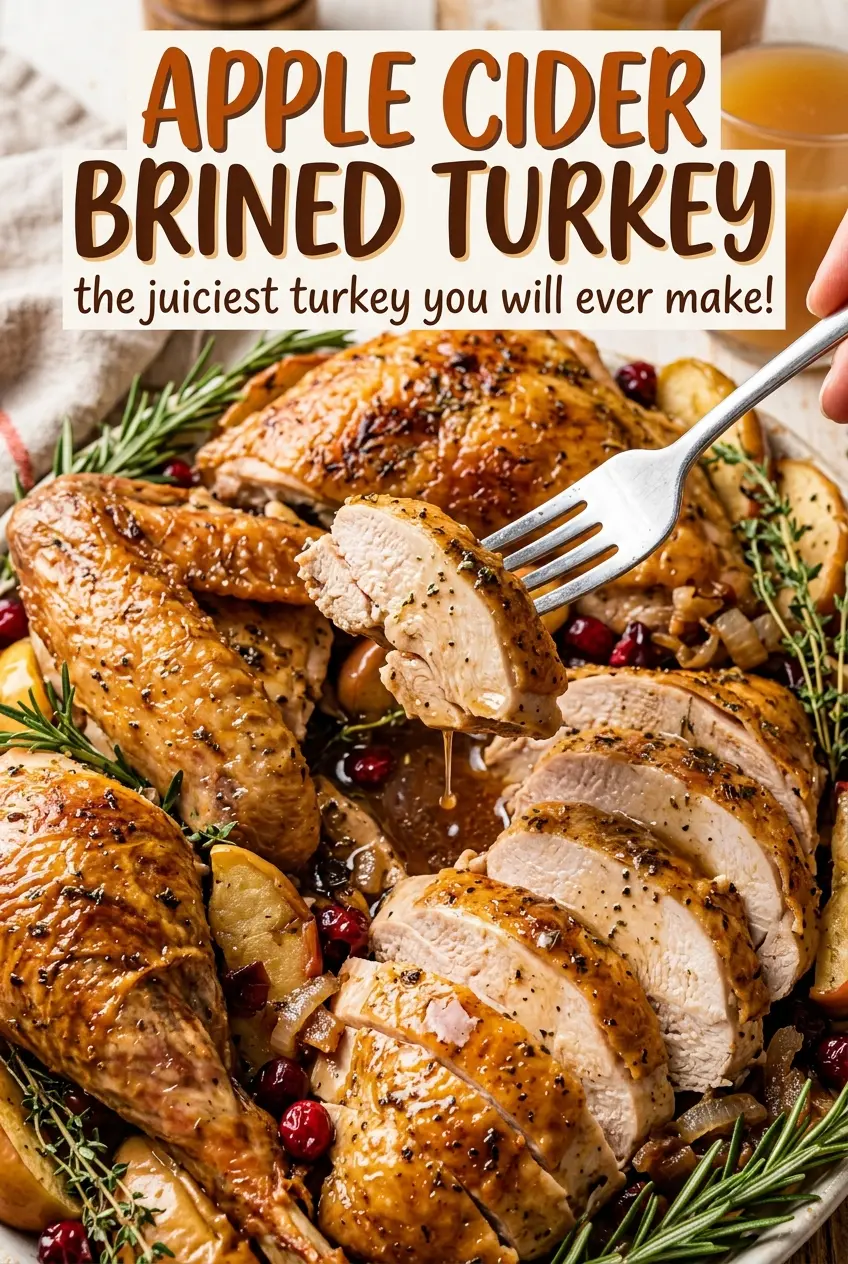
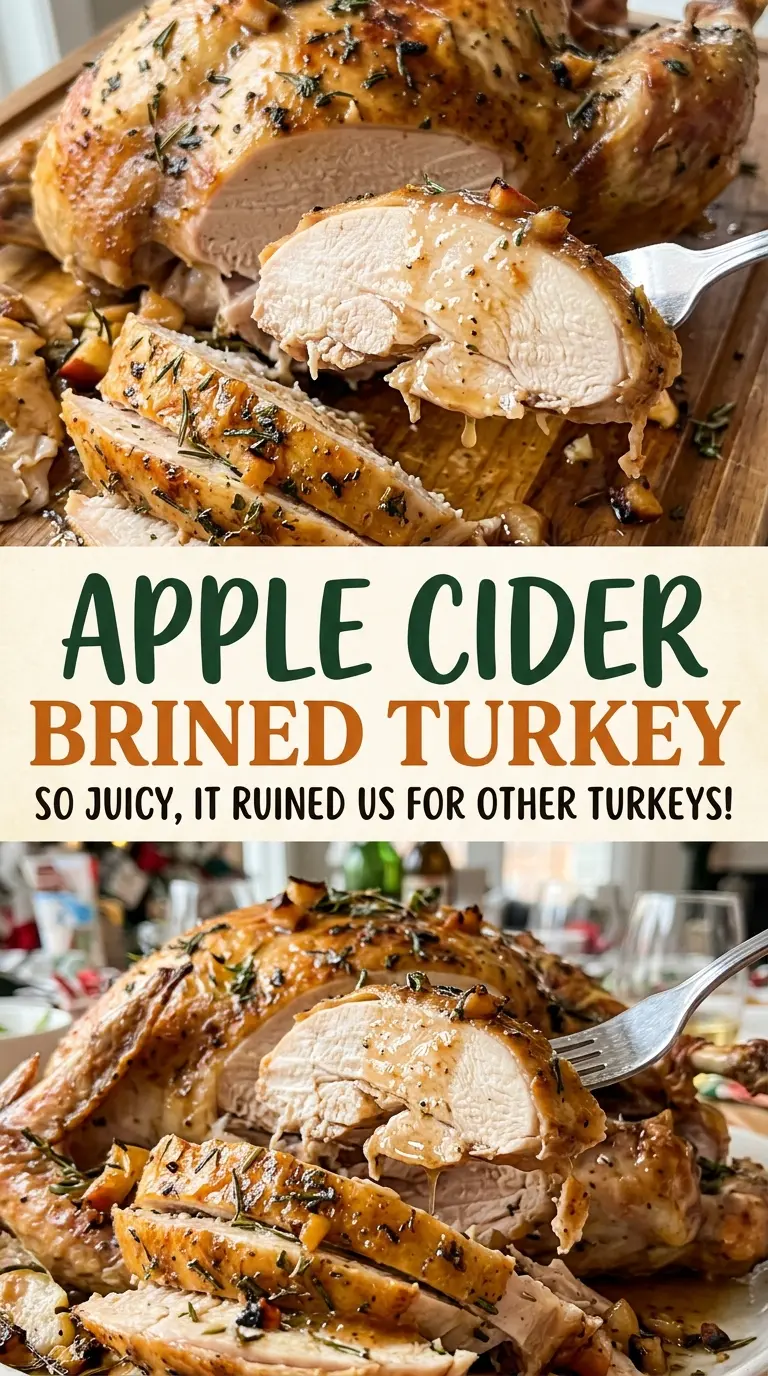
When the turkey comes out of its overnight bath, the apple-and-herb scent is already there, but the skin is wet and needs a careful pat before it goes anywhere near the oven. That small detail matters with this Apple Cider Brined Turkey: dry skin gives the butter something to cling to and lets the surface roast instead of steam.
I use a plain, unbrined bird so the salt in the brine can do its job without piling onto salt that’s already been added. Apple cider rounds out the brine with a gentle sweetness, while rosemary, thyme, bay, and peppercorns bring a savory edge. The result is well-seasoned turkey with tender meat and crisp, browned skin, without a complicated roasting routine.
The brine needs to be completely cold before the turkey goes in, so I plan that cooling time ahead. Once the bird is submerged and chilled, the oven work is straightforward: butter the dried skin, roast until the thickest parts reach temperature, then give the turkey a full rest before carving.
Kitchen Note
Let the brine cool completely before adding the cider and turkey. I learned to give that step its own time; even a little warmth in the mixture means it needs longer in the refrigerator before the bird is ready to go in.
Save this Apple Cider Brined Turkey for a roast with tender, well-seasoned meat and buttery, browned skin.
Why This Brine Starts With an Unbrined Turkey
The cider brings aroma and a mild sweetness, but it doesn’t cancel the salt in the brine. Salt moves into the turkey as it sits, seasoning the meat throughout; a bird that has already been salted or injected starts with extra seasoning before it ever reaches this mixture. That’s why I use a thawed, unbrined turkey here, rather than a kosher, self-basting, or enhanced one.
Brining also gives you a little more breathing room against dry meat, but it can’t rescue a turkey that stays in the brine too long or roasts past its target temperature. Keep the overnight brining window in view and use an instant-read thermometer instead of relying on the clock alone. The cider and brown sugar add their own roundness, while the herbs and pepper keep the overall flavor savory rather than candy-sweet.
This is a useful approach when you want a whole roasted turkey that tastes seasoned beyond the surface. The brine is aromatic, not a sauce, and the finished meat still tastes like turkey first.
What the Cider, Salt, and Fresh Herbs Each Bring
- Diamond Crystal kosher salt — Salt seasons the meat during the brining time, so use the brand named here rather than measuring a denser kosher salt cup-for-cup. Different salt crystals pack differently by volume, and that can shift the brine’s saltiness.
- Pasteurized apple cider — Cider gives the brine a fuller apple character than a clear, mild liquid would. Choose pasteurized cider and keep it chilled; this recipe depends on blending it into a cold brine before the turkey goes in.
- Light brown sugar — The sugar softens the brine’s salty edge and adds a mellow sweetness. Packed light brown sugar keeps the flavor gentle; darker brown sugar would bring a more pronounced molasses note.
- Fresh rosemary and thyme — Fresh sprigs release their fragrance into the warm salt-and-sugar mixture as it cools. They’re worth buying fresh for this brine; dried herbs won’t give the same clean, leafy aroma in this preparation.
- Unbrined whole turkey — Start with a thawed bird with the neck and giblets removed. An already salted or seasoned turkey is a poor fit because the added brine can make the finished meat too salty.
- Unsalted butter — Softened butter spreads over the skin without adding more salt to a turkey that has already been brined. Let it soften enough to rub on easily, rather than melting it into a liquid that runs off the surface.
Four Stages From Cold Brine to Carved Turkey
Dissolve the Salt Before Adding the Aromatics
Bring four cups of the water to a simmer in a saucepan, then stir in the kosher salt and brown sugar until both dissolve. Take the pan off the heat and add the bay leaves, whole peppercorns, rosemary, and thyme. You’re not trying to boil the herbs; the hot mixture gives them a head start releasing their aroma. If crystals remain on the bottom, keep stirring until the liquid looks clear before you move on.
Cool the Mixture and Chill the Complete Brine
Let the saucepan mixture cool completely, then pour it into a five-gallon food-safe container. Stir in the remaining water and chilled apple cider, and refrigerate until the brine is 40°F or colder. Don’t add the turkey while the mixture is still warm. A thermometer gives you a more dependable check than judging the container by touch.
Keep the Turkey Submerged During the Overnight Brine
Set the turkey breast-side down in the cold brine. If it floats, use a plate to hold it fully under the liquid, then refrigerate the container at 40°F or colder for 12 to 18 hours. A bird that sits partly above the brine won’t be exposed evenly, so check its position when you put it away. Keep the container cold and covered while the turkey brines.
Dry, Butter, Roast, and Rest
Lift out the turkey, discard the brine, and pat the bird completely dry with paper towels; don’t rinse it. Heat the oven to 325°F with a rack in the lower third, and set a rack inside a 16-inch roasting pan. Put the turkey breast-side up on the rack, rub softened butter over the skin, and sprinkle it with freshly ground black pepper. Roast for 3 to 3¾ hours, tenting loosely with foil if the skin browns too quickly; the thickest breast and innermost thigh should each reach 165°F on an instant-read thermometer without touching bone. Transfer the bird to a carving board, tent loosely with foil, and rest for 30 minutes before carving.
Two Simple Ways to Adjust the Brine’s Flavor
A Brine With Less Added Sugar
For less added sugar, leave out the brown sugar and keep the cider, salt, and aromatics. The turkey will lose that gentle brown-sugar roundness, though the cider still contributes natural sweetness. This changes the balance of the brine, so expect a more direct savory-and-apple flavor.
A Simpler, Rosemary-Forward Herb Note
Leave out the thyme and keep the rosemary, bay leaves, and peppercorns for a more focused piney aroma. The brine still seasons the turkey, but the herb character will be less layered. This is an easy flavor adjustment if thyme isn’t your favorite.
Storage and Reheating
- Refrigerator: Store carved turkey in airtight containers and use within 3 to 4 days. The meat firms up as it chills, so slice it after reheating if you prefer softer, warmer pieces.
- Freezer: Freeze carved portions in airtight freezer-safe packaging for 2 to 6 months for best quality. Smaller portions thaw more evenly than one large packed container.
- Reheating: Put turkey in an oven-safe dish, cover it tightly with foil, and warm it in a 325°F oven until the thickest pieces reach 165°F. Uncovered reheating dries the edges before the center is hot.
Questions That Come Up When Brining a Whole Turkey
Apple Cider Brined Turkey
Ingredients
Equipment
Method
- In a saucepan, bring 4 cups of the water to a simmer.
- Stir in the kosher salt and brown sugar until dissolved.
- Remove the saucepan from the heat and add the bay leaves, peppercorns, rosemary, and thyme.
- Cool the mixture completely.
- Pour the cooled mixture into a 5-gallon food-safe container.
- Stir in the remaining 12 cups water and the apple cider.
- Refrigerate until the brine is 40°F or colder.
- Place the turkey breast-side down in the cold brine.
- Keep the turkey fully submerged with a plate if needed.
- Refrigerate at 40°F or colder for 12 to 18 hours.
- Remove the turkey from the brine and discard the brine.
- Pat the turkey completely dry with paper towels without rinsing it.
- Heat the oven to 325°F and set a rack in the lower third.
- Place a rack inside a 16-inch roasting pan.
- Set the turkey breast-side up on the roasting rack.
- Rub the softened butter over the skin.
- Sprinkle with black pepper.
- Roast for 3 to 3 3/4 hours, tenting loosely with foil if it browns too quickly, until the thickest part of the breast and innermost thigh reach 165°F on an instant-read thermometer without touching bone.
- Transfer the turkey to a carving board and tent loosely with foil.
- Rest for 30 minutes before carving.