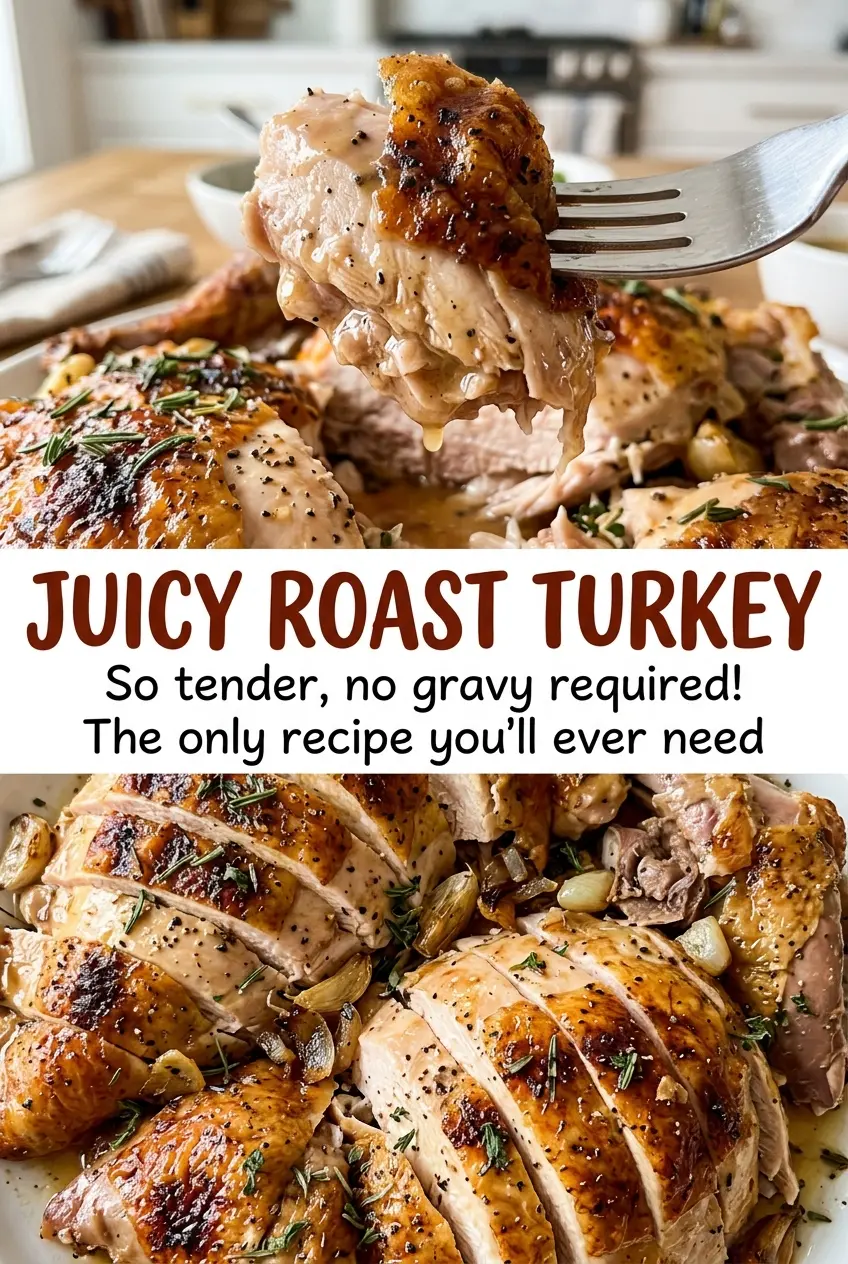
The first thing I notice when a turkey goes into the oven is how much the skin can affect the whole roast. If it’s damp, the butter tends to slide around instead of coating it evenly, and the breast can brown before the rest is ready. For this Juicy Roast Turkey, I start with an uncovered rest in the refrigerator, then tuck fresh herb butter beneath the breast skin as well as rubbing it over the outside.
That two-part approach gives the meat seasoning close to the surface while the butter flavors the skin and breast. I keep the cavity aromatics simple—onion, lemon, and celery—and add broth to the pan beneath the roasting rack. The result is a deeply browned bird with tender slices and a pan that’s ready for the last stretch of roasting without crowding the turkey.
Kitchen Note
Keep the onion, lemon, and celery loose in the cavity rather than packing them tightly. They’re there to scent the turkey as it roasts, not to act like a stuffing that fills the bird.
Save this Juicy Roast Turkey for a golden, herb-buttered centerpiece with tender slices and a simple onion, lemon, and celery aroma.
Why the Uncovered Salt Rest Changes the Skin Before the Turkey Hits the Oven
An uncovered rest in the refrigerator does two useful jobs at once. Salt has time to season the turkey beyond just its outer surface, and the skin gets exposed to cool, dry air rather than sitting against moisture trapped under plastic or a cover. That drier surface is a better starting point for browning once the bird goes into the oven.
This is why I use a fully thawed turkey that hasn’t been brined or injected as a self-basting bird. Those products already contain added salt and moisture, so seasoning them with the same amount of salt can leave the meat too salty. With an unbrined bird, the salt in this recipe can season it evenly during the refrigerator rest instead of competing with seasoning already inside.
Set the turkey breast-side up on a rimmed baking sheet and leave it uncovered for 12 to 24 hours. There’s no need to rinse it before roasting; rinsing would put moisture back on the skin. Patting it dry before seasoning and giving it that open-air rest are the small bits of preparation that set up the roast.
What the Herb Butter, Citrus, and Pan Broth Each Contribute

- Whole turkey — Choose a fully thawed, unbrined, non-self-basting bird in the specified 12- to 14-pound range. The size matters because the roasting window is built around a bird of this weight; starting with a pre-salted one changes how the seasoning lands.
- Diamond Crystal kosher salt and black pepper — Kosher salt seasons the meat during the refrigerator rest, while pepper adds a straightforward savory note. Use Diamond Crystal here rather than swapping salt brands by volume, since kosher salt crystals vary in density.
- Unsalted butter — Softened butter is easy to spread under the breast skin without tearing it, and unsalted butter lets the turkey’s salt level stay controlled. Butter straight from the refrigerator is difficult to work into an even layer.
- Fresh thyme and rosemary — Their leaves bring a fragrant, woodsy note to the butter without adding a wet marinade. Fresh herbs blend neatly into softened butter; dried herbs have a different texture and won’t give quite the same fresh aroma.
- Onion, lemon, and celery — These aromatics gently scent the inside of the bird while it roasts. A fresh lemon matters for its bright citrus fragrance, while the onion and celery add a familiar savory aroma.
- Low-sodium chicken broth — The broth sits in the roasting pan, not inside the turkey, and provides liquid beneath the rack as the bird cooks. Low-sodium broth keeps the pan juices from starting out overly salty.
The Stages That Keep the Breast Buttery and the Roast Even
Season the Bird and Give It Its Refrigerator Rest
Remove the neck and giblets, then pat the turkey dry. Season the outside and inside of the cavity with kosher salt and pepper, and set the turkey breast-side up on a rimmed baking sheet. Refrigerate it uncovered for 12 to 24 hours so the surface dries while the seasoning has time to settle in.
Bring It Out and Mix the Herb Butter
Take the turkey out of the refrigerator 45 minutes before roasting, and heat the oven to 325°F with a rack in the lower third. Stir the softened butter with the thyme and rosemary until the herbs are spread throughout. Gently loosen the skin over the breast; work about half of the butter underneath and rub the rest over the outside.
Set Up the Aromatics and Roasting Pan
Put the onion, lemon, and celery in the cavity, then set the turkey breast-side up on a rack in a 16×13-inch roasting pan. Pour the low-sodium chicken broth into the pan around the rack. Keeping the bird on the rack leaves it elevated above the broth as it roasts.
Roast Until Both Checks Reach the Target
Roast for 3 to 3 3/4 hours, checking the breast and the innermost part of the thigh with an instant-read thermometer without touching bone. Both spots need to reach 165°F; a deeply browned breast isn’t proof that the meat is ready. If the breast darkens before the turkey is done, tent it loosely with foil, and if either reading is short, keep roasting and check again every 15 minutes.
Rest Before You Carve
Transfer the turkey to a carving board and tent it loosely with foil. Let it rest for 30 minutes before carving so the roast isn’t cut as soon as it leaves the oven. Use a sharp carving knife and make steady slices across the breast rather than sawing back and forth.
Two Small Changes for a Different Turkey Roast
Let the Thyme Lead
Leave out the rosemary and make the herb butter with thyme only. The roast keeps its fragrant butter coating, with a gentler, less piney herb note.
Make the Cavity More Citrus-Forward
Use the lemon and leave out the onion and celery. The turkey will have a lighter, brighter aroma inside, without the rounder savory scent those vegetables bring.
Storage and Reheating
- Refrigerator: Refrigerate leftovers within 2 hours and keep them in an airtight container for 3 to 4 days. Sliced breast meat will lose some of its just-roasted texture as it chills.
- Freezer: Freeze sliced turkey in airtight portions for up to 2 to 6 months for best quality. Thaw frozen portions in the refrigerator before reheating.
- Reheating: Arrange slices in a covered oven-safe dish with a splash of chicken broth and warm at 325°F until steaming hot throughout. Leaving the dish uncovered is the quickest way to dry out the lean breast meat.
Questions That Come Up Before the Turkey Goes in the Oven
Juicy Roast Turkey
Ingredients
Equipment
Method
- Remove the neck and giblets from the turkey and pat it dry.
- Season the turkey all over and inside the cavity with the salt and pepper.
- Set the turkey breast-side up on a rimmed baking sheet and refrigerate uncovered for 12 to 24 hours.
- Take the turkey out of the refrigerator 45 minutes before roasting.
- Heat the oven to 325°F and set a rack in the lower third of the oven.
- Mix the butter, thyme, and rosemary.
- Gently loosen the skin over the turkey breast and spread about half the herb butter underneath.
- Rub the rest of the herb butter over the turkey skin.
- Put the onion, lemon, and celery loosely in the cavity.
- Set the turkey breast-side up on a rack in a 16x13-inch roasting pan and pour the broth into the pan.
- Roast for 3 to 3 3/4 hours, tenting the breast loosely with foil if it gets deeply browned before the turkey is done.
- Check with an instant-read thermometer in the thickest part of the breast and the innermost part of the thigh, without touching bone; the turkey is ready when both reach 165°F.
- If needed, continue roasting and check again every 15 minutes.
- Transfer the turkey to a carving board, tent loosely with foil, and rest for 30 minutes before carving.