The cake springs back under a light touch, but there’s only a short window to roll it without a fight. Leave it flat until it’s cool and the sponge can crack when you bend it; roll it while warm and it learns the shape without tearing. That timing is what turns this Christmas Chocolate Yule Log into a neat spiral instead of a pile of chocolate crumbs.
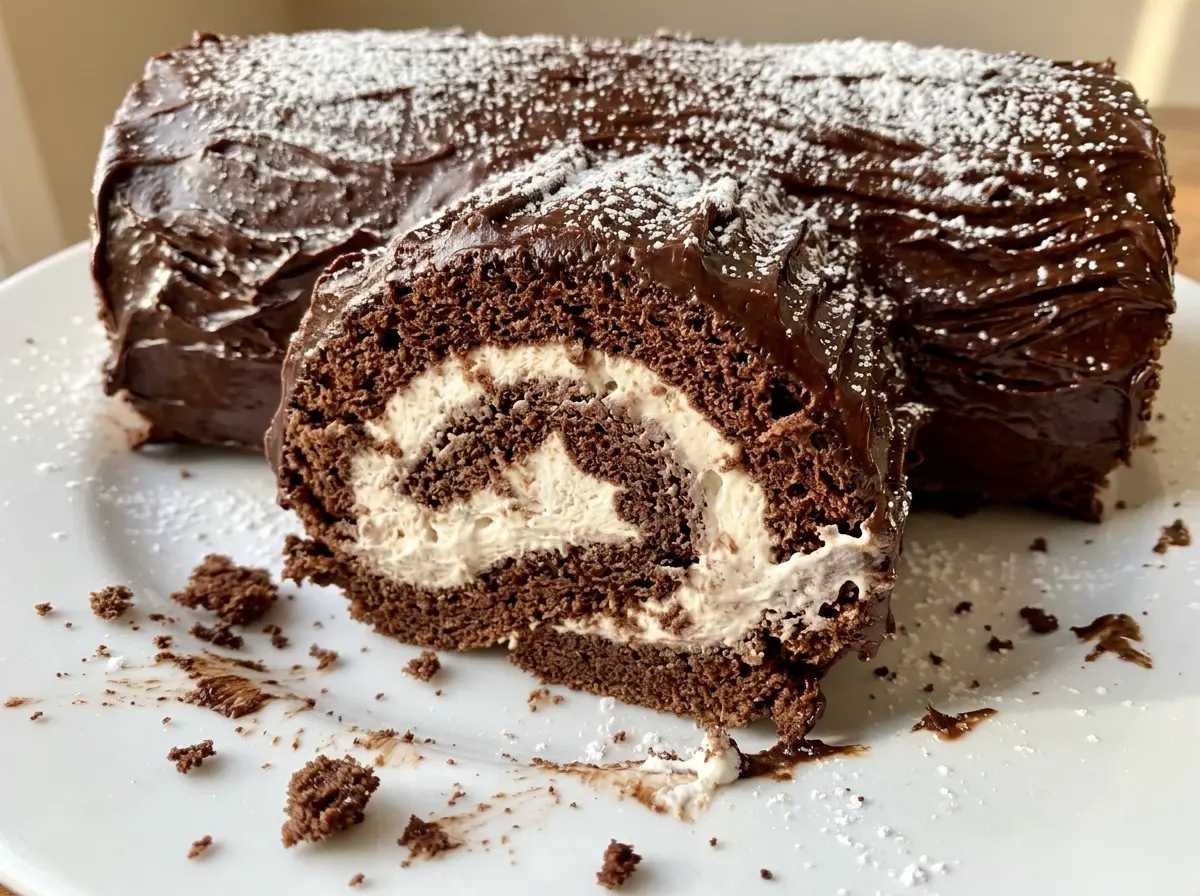
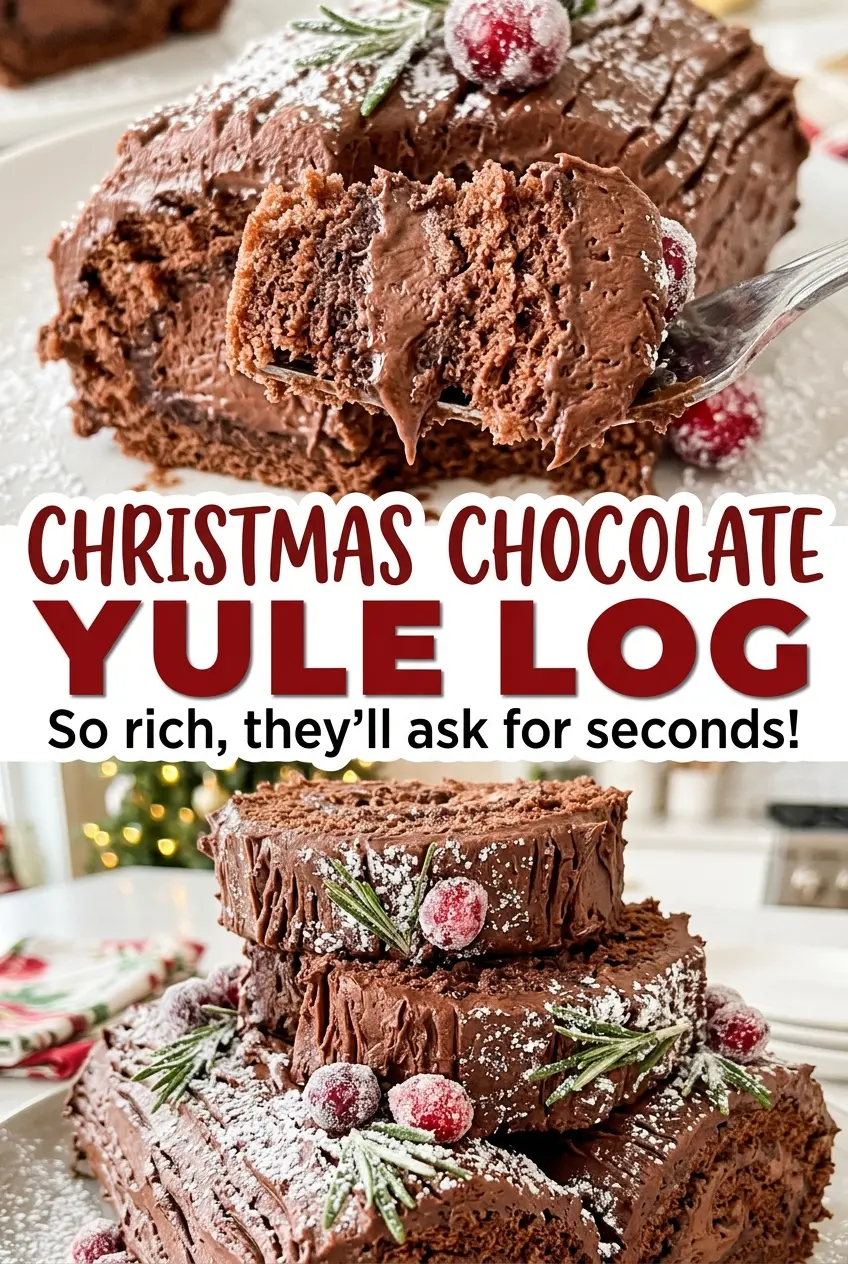
I like how the cake stays light enough to roll around the whipped cream, while the ganache gives the outside a rich, bark-like finish. The sponge gets its lift from egg whites beaten separately, then folded into the chocolate batter in stages. Keep your folding gentle and stop when the white streaks disappear. Once it’s chilled, the log slices cleanly to show off the cream swirl inside.
Kitchen Note
Ganache goes from pourable to spreadable as it cools, so give it the full cooling time and stir it now and then. If it still slides off the log, let it sit a little longer before decorating.
Save this Christmas Chocolate Yule Log for a celebration dessert with a soft chocolate spiral, whipped cream filling, and fork-drawn ganache bark.
Why Separate Egg Whites Keep This Chocolate Roll Flexible
A thin rolled cake needs to bend without the help of a heavy, dense crumb. Here, the yolks and part of the sugar make a thick base, while the whites are beaten with the remaining sugar until they hold stiff, glossy peaks. Those whites carry air into the batter, giving the sponge enough lift to roll around its filling.
That structure depends on keeping the foam intact. Fold the whites in three additions rather than stirring them all in at once; each addition loosens the chocolate mixture before the next goes in. Stop as soon as no white streaks remain. A few careful folds preserve more of the air than brisk mixing, and that makes a more pliable cake that’s less likely to split when you roll it.
What the Cocoa, Chocolate, and Cream Each Bring to the Log
- Unsweetened cocoa powder — It brings chocolate flavor to the sponge without adding the sweetness or extra bulk of a chocolate bar. Use unsweetened cocoa, not sweetened hot cocoa mix. Sifting it with the flour helps keep dry pockets out of the batter.
- All-purpose flour — It gives the sponge enough structure to hold its spiral. A one-to-one gluten-free baking flour blend is the most practical swap, though the cake may be more delicate; see the variation below. Sift it with the other dry ingredients so it folds in evenly.
- Large eggs — The yolks add body to the chocolate base, and the whites provide the lift that makes rolling possible. Separate them carefully; even a little yolk in the whites can keep them from becoming foamy and glossy. There isn’t a simple egg substitute that gives this sponge the same flexible structure.
- Heavy cream — It does two different jobs: whipped cream makes a light filling, and hot cream turns chopped chocolate into ganache. A lighter cream won’t whip into the same stable filling, so stick with heavy cream here.
- Semisweet chocolate — Finely chopped chocolate melts evenly when the steaming cream is poured over it. A good everyday semisweet bar works well; chopping it small matters more than buying an expensive brand. Bittersweet chocolate works as a swap if you want a less-sweet, more assertive ganache.
- Powdered sugar — It sweetens the filling and keeps the towel from sticking to the warm cake. Keep the two uses separate: the portion for the towel is there to help with rolling, not to sweeten the whipped cream.
The Roll, Filling, and Bark: Four Stages That Set the Shape
Build a light chocolate sponge
Heat the oven to 350°F and line a 10×15-inch jelly-roll pan with parchment, spraying the parchment and exposed sides. Beat the yolks with part of the granulated sugar until thick and pale, then mix in the vanilla and fold in the sifted dry ingredients. In a clean bowl, beat the whites until foamy, gradually add the remaining sugar, and continue until the peaks are stiff and glossy. Fold the whites into the chocolate mixture in three additions, then spread the batter evenly in the pan.
Bake just until the cake springs back
Bake for 10 to 12 minutes, checking for a sponge that springs back when lightly touched. If it feels wet or leaves a dent, it needs more time; avoid baking it until it feels firm and dry, since a thin cake can become brittle. While it bakes, dust a clean kitchen towel with powdered sugar. Have the towel ready before the pan comes out, because the warm cake needs to be rolled promptly.
Roll warm, then cool the wrapped sponge
Invert the warm cake onto the sugared towel and peel away the parchment. Starting at a short end, roll the cake and towel together, then set it seam-side down on a rack to cool for 1 hour. The towel keeps the layers from sticking to each other as the cake cools into its rolled shape. Handle the sponge gently as you unroll it later; it should bend rather than feel rigid.
Fill, branch, and coat with ganache
Heat the portion of heavy cream for the ganache until steaming, pour it over the finely chopped chocolate, and let it stand for 5 minutes before stirring smooth and mixing in the butter. Cool it for 45 to 60 minutes, stirring occasionally, until spreadable; meanwhile, beat the remaining cream with powdered sugar to medium-stiff peaks. Spread the filling over the unrolled cake, leaving a 1/2-inch border at the far edge, then reroll without the towel and set the log seam-side down. Chill for 30 minutes, trim the ends, attach a 2-inch diagonal piece to the side with a little ganache, and cover the outside with the rest; draw fork lines through the coating, then refrigerate for at least 1 hour before slicing.
Three Ways to Change the Look or Chocolate Balance
Make it a gluten-free chocolate log
Replace the all-purpose flour with a one-to-one gluten-free baking flour blend. The sponge may feel more fragile as you roll it, so keep the towel snug around the warm cake and unroll it gently once cool; the chocolate and cream layers stay the same.
Use bittersweet chocolate for a darker finish
Swap bittersweet chocolate for the semisweet chocolate in the ganache. The coating will taste less sweet and more intensely chocolatey, which makes a nice contrast to the lightly sweetened whipped cream. Chop it finely so it melts evenly in the hot cream.
Keep the log straight and simple
For a clean cylinder instead of a branched log, skip cutting and attaching the diagonal piece. Coat the whole rolled cake with ganache and draw the bark lines along its length; you’ll get the same filling and chocolate finish in a simpler shape.
Storage and Serving
- Refrigerator: Cover the cake and refrigerate for up to 3 days. The whipped cream filling softens a little over time, but the log will stay sliceable when chilled.
- Freezer: Freeze individual slices in an airtight container for up to 1 month. Thaw them in the refrigerator; the whipped cream may lose some of its airy texture.
- Serving: Serve chilled, when the filling and ganache are firm. Don’t leave the cream-filled cake sitting out for an extended stretch.
Questions That Come Up When Rolling a Yule Log
Christmas Chocolate Yule Log
Ingredients
Equipment
Method
- Heat the oven to 350°F.
- Line a 10x15-inch jelly-roll pan with parchment paper and coat the parchment and exposed sides of the pan with nonstick cooking spray.
- Beat the egg yolks with 1/3 cup granulated sugar in a large bowl until thick and pale, about 2 to 3 minutes.
- Mix in the vanilla.
- Sift the flour, cocoa powder, baking powder, and salt into the yolk mixture, then fold just until combined.
- In a clean bowl, beat the egg whites until foamy.
- Gradually beat in the remaining 1/3 cup granulated sugar until stiff, glossy peaks form, about 2 to 3 minutes.
- Fold the egg whites into the chocolate mixture in three additions until no white streaks remain.
- Spread the batter evenly in the prepared pan.
- Bake for 10 to 12 minutes, until the cake springs back when lightly touched.
- Dust a clean kitchen towel with 1/4 cup powdered sugar.
- Invert the warm cake onto the towel and peel off the parchment.
- Roll the cake and towel together from a short end, then cool seam-side down on a rack for 1 hour.
- Heat 3/4 cup heavy cream in a small saucepan over medium heat until steaming.
- Pour it over the chocolate and let stand for 5 minutes.
- Stir smooth and mix in the butter.
- Cool for 45 to 60 minutes, stirring occasionally, until spreadable.
- Beat the remaining 1 1/2 cups heavy cream with the remaining 2 tablespoons powdered sugar until medium-stiff peaks form, about 2 to 3 minutes.
- Gently unroll the cooled cake.
- Spread the whipped cream evenly over it, leaving a 1/2-inch border at the far edge.
- Reroll the cake without the towel and place it seam-side down on a serving platter.
- Refrigerate the cake for 30 minutes to firm the filling.
- Trim the ends, then cut a 2-inch diagonal piece from one end and attach it to the side of the log with a little ganache.
- Spread the remaining ganache over the outside and draw lines through it with a fork to resemble bark.
- Refrigerate for at least 1 hour before slicing and serving.