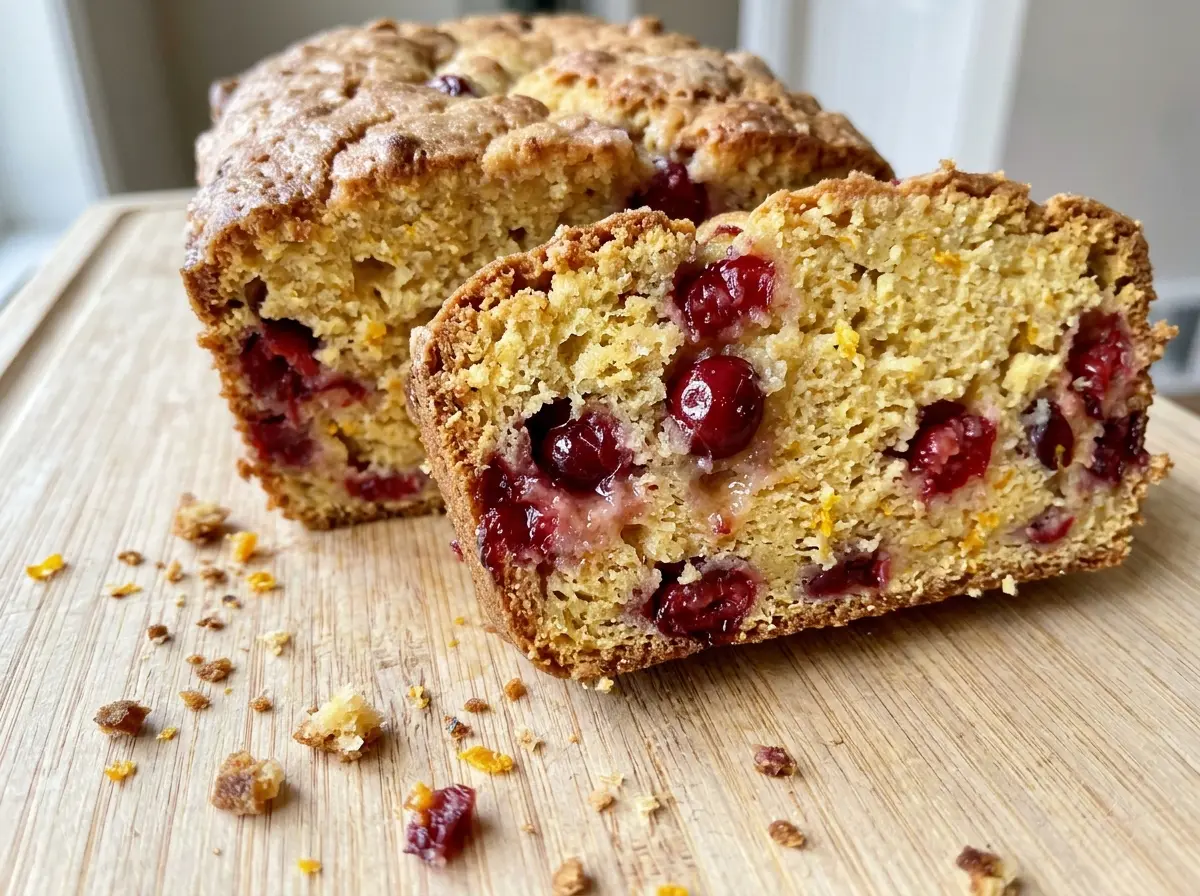
At about the hour mark, the orange scent gets ahead of the loaf, while the center still needs a little time in the oven. That’s the moment I pay close attention to with Christmas cranberry orange bread: a toothpick should come out with a few moist crumbs, not wet batter and not perfectly clean.
The batter comes together in two bowls, and the cranberries go in last so they stay in distinct pockets instead of getting crushed into the orange mixture. I keep the stirring brief once the wet and dry ingredients meet. That’s how the slices hold together with a tender crumb rather than turning heavy.
Give the loaf its full cooling time before slicing. The finished bread has a bright orange aroma, tart cranberry bites, and a soft center beneath its golden crust.
Kitchen Note
When you roughly chop a large cranberry, cut through it cleanly instead of pressing down until it’s crushed. That keeps the batter from picking up too much cranberry juice before the berries are folded in.
Save this Christmas cranberry orange bread for a bright, tart slice with a tender orange-scented crumb.
Why This Loaf Uses Both Baking Powder and Baking Soda
Using two leaveners in one quick bread isn’t accidental. Baking powder supplies lift as the batter bakes, while baking soda reacts with the acidity in the orange juice. Together, they help this loaf rise without relying on yeast or a long rest.
That balance also makes the mixing stage worth handling gently. Once the orange juice meets the dry ingredients, the leaveners start doing their work. Stir just until the dry streaks disappear; beating the batter smooth doesn’t add useful lift, and extra mixing can make the crumb tougher.
The cranberries bring their own contrast. Their tartness cuts through the sweetness of the crumb, so the loaf tastes distinctly fruity rather than like a plain sweet bread with orange scent. Fold them in after the batter is combined, and you’ll keep those tart bites spread through the slices without working the batter more than necessary.
How Orange Juice, Zest, and Butter Shape the Crumb

- Orange juice and zest — They contribute in different ways: juice adds moisture and acidity, while finely grated zest brings fragrant orange oils. Since both define the orange character, use juice with a clean, recognizable orange taste and grate only the colored peel; the white pith underneath is bitter.
- Unsalted butter — Melted butter makes a rich, tender crumb without needing a mixer. Let it cool before whisking it with the eggs and juice so it blends smoothly instead of feeling hot against the eggs.
- All-purpose flour — It gives the loaf enough structure to hold the fruit while staying soft. Spoon it into the measuring cup and level it off rather than packing the cup; too much flour is an easy way to end up with a dry, tight slice.
- Eggs — They bind the batter and help the loaf hold its shape once sliced. Whisk them thoroughly with the liquid ingredients so there aren’t streaks of egg white in the finished crumb.
- Cranberries — Fresh and frozen both work here. Choose firm fresh berries when buying them, or use frozen berries when that’s what you have; large berries should be roughly chopped so you don’t get oversized sour pockets in every slice.
- Sugar and leaveners — Granulated sugar sweetens the tart berries and helps the loaf brown. Baking powder and baking soda each contribute lift, so measure them carefully rather than estimating.
Mixing and Baking the Loaf Without a Tough Center
Prepare the Pan and Dry Ingredients
Heat the oven to 350°F and grease a 9×5-inch loaf pan, including the corners. Whisk the flour, sugar, baking powder, baking soda, and salt together in a large bowl so the leaveners are distributed throughout. A few seconds of thorough whisking now helps the loaf rise evenly rather than leaving a concentrated pocket of baking soda or powder.
Whisk the Orange Mixture
In a medium bowl, whisk the eggs, orange juice, finely grated zest, and melted, cooled butter until combined. The mixture should look blended, with no obvious streaks of egg white or butter. If the butter is still hot, give it more time to cool before adding it; the goal is a smooth liquid mixture, not cooked bits of egg.
Bring the Batter Together and Fold in the Berries
Pour the wet mixture into the dry ingredients and stir just until no dry streaks remain. The batter doesn’t need to look perfectly smooth, and a few small lumps are better than prolonged stirring. Gently fold in the cranberries at the end, using broad strokes so they’re distributed without crushing them or turning the batter pink.
Bake, Then Let the Crumb Set
Scrape the batter into the greased pan and bake for 55 to 65 minutes. Start checking near the shorter end of that range; insert a toothpick in the center, where it should come out with a few moist crumbs. Cool the loaf in its pan for 10 minutes, then turn it out onto a wire rack and let it cool completely before slicing, while the tender crumb is still warm and fragile.
Two Easy Ways to Change the Cranberry Bread
Use frozen cranberries for a winter bake
Frozen cranberries make this loaf possible when fresh berries aren’t available, and they keep the same sharp, tart contrast. Fold them in while frozen rather than thawing them first; thawed berries are softer and more likely to break up as you stir.
Toast a slice for crisp edges
Once the loaf is completely cool, toast individual slices until their edges are lightly crisp. The warm center softens while the cranberry pieces taste sharper against the toasted crumb; keep an eye on the slices because the sugar in the bread can brown quickly.
Storage and Reheating
- Refrigerator: Keep the cooled loaf in an airtight container for up to 5 days. The crumb firms up when chilled, so bring a slice toward room temperature if you prefer it softer.
- Freezer: Wrap the completely cooled loaf or individual slices tightly, then freeze for up to 2 months. Thaw wrapped slices at room temperature so they don’t dry out.
- Reheating: Warm a slice in the microwave for about 10 seconds, then add a few seconds if needed. Long heating can make the crumb tough, so use short bursts rather than microwaving it until piping hot.
Questions That Come Up When Baking Cranberry Orange Bread
Christmas Cranberry Orange Bread
Ingredients
Equipment
Method
- Preheat the oven to 350°F.
- Grease a 9x5-inch loaf pan.
- Whisk the flour, sugar, baking powder, baking soda, and salt together in a large bowl.
- In a medium bowl, whisk the eggs, orange juice, orange zest, and melted butter until combined.
- Pour the wet mixture into the dry ingredients and stir just until no dry streaks remain.
- Gently fold in the cranberries.
- Scrape the batter into the prepared pan and bake for 55 to 65 minutes, until a toothpick inserted in the center comes out with a few moist crumbs.
- Cool the bread in the pan for 10 minutes.
- Turn it out onto a wire rack and cool completely before slicing.