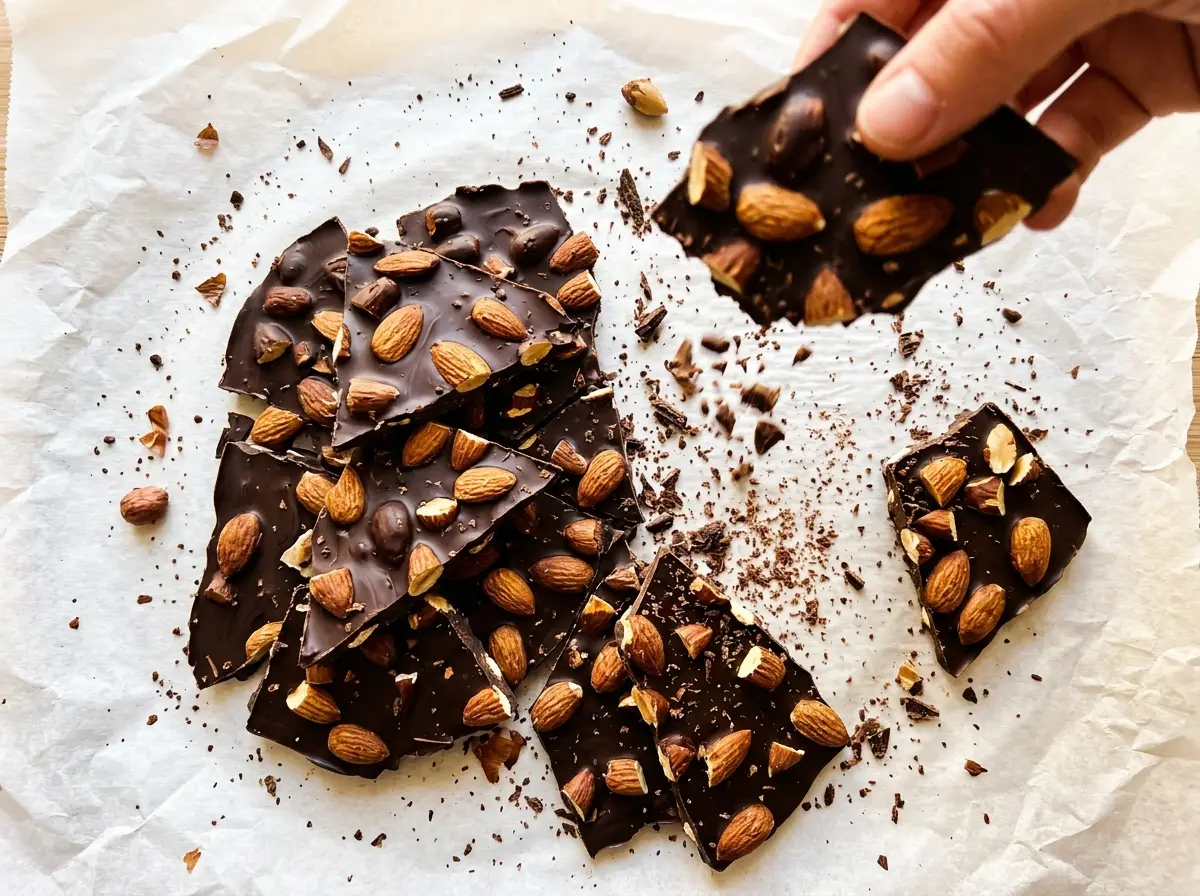
The almonds smell warm and toasty before the chocolate is even melted, and that contrast is what makes this simple bark worth taking the extra few minutes to make. Dark Chocolate Almond Bark brings crunchy, lightly toasted almonds together with a firm layer of dark chocolate, so every piece has a little snap and plenty of roasted-nut flavor.
I like this recipe because the steps are straightforward, but the small details matter: chop the chocolate finely, let the almonds cool before they meet it, and spread the chocolate in a level layer. The result breaks into pieces without one end being thick and clumsy while another is paper-thin. Keep the chocolate between 60% and 70% cacao, and you get a balanced bark that tastes distinctly dark without burying the almonds.
Kitchen Note
I stop microwaving when the chocolate is nearly melted, not completely liquid. A few small pieces disappear as I stir, and that’s a better cue than giving it one long blast and risking scorched chocolate.
Save this Dark Chocolate Almond Bark for a crisp, nutty treat made with toasted almonds and a thin layer of dark chocolate.
Why an Even Quarter-Inch Layer Makes Better Bark
Bark is meant to break, but the thickness of the chocolate decides whether it breaks into pleasant, easy-to-eat pieces or heavy slabs. A layer about 1/4 inch thick gives the almonds enough chocolate to cling to without hiding them under a thick coating. It also sets into a sheet that’s easy to snap apart once it’s firm.
Spread the chocolate all the way across the lined baking sheet, keeping the surface level rather than leaving a mound in the middle. If one side is much thicker, it will feel harder and more substantial than the rest, while thin spots can crack before you want them to. Don’t chase perfectly straight edges; an even surface matters more. When the chopped almonds are scattered across that level sheet, the finished pieces have a more consistent balance of chocolate and crunch.
How the Almonds and Cacao Shape the Bark

- Whole raw almonds — Toasting raw almonds brings out a deeper roasted flavor and gives them a crisp bite. Let them cool before roughly chopping so they don’t soften the chocolate when they land on top. If you need to leave out the almonds, the chocolate still sets into plain bark, but you’ll lose the crunch and toasted flavor.
- Dark chocolate — Choose finely chopped chocolate between 60% and 70% cacao. A good-tasting bar matters here because chocolate is the base of the whole treat; there’s nowhere for a flat or waxy flavor to hide. The lower end of the range tastes milder, while the higher end is more intense. The closest adjustment is to choose a different cacao percentage within that range rather than switching to a very sweet chocolate.
From Toasted Almonds to a Firm, Breakable Sheet
Toast the Almonds Until Fragrant
Heat the oven to 350°F and spread the whole raw almonds on a baking sheet. Toast them for 8 to 10 minutes, until they smell fragrant and look lightly golden. Let them cool, then roughly chop them; chopping while warm can make the pieces harder to handle and less crisp. Keep an eye on their color near the end, since almonds can move from lightly toasted to too dark quickly.
Melt the Chocolate Gently
Put the finely chopped chocolate in a dry microwave-safe bowl. Microwave at 50% power in 30-second intervals, stirring each time, until it’s nearly melted. Stir until smooth; if a few small pieces remain, keep stirring before adding more heat. Water in the bowl can make melted chocolate seize, so start with a completely dry bowl.
Spread and Top While the Chocolate Is Fluid
Line a 9×13-inch baking sheet with parchment paper, then spread the chocolate into an even layer about 1/4 inch thick. Work while it’s still easy to spread, smoothing out thicker patches as you go. Sprinkle the chopped almonds over the top, distributing them across the sheet rather than leaving a bare corner. Gently press them into the chocolate so they stay in place without disappearing under it.
Chill Until Firm, Then Break
Refrigerate the sheet for 20 to 30 minutes, until the chocolate is firm to the touch. If the center still feels soft, give it more time rather than trying to break it early. Once firm, lift or loosen the bark from the parchment and break it into pieces. The pieces don’t need matching edges; their varied shapes are part of the charm.
Two Simple Ways to Adapt This Almond Bark
Make It Dairy-Free
Replace the dark chocolate with dairy-free dark chocolate in the same 60% to 70% cacao range, then use the same melting and chilling method. The chocolate may set with a slightly different texture depending on the brand, but the toasted-almond topping still gives the bark its crunch.
Put More Almond in Every Bite
Roughly chop the toasted almonds a little finer before sprinkling them over the chocolate. Smaller pieces spread more evenly through the bark, so each broken piece gets a little crunch; the tradeoff is that you’ll lose some of the larger, distinct almond bites.
Storage and Serving
- Room temperature: Keep the bark in an airtight container in a cool, dry spot for up to 2 weeks. A warm room can soften the chocolate.
- Refrigerator: Store it airtight for up to 3 weeks. Let the closed container come to room temperature before opening to limit condensation on the chocolate.
- Freezer: Freeze it in an airtight container for up to 2 months. Thaw it while still sealed, then serve; there’s no reheating needed.
Questions That Come Up When Making Chocolate Bark
Dark Chocolate Almond Bark
Ingredients
Equipment
Method
- Heat the oven to 350°F.
- Spread the almonds on a baking sheet and toast for 8 to 10 minutes, until fragrant and lightly golden.
- Let the almonds cool, then roughly chop them.
- Line a 9x13-inch baking sheet with parchment paper.
- Put the chocolate in a dry microwave-safe bowl and microwave at 50% power in 30-second intervals, stirring each time, until nearly melted.
- Stir the chocolate until smooth.
- Spread the chocolate on the prepared baking sheet into an even layer about 1/4 inch thick, then sprinkle the chopped almonds over it and gently press them into the chocolate.
- Refrigerate for 20 to 30 minutes, until firm, then break into pieces.