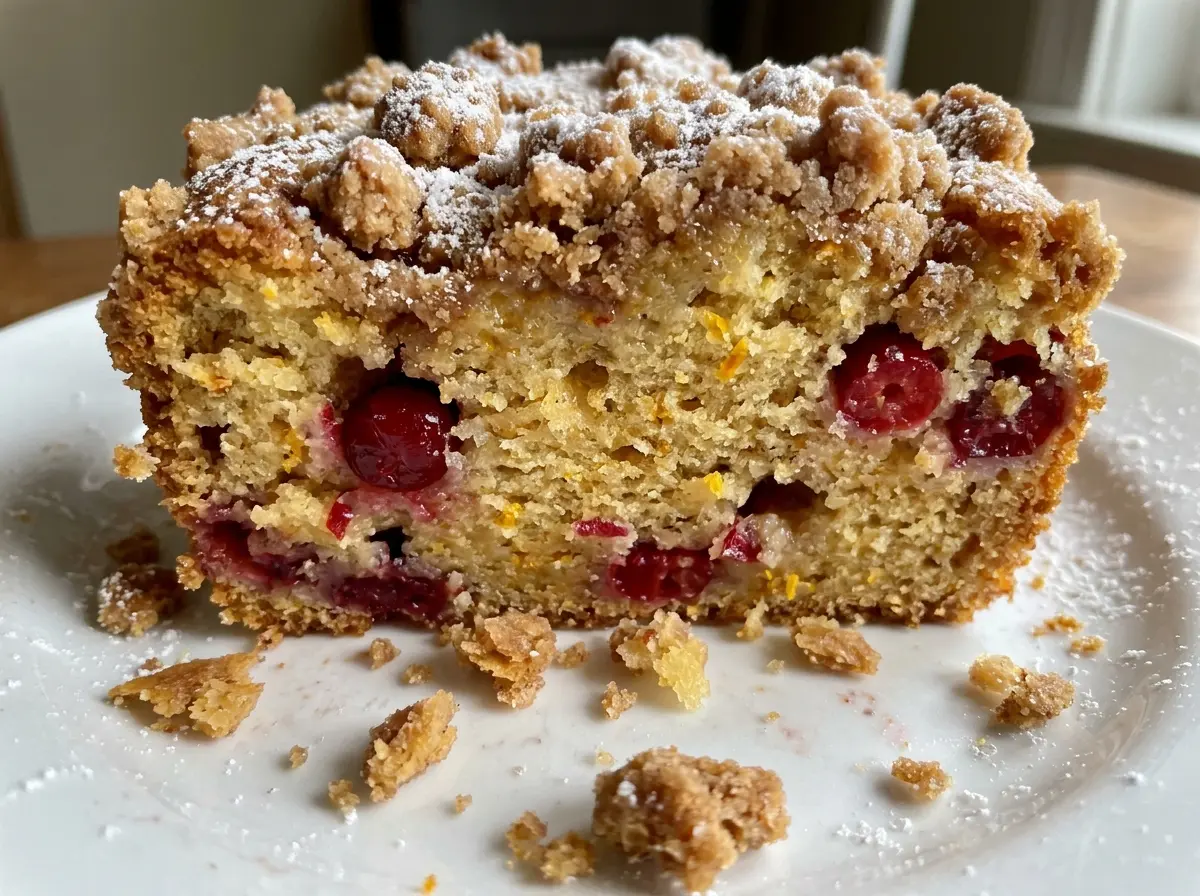
When the streusel is ready, it should look like coarse crumbs, not a smooth paste. That little contrast is what gives each square a buttery, cinnamon-scented top against the soft cake underneath. I make this Cranberry Orange Coffee Cake when I want something bright and tart, but still tender enough to serve with coffee.
The batter gets its lift from both baking powder and baking soda, while sour cream keeps the crumb soft and orange zest brings a fragrant citrus note. Fresh or frozen cranberries work here; frozen ones go in straight from the freezer. Their sharp, juicy pockets cut through the sweet cake and brown-sugar topping without needing any extra decoration.
Once the top turns golden and a toothpick in the cake portion comes out with a few moist crumbs, let the cake rest before slicing. The berries stay tart, the center stays tender, and every square gets a little streusel.
Kitchen Note
If you’re using frozen cranberries, don’t thaw them first. They fold into the batter more neatly while still frozen, and you won’t have a bowl of cranberry juice coloring the cake before it goes into the oven.
Save this Cranberry Orange Coffee Cake for a bake with tart cranberry pockets, bright orange zest, and a buttery streusel top.
Why Sour Cream and Orange Juice Belong in the Same Batter
Orange juice brings citrus flavor, but it isn’t doing the same job as the finely grated zest. The juice adds moisture and a little acidity; the zest carries fragrant orange oils that come through clearly in the baked cake. Using both gives the crumb a rounded orange flavor instead of relying on juice alone.
Sour cream adds another source of moisture and acidity. Along with the baking soda and baking powder, it helps create a tender cake that can hold the cranberries and streusel without turning dense. The balance depends on mixing gently once the flour goes in. Stir only until the dry streaks disappear, then fold in the berries; a long mixing session can make the crumb tougher than it needs to be.
That balance also explains why the batter isn’t a place to improvise with extra juice. The orange juice, sour cream, and dry ingredients are already working together. Keep the measured ingredients in proportion, and you get a soft, sliceable cake with a clear citrus note.
What the Cranberries, Orange, and Sour Cream Each Bring

- Cranberries — Fresh berries give distinct tart bites, while frozen cranberries offer the same sharp contrast without thawing first. Choose firm fresh berries without soft spots. The recipe works with either fresh or frozen, but dried cranberries aren’t a direct stand-in because they are sweeter and don’t bring the same juicy texture.
- Orange zest and juice — The two forms of orange do different things: zest supplies the most concentrated aroma, while juice gives the batter citrus flavor and moisture. Finely grate only the colored outer peel; the white pith underneath tastes bitter. For the juice, plain orange juice is enough, but keep the zest for a more fragrant cake.
- Sour cream — This adds moisture and a slight tang that suits the berries. Use regular sour cream for the intended rich, tender crumb. A lower-fat replacement changes the balance of fat and moisture, so it isn’t my first choice here.
- Unsalted butter — Softened butter creams with the granulated sugar to build air into the cake, while cold butter makes the streusel crumbs. Keep those temperatures distinct: soft butter should yield when pressed, and cold streusel butter should still feel firm as you work it in.
- All-purpose flour and leaveners — Flour gives the cake its structure, while baking powder and baking soda help it rise. Spoon flour into the measuring cup and level it rather than packing it down; too much flour can leave the cake dry and heavy.
- Light brown sugar and cinnamon — These season and sweeten the streusel, giving it a warm, caramel-like edge against the tart fruit. Packed brown sugar makes the topping hold together as coarse crumbs.
Building the Streusel and Keeping the Cake Tender
Make Coarse, Cold Streusel
Stir the flour, packed light brown sugar, and cinnamon together in a small bowl. Cut in the cold butter with a fork or your fingertips until the mixture forms coarse crumbs. Stop while the pieces still look crumbly; if the butter warms and smears, the topping will be less distinct. Refrigerate the streusel while you make the batter.
Cream the Butter and Sugar
Heat the oven to 350°F and grease a 9-inch square baking pan. Whisk the flour, baking powder, baking soda, and salt in a medium bowl so the leaveners are distributed through the flour. In a large bowl, beat the softened butter and granulated sugar for 2 to 3 minutes, until light and fluffy. If the mixture still looks dense and grainy, keep beating until it has noticeably lightened.
Add the Wet Ingredients, Then Fold
Beat in the eggs one at a time, then mix in the sour cream, orange zest, orange juice, and vanilla until combined. Add the flour mixture and stop mixing as soon as no dry streaks remain. Fold in the cranberries gently so they stay whole and the batter doesn’t get overworked. The finished batter should be evenly mixed, with berries distributed throughout rather than crushed into it.
Top, Bake, and Let It Set
Spread the batter evenly in the prepared pan, then scatter the chilled streusel over the top. Bake for 45 to 55 minutes, until the top is golden and a toothpick inserted into the cake portion comes out with a few moist crumbs. Check cake rather than fruit if the toothpick meets a cranberry. Cool the cake in the pan on a wire rack for at least 20 minutes before serving; that rest gives the tender crumb time to settle for cleaner squares.
Easy Ways to Change the Cranberry Orange Coffee Cake
Use Fresh Cranberries
Choose fresh cranberries when you want clearly defined, tart bites throughout the cake. Pick through them for soft or damaged berries before folding them into the batter. The flavor stays bright and sharp against the sweet streusel.
Make It Without the Streusel
For a less sweet, simpler top, leave off the streusel and bake the cranberry-orange batter in the same greased pan. The cake will lose the buttery, cinnamon crumb layer, but the fruit and orange still give each piece plenty of character.
Leave Out the Cranberries
For an orange-forward coffee cake, omit the cranberries and keep the rest of the batter and streusel unchanged. Without the tart fruit, the cake tastes sweeter and has a more even crumb, so it works well when you want a simpler slice.
Storage and Reheating
- Refrigerator: Keep the cooled cake covered in an airtight container for up to 4 days. The chilled crumb will be firmer than it is at room temperature.
- Freezer: Freeze individual pieces wrapped tightly, then place them in a freezer-safe container for up to 2 months. Thaw overnight in the refrigerator or until no longer frozen.
- Reheating: Warm a piece in the microwave in short bursts, about 10 seconds at a time. Long heating can dry the cake and soften the streusel too much.
Questions That Come Up While Baking This Cake
Cranberry Orange Coffee Cake
Ingredients
Equipment
Method
- In a small bowl, stir together the flour, brown sugar, and cinnamon.
- Cut in the cold butter with a fork or your fingertips until the mixture forms coarse crumbs.
- Refrigerate the streusel while you prepare the cake batter.
- Heat the oven to 350°F and grease a 9-inch square baking pan.
- In a medium bowl, whisk together the flour, baking powder, baking soda, and salt.
- In a large bowl, beat the softened butter and granulated sugar until light and fluffy, about 2 to 3 minutes.
- Beat in the eggs one at a time.
- Mix in the sour cream, orange zest, orange juice, and vanilla until combined.
- Add the flour mixture and mix just until no dry streaks remain.
- Gently fold in the cranberries.
- Spread the batter evenly in the prepared pan.
- Scatter the streusel over the top.
- Bake for 45 to 55 minutes, until the top is golden and a toothpick inserted into the cake portion comes out with a few moist crumbs.
- Cool in the pan on a wire rack for at least 20 minutes before serving.