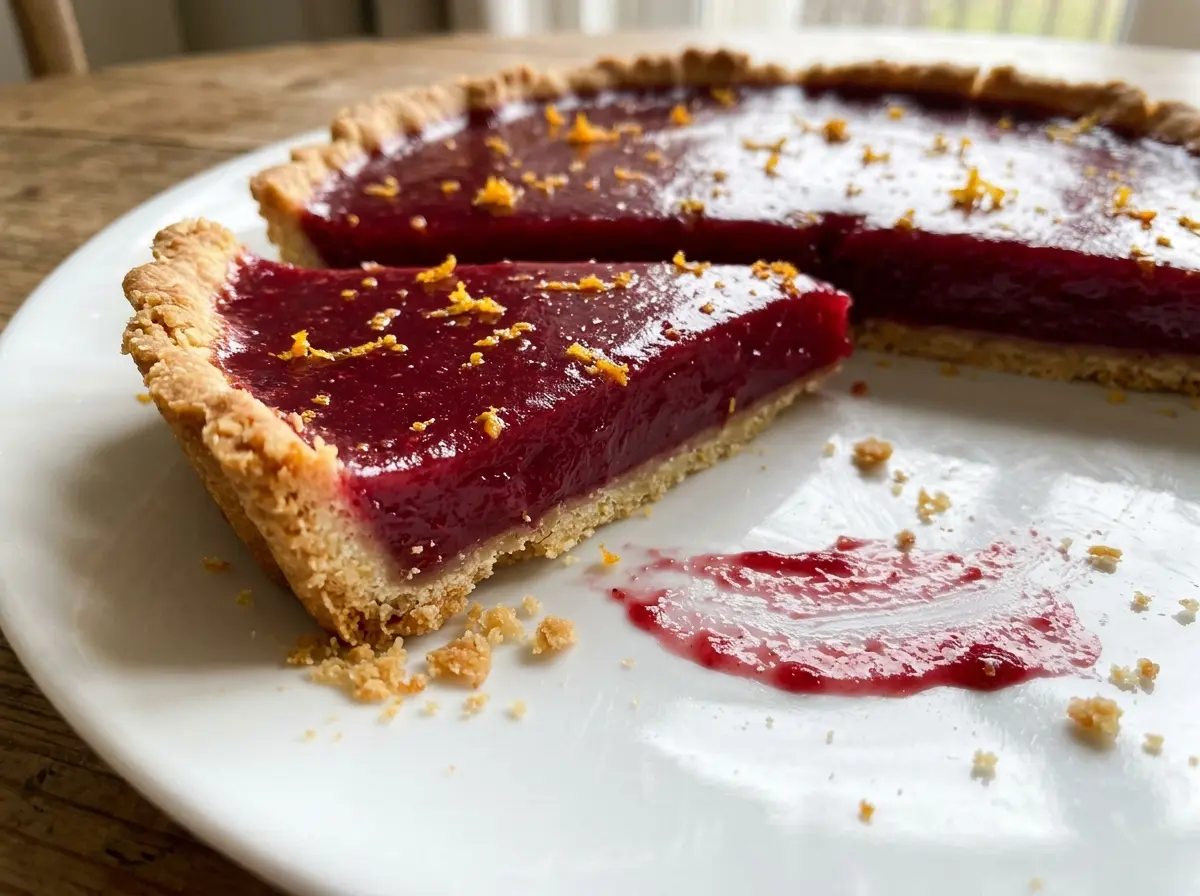
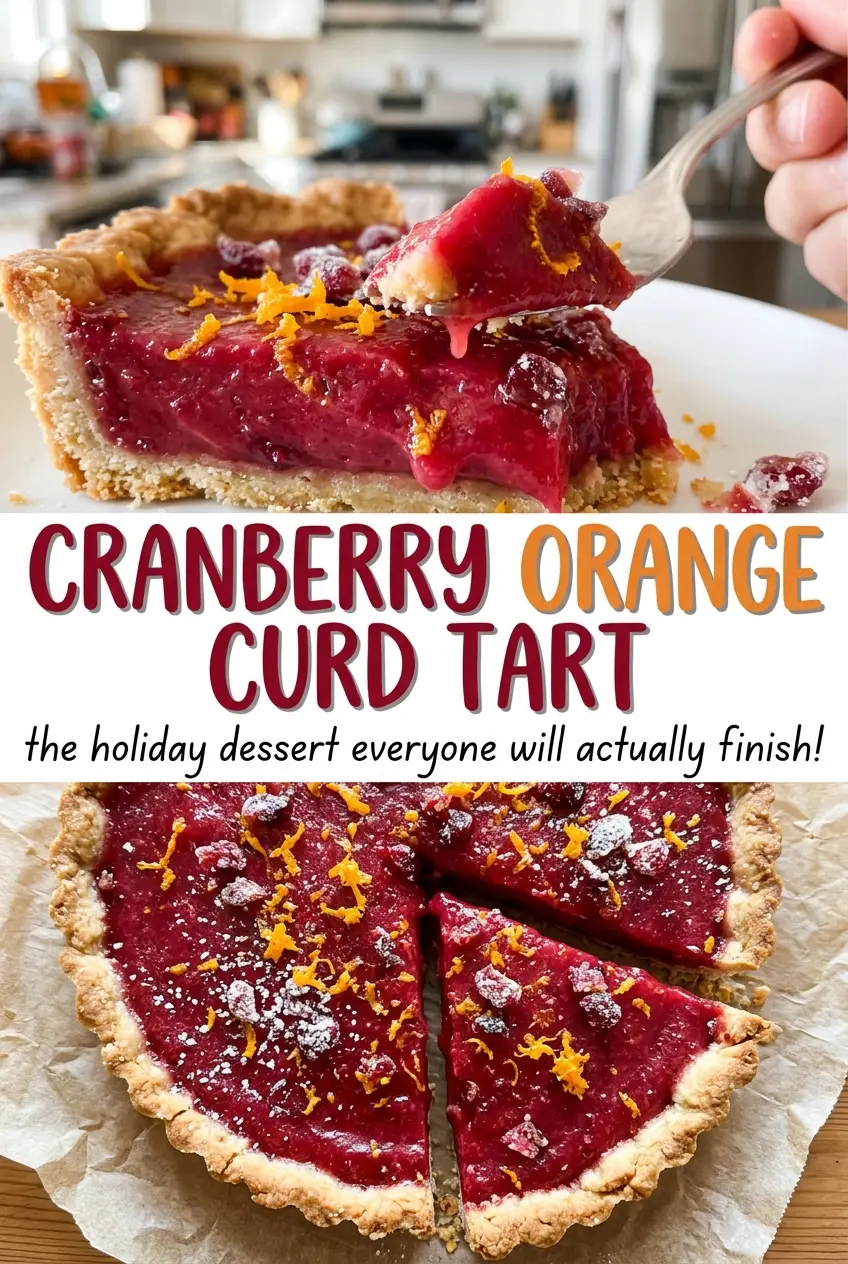
Fresh cranberries go from firm, tart berries to a bubbling ruby mash in a few minutes, and that color change is the first sign this tart is coming together. I strain the softened fruit before adding the eggs, so the filling tastes bright and smooth instead of seedy. In this Cranberry Orange Curd Tart, orange zest lifts the cranberry’s sharp edge, while a buttery pastry shell gives every slice a crisp place to land.
The curd cooks gently over simmering water rather than directly over a burner. That steady heat gives the eggs time to thicken the fruit without scrambling, and whisking keeps the mixture moving as it changes from loose puree to glossy curd. Once it’s chilled, the filling cuts cleanly and holds its shape, with a tender shell underneath and a vivid cranberry-orange finish.
Kitchen Note
I use an instant-read thermometer for the curd because the thickening happens gradually and the visual change can be easy to misjudge. Take the bowl off the heat when it reaches 170°F to 175°F, then whisk in the butter.
Save this Cranberry Orange Curd Tart for its tangy ruby filling, smooth citrus curd, and crisp golden shell.
A Pale Tart Shell Turns Soft Under Cranberry Curd
The filling is moist and sets in the refrigerator, so the shell needs to be fully baked before the curd goes in. A lightly baked crust might look fine at first, but it can soften under the filling before you slice it. Baking the shell until evenly golden gives it a firmer, drier base that stands up to the smooth curd.
That’s why I don’t rush the blind-baking stage or pour warm filling into a warm shell. The shell bakes with parchment and pie weights first, then finishes uncovered so the bottom and sides can color. Cooling it completely in the pan matters, too: the pastry firms as it cools, and the curd won’t be asked to set against residual heat. The contrast is what makes each bite work—the crisp, buttery pastry stays distinct from the soft, tart filling.
The Cranberries Set the Flavor; Yolks Set the Texture
- Fresh cranberries — They bring the tart’s concentrated cranberry flavor and natural pectin. Pick out any soft berries before cooking; the strained puree is the foundation of the curd, so fresh fruit gives the most reliable result.
- Orange juice and zest — Juice loosens the cranberries as they cook, while finely grated zest carries the fragrant orange oils into the filling. Freshly grated zest gives a brighter aroma; take care to grate the colored peel rather than the bitter white pith.
- Eggs and egg yolks — Whole eggs help the curd set, and the extra yolks give it a richer, silkier feel. The yolks are doing more than adding color, so I wouldn’t leave them out or replace them with extra whole eggs.
- Unsalted butter — Cold butter keeps the pastry tender when worked into the flour, and the separate pieces whisked into the curd make it smooth and rounded. Unsalted butter lets the measured salt in the crust stay in balance.
- All-purpose flour — It gives the shell enough structure to hold the filling while still breaking into a tender bite. Spoon it into the measuring cup and level it rather than packing it down, which can make the dough dry.
- Granulated sugar — A portion sweetens the pastry, while the larger portion balances the cranberries in the curd. The two uses are divided, so keep the crust sugar separate from the curd sugar as you prep.
From Pea-Size Butter to a Set, Glossy Curd
Bring the Pastry Together Without Overworking It
Whisk the flour, the crust portion of the sugar, and salt in a medium bowl. Work in the cold, cubed butter with your fingertips or a pastry blender until the pieces are about pea-size. Stir in the ice water just until the dough holds together when pressed; stop there, because a smooth, heavily worked dough bakes up less tender. Shape it into a disk, wrap it, and refrigerate it for 30 minutes.
Roll and Blind-Bake the Tart Shell
Roll the dough between two sheets of parchment into a 12-inch round, then fit it into a 9-inch tart pan with a removable bottom and trim the edge. Prick the bottom with a fork and freeze the shell for 15 minutes. Heat the oven to 375°F, line the chilled shell with parchment, and fill it with pie weights. Bake for 20 minutes, remove the parchment and weights, then bake for 8 to 12 minutes more, until the crust is evenly golden.
Soften the Cranberries and Strain the Puree
Combine the rinsed, picked-over cranberries and orange juice in a 2-quart saucepan. Cook over medium heat, stirring occasionally, until the berries have burst and softened; expect this to take 8 to 10 minutes. Press the mixture through a fine-mesh sieve into a medium heatproof bowl, then discard the skins and seeds. The puree should look smooth and vividly colored before you add the eggs.
Thicken the Curd Over Gentle Steam
Bring about 1 inch of water to a gentle simmer in the saucepan. Whisk the curd sugar, orange zest, eggs, and egg yolks into the strained puree, then set the bowl over the pan without letting it touch the water. Whisk constantly for 10 to 15 minutes, until the mixture looks thick rather than loose; keep the water at a gentle simmer instead of letting it boil hard. Remove the bowl from the heat and whisk in the small pieces of butter a few at a time until the curd is smooth.
Fill the Cooled Shell and Let It Set
Cool the tart shell completely in its pan before adding the filling. Pour in the curd and smooth it into an even layer, then refrigerate the tart for at least 4 hours, until set. Once it’s firm, remove the tart ring, slice, and serve. If the center still shifts when you move the pan, give it more chilling time before releasing the ring.
Two Useful Ways to Adapt This Cranberry Tart
A Gluten-Free Pastry Shell
Replace the all-purpose flour with the same amount of a cup-for-cup gluten-free baking blend made for pastry. The shell may be more delicate when you fit it into the pan, but the cranberry-orange curd stays the same; handle the dough gently and keep it between the parchment while rolling.
Serve the Curd Without the Pastry
For a crustless version, make the cranberry-orange curd and chill it in small serving dishes rather than pouring it into a tart shell. You’ll get the same tangy, silky filling in a spoonable format, without the crisp pastry contrast.
Storage and Reheating
- Refrigerator: Cover and refrigerate for up to 3 days. The pastry gradually softens as it sits against the curd.
- Freezer: I don’t recommend freezing the assembled tart; thawed curd can weep and the shell loses its crisp texture.
- Reheating: Serve it chilled rather than reheating it. Warmth loosens the set curd and softens the pastry.
Questions That Come Up When Making Cranberry Orange Curd Tart
Cranberry Orange Curd Tart
Ingredients
Equipment
Method
- In a medium bowl, whisk together the flour, 1/4 cup of the sugar, and salt.
- Work in 8 tablespoons cold butter with your fingertips or a pastry blender until the pieces are pea-size.
- Stir in the ice water just until the dough holds together when pressed.
- Gather the dough into a disk, wrap, and refrigerate for 30 minutes.
- Roll the dough between two sheets of parchment into a 12-inch round.
- Fit the dough into a 9-inch tart pan with a removable bottom and trim the edge.
- Prick the bottom with a fork and freeze for 15 minutes.
- Heat the oven to 375°F.
- Line the chilled shell with parchment and fill it with pie weights.
- Bake for 20 minutes.
- Remove the parchment and weights, then bake for 8 to 12 minutes more, until the crust is evenly golden.
- Cool the shell completely in the pan.
- Combine the cranberries and orange juice in a 2-quart saucepan and cook over medium heat, stirring occasionally, for 8 to 10 minutes, until the berries have burst and softened.
- Press the cranberry mixture through a fine-mesh sieve into a medium heatproof bowl.
- Discard the skins and seeds.
- Bring about 1 inch of water to a gentle simmer in the saucepan.
- Whisk 1 cup of the sugar, orange zest, eggs, and egg yolks into the strained cranberry puree.
- Set the bowl over the pan, making sure it does not touch the water.
- Cook, whisking constantly, for 10 to 15 minutes, until the curd is thick and reaches 170°F to 175°F on an instant-read thermometer.
- Remove the bowl from the heat and whisk in the remaining 6 tablespoons butter a few pieces at a time until smooth.
- Pour the curd into the cooled tart shell and refrigerate for at least 4 hours, until set.
- Remove the tart ring, slice, and serve.