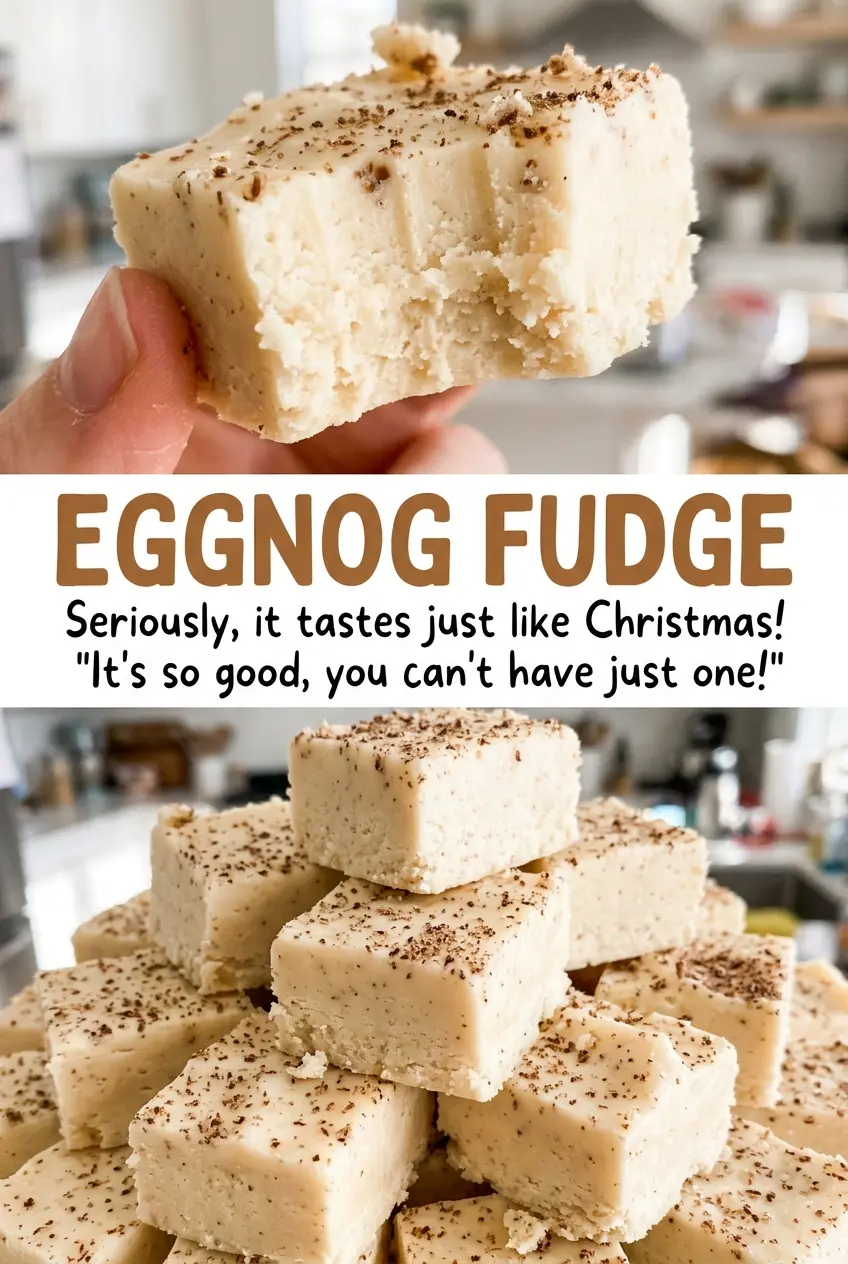
The sugar mixture gets glossy as the butter melts, then suddenly starts bubbling across the surface. That change is your cue to keep stirring and watch the thermometer closely. I make this eggnog fudge in a heavy-bottomed saucepan so the heat stays steady while the sugar cooks, and the result is a smooth, firm slab that cuts into neat pieces.
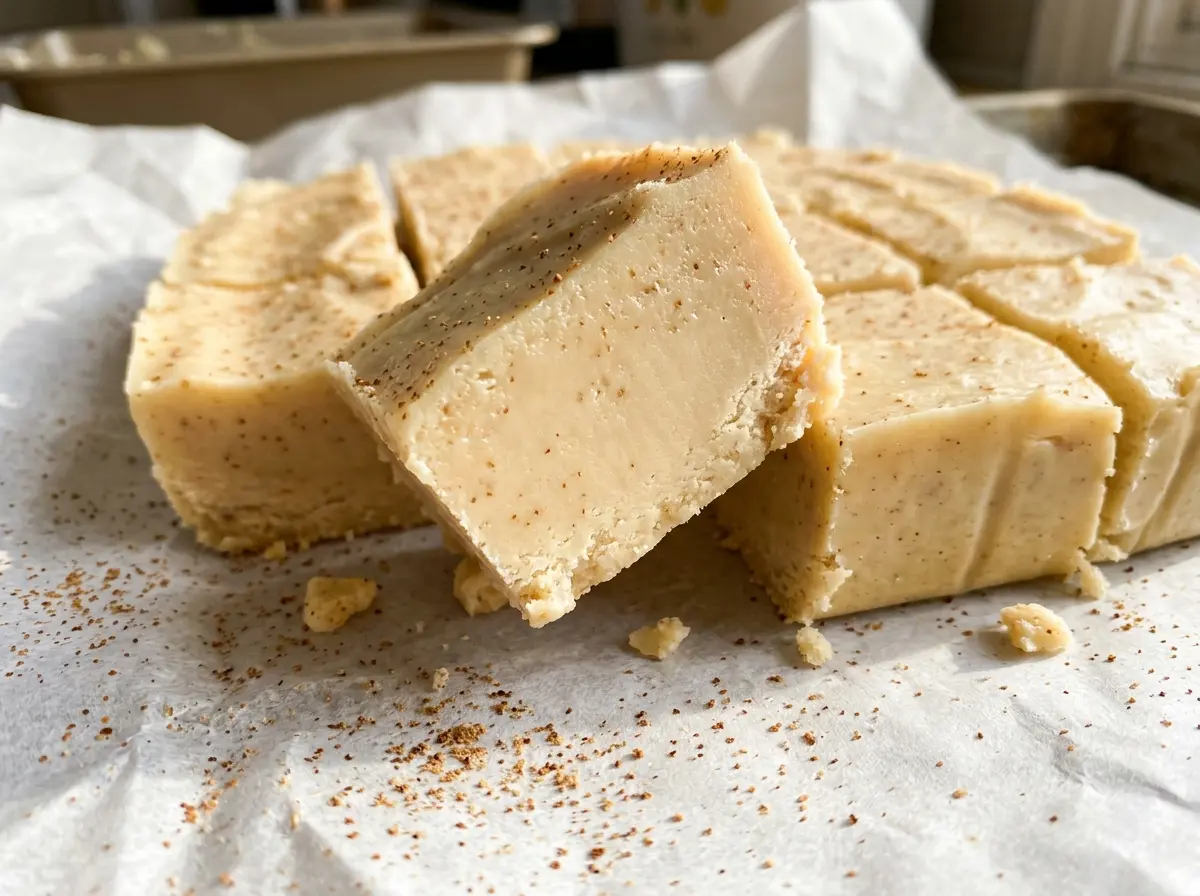
Eggnog brings its own creamy sweetness and familiar nutmeg note, so this fudge doesn’t need a long list of extras. White chocolate chips and marshmallow creme melt into the hot mixture after it comes off the heat, making the texture easy to spread without another round of cooking. Once the pan has cooled and the fudge is firm, the parchment overhang makes it simple to lift the slab out for cutting.
Kitchen Note
Leave the parchment overhanging on two sides, not tucked flush with the pan. Once the slab is firm, you can lift it straight out without bending the fudge or scraping the pan.
Save this eggnog fudge for a smooth, nutmeg-scented treat that cuts into 48 shareable squares.
Why Eggnog Fudge Can Turn Grainy Before It Sets
Fudge can feel grainy even when it reaches the right temperature. The trouble often starts earlier, while sugar crystals are still visible in the mixture. If the sugar hasn’t dissolved before the mixture comes to a boil, those crystals can carry through into the finished candy. I stir the sugar, butter, and eggnog together until the mixture looks smooth, then keep stirring as it cooks.
Once the mixture boils, don’t treat the thermometer reading as the only thing happening in the pan. The syrup is concentrating as water cooks away, and a few degrees make a noticeable difference to how the fudge sets. A reading below the target can leave the pieces soft; cooking past it can make them dry or crumbly. The steady stirring and measured endpoint work together: one helps the mixture stay even, and the other tells you when it’s ready for the chocolate and marshmallow creme.
A heavy-bottomed saucepan helps the mixture heat more evenly than a thin pot, which is useful when sugar is cooking over direct heat. Use the full 4-quart size so there’s room to stir comfortably as the mixture boils. If you see undissolved sugar before boiling, keep stirring until it disappears rather than rushing ahead.
What Gives Eggnog Fudge Its Creamy Set
- Eggnog — It supplies the liquid and the signature custardy, spiced taste. Choose eggnog you enjoy drinking, since its flavor stays noticeable in the finished fudge. There isn’t a clean one-for-one swap that keeps both the taste and the balance of liquid the same.
- White chocolate chips — They melt into the hot sugar mixture and add sweetness and body. Store-brand chips work here; if you prefer a substitute, chopped white chocolate baking bar can replace the chips ounce for ounce, using the same 12 ounces. The result may set a little differently because products vary in how they melt.
- Marshmallow creme — This helps give the fudge a smooth, soft bite. Use the creme rather than trying to replace it with whole marshmallows; they don’t behave exactly the same way when stirred into the mixture.
- Unsalted butter — It rounds out the sweetness and helps the cooked base feel rich instead of brittle. Unsalted butter keeps the salt level predictable, and a standard grocery-store brand is fine.
- Vanilla and ground nutmeg — Both are easy to notice in a simple fudge, so use vanilla extract that tastes good to you and fresh-smelling ground nutmeg. The nutmeg gives the eggnog its familiar warm note without needing another spice.
- Granulated sugar — Regular granulated sugar is the right choice for this cooked candy. It dissolves into the butter and eggnog base and then concentrates as it boils; I wouldn’t trade it for a different sweetener in this formula.
From Smooth Sugar Syrup to a Firm Fudge Slab
Line the Pan Before the Sugar Goes on the Heat
Line a 9×13-inch baking pan with parchment, leaving an overhang on two sides. Set the pan near the stove so it’s ready as soon as the fudge mixture is smooth. The parchment makes it possible to lift the cooled slab out for cutting, so don’t skip the overhang.
Dissolve the Sugar in the Eggnog Base
In a heavy-bottomed 4-quart saucepan, combine the granulated sugar, unsalted butter, and eggnog over medium heat. Stir constantly until the butter has melted and the sugar has dissolved; the mixture should look even rather than sandy. Keep the pan moving with a steady stir so the base heats evenly. Only bring it to a boil once the sugar is dissolved.
Cook the Boiling Mixture to Its Endpoint
Bring the mixture to a boil, stirring constantly, and cook until a candy thermometer reads 234°F. This usually takes about 5–8 minutes. Stay with the pan and keep stirring rather than stepping away while it boils. Once it reaches the target, remove the saucepan from the heat.
Stir in the Melt-Ins and Let the Slab Firm
Off the heat, stir in the white chocolate chips, marshmallow creme, vanilla extract, and ground nutmeg until smooth. Work until no streaks of marshmallow creme or unmelted chips remain, then pour the mixture into the prepared pan and spread it evenly. Let it cool at room temperature until firm, about 2–3 hours. Lift it out with the parchment and cut it into 48 pieces.
Two Useful Ways to Adapt This Batch
A Dairy-Free Version
Use plant-based butter in place of the unsalted butter, dairy-free eggnog instead of regular eggnog, and dairy-free white chocolate chips. Choose marshmallow creme without dairy as well. These products vary in fat and sweetness, so the flavor and firmness may differ slightly from the original; keep the same proportions and cook to the same thermometer reading.
Make Smaller Candy-Bowl Pieces
For a smaller format, cut the firm slab into 96 pieces instead of 48. The pieces will be easier to pick up alongside other sweets, while keeping the same nutmeg-and-eggnog flavor. Use a sharp knife and make steady cuts through the slab.
Storage and Reheating
- Refrigerator: Keep the pieces in an airtight container for up to 2 weeks. Chilled fudge is firmer, so let it sit briefly at room temperature before serving.
- Freezer: Freeze the pieces in an airtight container, with parchment between layers, for up to 2 months. Thaw them in the refrigerator while still covered to limit condensation.
- Reheating: This fudge doesn’t need reheating. Don’t microwave it; warming can soften the pieces unevenly and make them messy to handle.
Questions That Come Up While Making Eggnog Fudge
Eggnog Fudge
Ingredients
Equipment
Method
- Line a 9x13-inch baking pan with parchment paper, leaving overhang on two sides.
- Combine the sugar, butter, and eggnog in a heavy-bottomed 4-quart saucepan over medium heat, stirring constantly until the butter melts and the sugar dissolves.
- Bring the mixture to a boil and cook, stirring constantly, until a candy thermometer reads 234°F, about 5–8 minutes.
- Remove the pan from the heat.
- Stir in the white chocolate chips, marshmallow creme, vanilla, and nutmeg until smooth.
- Pour the fudge into the prepared pan and spread it evenly.
- Let it cool at room temperature until firm, about 2–3 hours.
- Lift the fudge out using the parchment overhang.
- Cut it into 48 pieces.