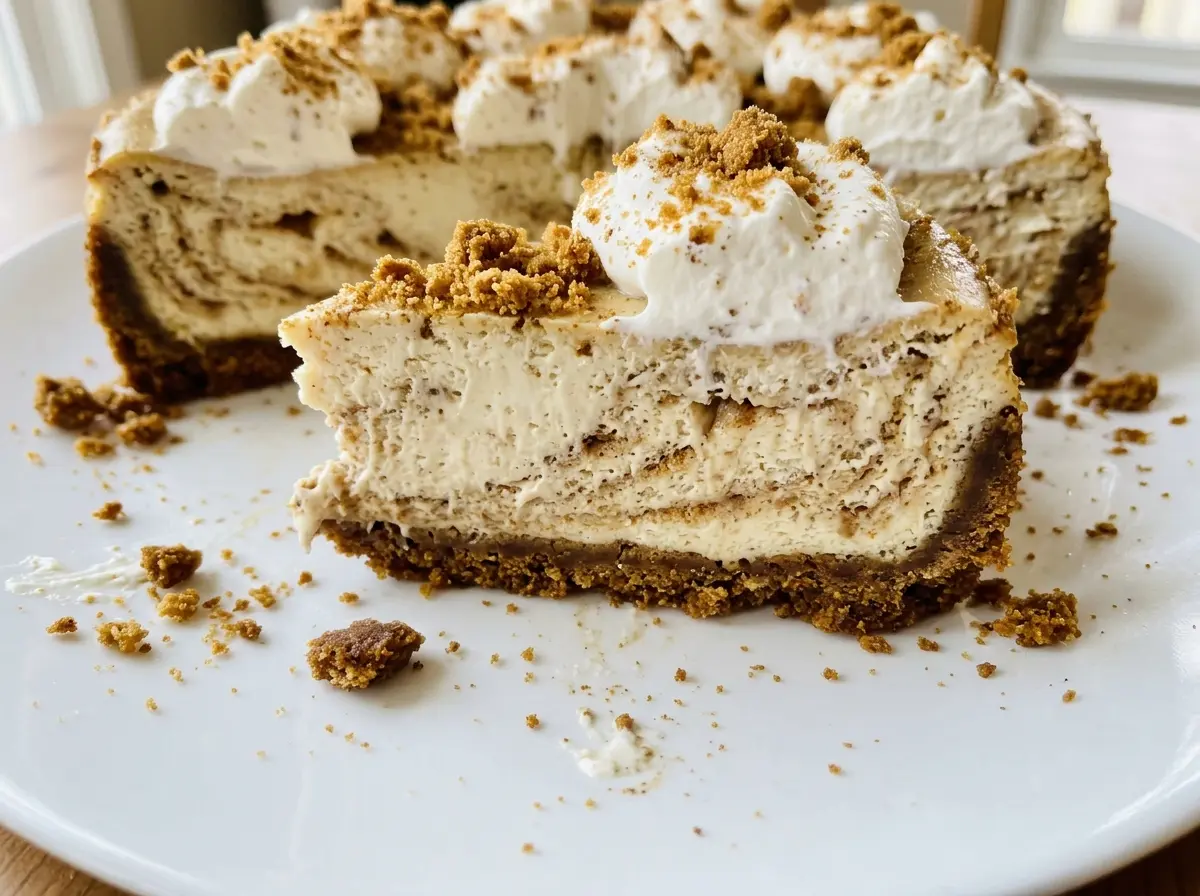
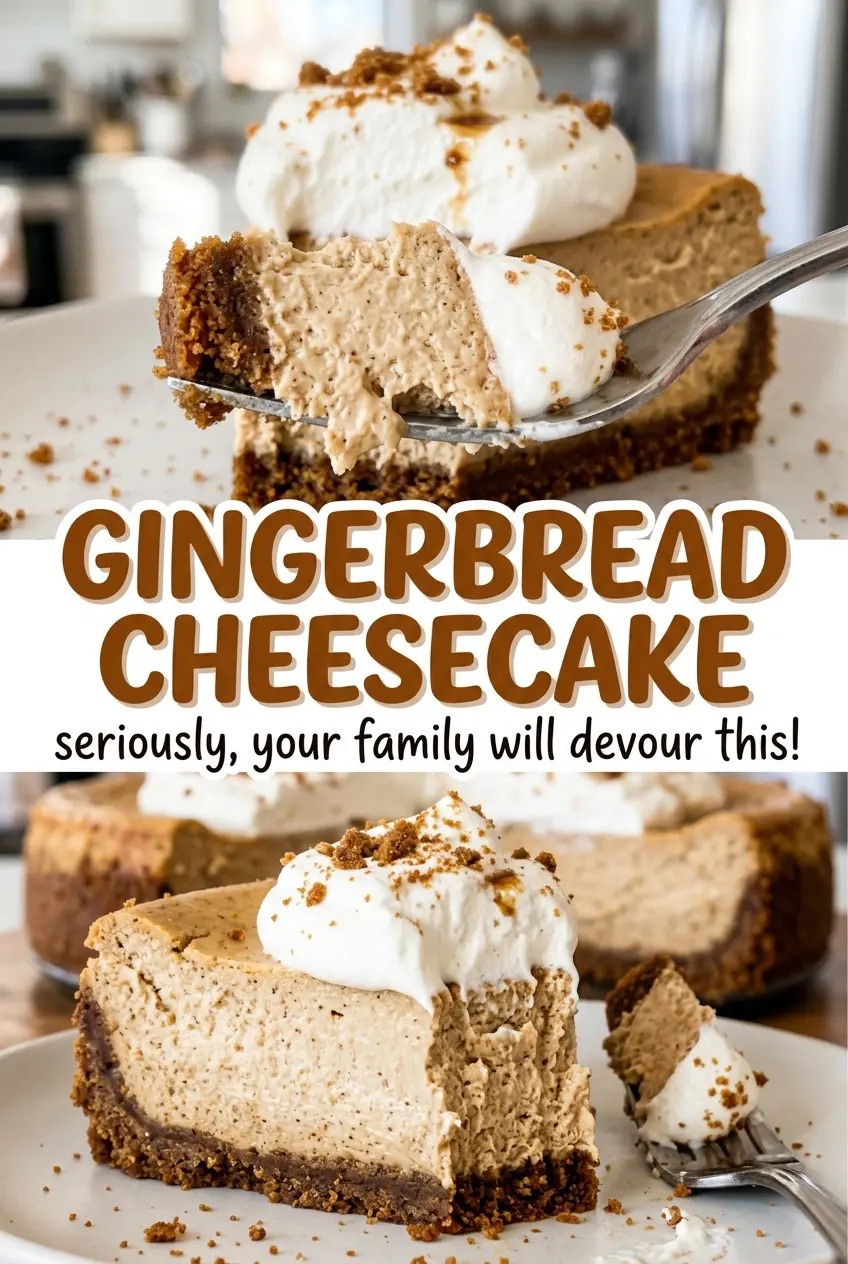
The edges can look ready while the center still moves when you nudge the pan. That gentle wobble is exactly what I want in this gingerbread cheesecake; baking it until the middle looks firm can leave the finished texture dry instead of creamy. The gingersnap crust gives each slice a crisp, spiced base, while molasses and warm spices make the filling taste unmistakably like gingerbread.
I bake the cheesecake in a water bath, then let it cool gradually inside the turned-off oven. Those two parts keep the temperature change from being abrupt, which helps the filling set smoothly instead of puffing and sinking. Room-temperature dairy and eggs also blend into a more even filling, so you don’t have to beat the mixture harder to chase down lumps. Once it’s chilled, the slices hold their shape but stay soft and rich, with a little snap from the cookie crust.
Kitchen Note
I use an instant-read thermometer because the center’s gentle wobble can make it hard to judge by sight alone. When it reaches 160°F, take the pan out of the water bath and let the slow cooling finish the job.
Save this gingerbread cheesecake for its crisp gingersnap crust and creamy, molasses-spiced center.
Why This Cheesecake Needs a Water Bath, Not Just a Lower Oven
A low oven temperature helps, but it doesn’t protect the edges from heating faster than the center. A water bath surrounds the springform pan with gentle, moist heat, giving the filling time to set evenly. That matters with a deep cheesecake like this one: the outside can turn firm while the center is still catching up if the pan sits directly in the oven’s dry heat.
The foil around the springform pan is what keeps the water where it belongs. I wrap the outside in three layers of heavy-duty foil, pressing the foil up the sides without tearing it, then set the pan inside a 12×16-inch roasting pan. Pouring boiling water into the roasting pan after the cheesecake is in place avoids carrying a full pan of hot water across the kitchen. The bath isn’t fussy, but a gap in the foil can let water seep into the crust, so take a moment to check the wrap before you pour.
What Gives the Crust and Filling Their Gingerbread Character
- Gingersnap crumbs — Finely crushed, crisp cookies make a sturdy base with more spice than a plain cookie crust. Choose cookies that taste good on their own; stale or soft ones won’t give the same crisp texture. Crush them evenly so the crust presses into a compact layer instead of breaking apart in coarse chunks.
- Unsulphured molasses — This brings the deep, slightly bittersweet note that makes the filling read as gingerbread rather than just spiced cheesecake. Use unsulphured molasses for its balanced sweetness; blackstrap is more bitter and can overpower the dairy and spices.
- Cream cheese and sour cream — Cream cheese gives the filling its body, while sour cream loosens the texture and adds a little tang. Let both come to room temperature before mixing; cold cream cheese is more likely to leave lumps, and cold sour cream can make the batter less uniform.
- The ground spices — Ginger and cinnamon lead, with cloves and nutmeg filling out the warmer notes. Fresh, fragrant spices make a noticeable difference here; if a jar smells faint, its flavor will be faint in the finished cheesecake too.
- Eggs and flour — The eggs set the filling as it bakes, and the flour helps support that smooth sliceable texture. Room-temperature eggs blend more readily into the batter, while all-purpose flour is the right choice for this small amount of structure.
Build the Crust, Mix the Filling, and Bake It Gently
Press and bake the gingersnap base
Heat the oven to 350°F and coat the bottom and sides of a 9-inch springform pan with nonstick cooking spray. Stir the crumbs with the melted butter, packed brown sugar, and salt until the mixture looks evenly moistened, then press it firmly over the bottom of the pan. Bake for 10 minutes and set the pan on a rack to cool. Lower the oven to 300°F while the crust cools.
Mix a smooth, evenly spiced filling
Beat the softened cream cheese and granulated sugar in a large bowl with an electric mixer on medium speed, scraping down the bowl as needed, until smooth. Beat in the molasses, sour cream, and vanilla until the mixture is even. In a small bowl, whisk the flour with the ginger, cinnamon, cloves, nutmeg, and salt, then beat that mixture into the filling on low speed. Add the eggs one at a time on low, stopping as soon as each one is incorporated.
Set up the roasting pan and water bath
Pour the filling over the cooled crust, then wrap the springform pan in three layers of heavy-duty foil. Set it in a 12×16-inch roasting pan and pour 8 cups of boiling water around it. Keep the water out of the springform pan as you pour; a steady, careful pour gives you more control than filling the roasting pan before the cheesecake is in place.
Use the wobble and the cooling time as your cues
Bake at 300°F for 90 to 110 minutes, until the edges are set and the center has a gentle wobble. Turn off the oven, crack the door open, and leave the cheesecake inside for 1 hour. Lift the springform pan out of the water bath, remove the foil, and cool it on a rack to room temperature. Run a thin knife around the edge, cover the pan, and refrigerate for at least 6 hours before releasing the ring and serving.
Two Spice Adjustments for a Different Gingerbread Balance
A clove-free filling
Leave out the ground cloves and keep the other listed spices. The filling will taste brighter and less pungent, with ginger and cinnamon more clearly in front.
A gentler, simpler spice mix
Leave out both the cloves and nutmeg, keeping the ginger and cinnamon. This softens the more assertive warm-spice notes without changing the creamy filling or the gingersnap base.
Storage and Serving
- Refrigerator: Keep the covered cheesecake refrigerated for up to 4 days. The gingersnap crust gradually softens as it sits.
- Freezer: It freezes well. Wrap the chilled cheesecake or individual slices tightly, place them in an airtight container, and freeze for up to 2 months.
- Serving: Serve chilled. Thaw frozen slices in the refrigerator rather than on the counter, and don’t reheat this cheesecake.
Questions That Come Up While Making Gingerbread Cheesecake
Gingerbread Cheesecake
Ingredients
Equipment
Method
- Heat the oven to 350°F.
- Coat the bottom and sides of a 9-inch springform pan with nonstick cooking spray.
- Stir together the gingersnap crumbs, melted butter, brown sugar, and salt.
- Press the crumb mixture firmly over the bottom of the pan.
- Bake the crust for 10 minutes.
- Set the pan on a rack.
- Reduce the oven temperature to 300°F.
- Beat the cream cheese and granulated sugar in a large bowl with an electric mixer on medium speed until smooth, scraping down the bowl as needed.
- Beat in the molasses, sour cream, and vanilla until smooth.
- Whisk together the flour, ground ginger, cinnamon, cloves, nutmeg, and salt in a small bowl.
- Beat the flour mixture into the filling on low speed.
- Add the eggs one at a time, mixing on low speed just until each is incorporated.
- Pour the filling over the cooled crust.
- Wrap the outside of the springform pan in three layers of heavy-duty foil.
- Set the springform pan in a 12x16-inch roasting pan.
- Pour the boiling water into the roasting pan around the springform pan.
- Bake at 300°F for 90 to 110 minutes, until the edges are set, the center has a gentle wobble, and an instant-read thermometer inserted in the center registers 160°F.
- Turn off the oven.
- Crack the oven door open and leave the cheesecake inside for 1 hour.
- Carefully lift the springform pan out of the water bath.
- Remove the foil.
- Cool the cheesecake on a rack until it reaches room temperature.
- Run a thin knife around the edge of the cheesecake.
- Cover the pan and refrigerate for at least 6 hours before releasing the springform ring and serving.