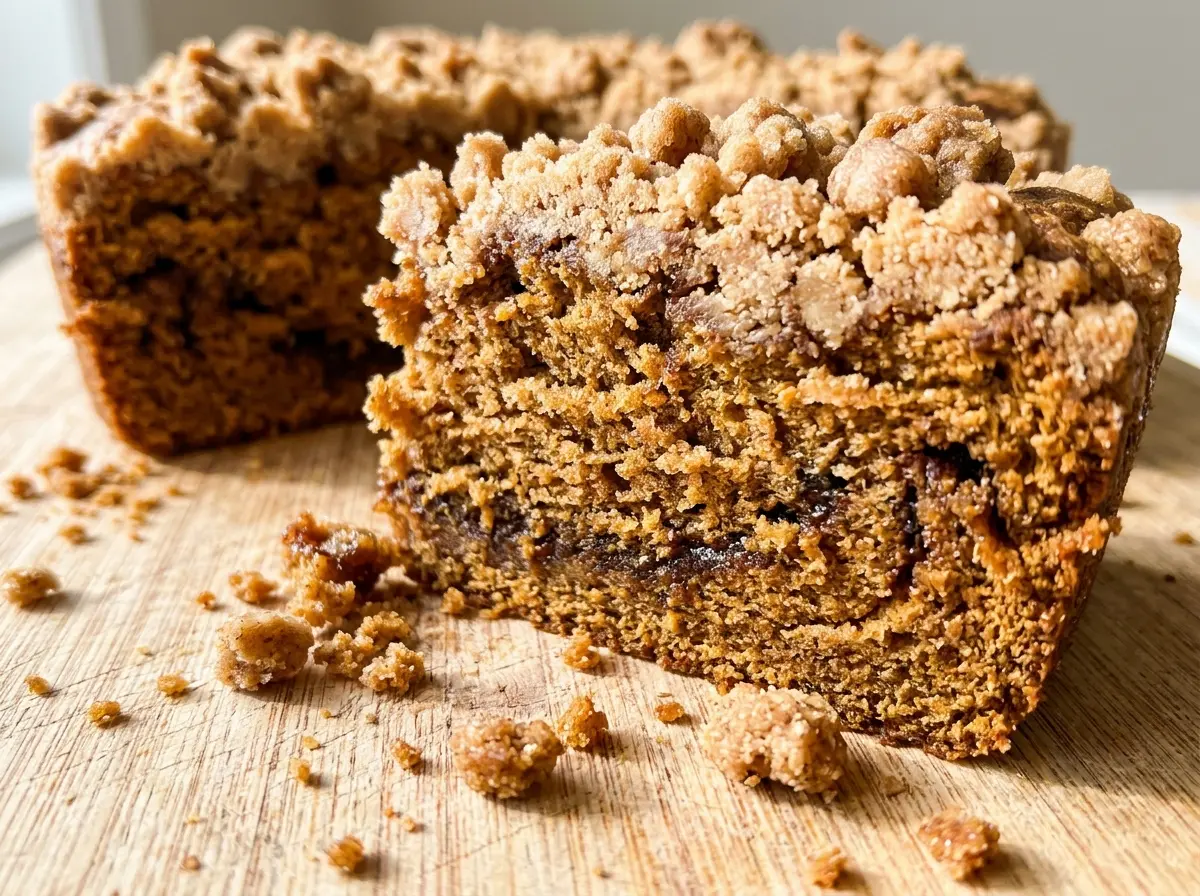
The oat topping goes on last, so every spoonful gets a little crunch over the soft, dark gingerbread underneath. When I cut into this cake, I look for that contrast: a tender middle with warm molasses flavor and a top that stays pleasantly crumbly. This gingerbread coffee cake with crumble topping is baked in a square pan, which makes it easy to portion for breakfast or an afternoon break.
Unsulphured molasses gives the cake its deep gingerbread character, while buttermilk keeps the crumb moist and brings a little tang to balance the sweetness. I mix the batter only until the flour disappears, then spread it into the pan before the baking soda has time to lose its lift. The oat topping adds texture without turning the cake into a heavy streusel bake. Serve it after a short rest, when the slices hold together but the cake is still soft.
Kitchen Note
I stop stirring the topping once the melted butter has formed distinct clumps with the oats and brown sugar. Those loose clusters scatter more evenly over the batter than a mixture pressed into one solid mass.
Save this gingerbread coffee cake for a cozy bake with a soft molasses crumb and a buttery oat crumble on top.
Why Buttermilk and Molasses Change the Mixing Timing
This batter gets its lift from baking soda, and the buttermilk supplies the acidity that helps it work. Molasses adds its own acidity and dense sweetness, too, so the wet mixture is more than a way to dissolve the sugar and combine the egg with the oil. Once the baking soda meets those acidic ingredients, the leavening process begins.
That’s why I have the pan greased and the oven hot before I stir the dry ingredients into the wet ones. There’s no need to rush or beat the batter hard; just work efficiently and stop once no dry flour remains. Letting the mixed batter sit while you prepare a pan or wait for the oven can cost it some of that lift. A ready pan and a clear counter make the handoff from mixing bowl to oven smooth, which helps the cake bake up tender rather than heavy.
What the Molasses, Buttermilk, and Oats Bring to This Cake

- Unsulphured molasses — This is the deep, rounded gingerbread note in the cake, not just a sweetener. Choose unsulphured molasses for a balanced taste; a jar that’s been open a long time can lose some of its aroma. Blackstrap is much more assertive and can taste bitter here, so it isn’t my swap of choice.
- Buttermilk — Its tang keeps the molasses flavor from tasting flat, and its acidity works with the baking soda. Plain kefir is the closest easy substitute; use it in the same volume, knowing the cake may have a slightly different tang.
- Old-fashioned rolled oats — Their broad flakes give the topping a distinct, chewy crunch rather than a sandy texture. Fresh oats matter more than a specialty brand; choose a package that smells clean and lightly nutty.
- Light brown sugar and unsalted butter — Brown sugar brings a gentle caramel note, while melted butter helps the topping hold together in clusters. Dark brown sugar works in its place for a more pronounced molasses taste. Unsalted butter keeps the topping’s sweetness and salt in balance.
- Canola oil — Oil keeps the cake’s crumb moist after it cools and blends smoothly into the wet ingredients. Another mild, neutral oil can take its place without changing the gingerbread flavor.
- Ground ginger, cinnamon, and cloves — The ginger leads, cinnamon rounds it out, and cloves add a deeper background note. Use spices that still smell fragrant when you open the jars; stale spices make a noticeably quieter cake.
Mixing and Baking the Cake Without Losing Its Lift
Stir Together the Oat Topping
Combine the rolled oats and brown sugar in a medium bowl, then stir in the melted butter. Set the topping aside while you prepare the cake. If you see a few larger clusters, leave them intact; they’ll give the surface a more varied texture than a layer of evenly fine crumbs.
Get the Pan and Bowls Ready
Heat the oven to 350°F and grease a 9-inch square baking pan with the teaspoon of oil set aside for the pan. Whisk the flour with the baking soda, salt, ginger, cinnamon, and cloves in a medium bowl so the spices are distributed throughout. In a separate large bowl, whisk the sugar, remaining oil, molasses, egg, and buttermilk until the mixture looks smooth. Keeping the dry and wet mixtures separate until the pan and oven are ready gives you a clean, unhurried assembly.
Bring the Batter Together Gently
Add the dry mixture to the wet mixture and stir just until you can’t see dry flour. If the batter is stirred far beyond that point, the cake can turn tougher than you want. Spread it evenly into the greased pan so the center and corners bake at a similar pace. Scatter the oat topping across the surface rather than pressing it down into the batter.
Bake Until the Center Gives a Moist-Crumb Test
Bake at 350°F for 38 to 45 minutes. The top should look set, and a toothpick inserted in the center should come out with a few moist crumbs; wet batter on the pick means it needs more time. If you wait for the toothpick to come out completely clean, the cake may bake past its best point. Let it rest in the pan for 20 minutes before slicing so the crumb has time to settle.
Two Reliable Ways to Adapt This Gingerbread Coffee Cake
Make It Gluten-Free
Replace the all-purpose flour with a measure-for-measure gluten-free baking blend that includes xanthan gum, using the same volume. The cake may be a little more delicate when sliced, so give it the full rest in the pan before cutting.
Make a Dairy-Free Version
Use a dairy-free baking stick in place of the unsalted butter, and replace the buttermilk with 3/4 cup unsweetened soy milk mixed with 2 1/4 teaspoons vinegar. Let the milk mixture stand for 5 minutes before adding it to the wet ingredients. Soy milk gives the batter useful body, though the finished cake may taste a little less tangy.
Storage and Reheating
- Room temperature: Keep the covered cake at room temperature for up to 2 days; the topping stays more textured than it does after chilling.
- Refrigerator: Store covered for up to 4 days. The crumb firms up in the cold, and the oat topping softens a little.
- Freezer: Freeze individual slices tightly wrapped for up to 2 months. Thaw them in the refrigerator or at room temperature while still wrapped.
- Reheating: Warm a slice in the microwave for about 10 to 15 seconds. Longer heating can dry the cake, so use short bursts rather than heating it until hot throughout.
Questions About Baking and Serving This Gingerbread Cake
Gingerbread Coffee Cake with Crumble Topping
Ingredients
Equipment
Method
- Stir the oats and brown sugar together in a medium bowl.
- Mix in the melted butter until clumps form.
- Heat the oven to 350°F.
- Grease a 9-inch square baking pan with 1 teaspoon of the canola oil.
- Whisk the flour, baking soda, salt, ginger, cinnamon, and cloves together in a medium bowl.
- In a large bowl, whisk the granulated sugar, remaining 1/3 cup canola oil, molasses, egg, and buttermilk until smooth.
- Add the dry ingredients to the wet ingredients and stir just until no dry flour remains.
- Spread the batter in the prepared pan.
- Scatter the crumble topping evenly over the batter.
- Bake at 350°F for 38 to 45 minutes, until a toothpick inserted in the center comes out with a few moist crumbs.
- Let the cake rest in the pan for 20 minutes before slicing.