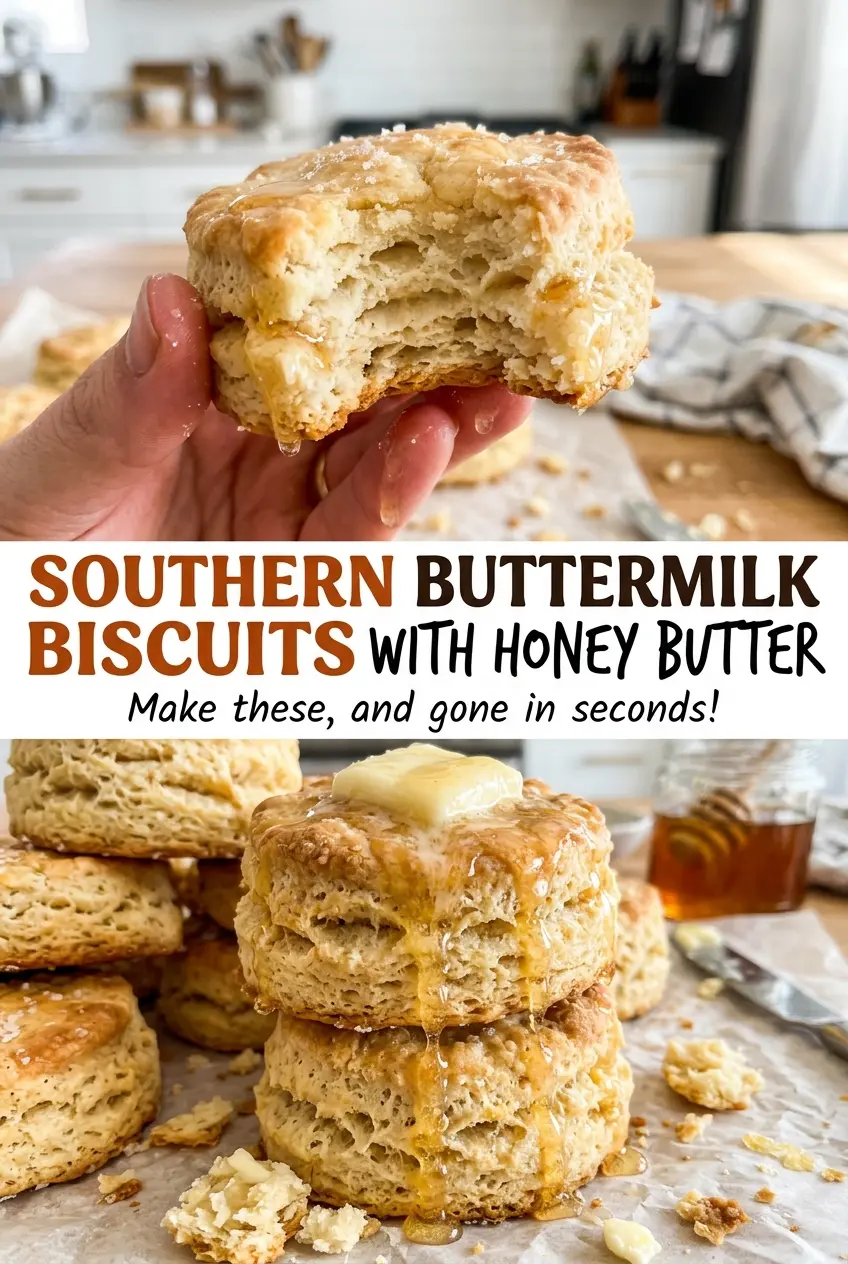
The moment cold buttermilk hits the flour, the dough looks rough and a little uneven. That’s exactly what you want; stirring until it looks smooth is how tender biscuits turn tough. These Southern buttermilk biscuits with honey butter bake up tall, with golden tops and soft centers, and they’re ready while the butter melts into a sweet, salty spread.
I keep the butter cold and cut it into small pieces so it stays distinct in the dough instead of disappearing into it. A couple of gentle folds build layers without turning biscuit making into a workout. The honey butter takes only a minute to stir together while the biscuits bake, and its salty sweetness is just right against the warm, tangy crumb.
Kitchen Note
Reroll the biscuit scraps once, then stop. Each extra round of patting and cutting works the dough more, and the last biscuits can come out noticeably less tender than the first.
Save these Southern buttermilk biscuits with honey butter for a breakfast worth slowing down for: tender layers, golden tops, and a quick sweet-salty spread.
Why These Biscuits Need Folds, Not More Kneading
Biscuits aren’t bread dough, so extra kneading doesn’t build the kind of structure you want. Too much handling tightens the dough and can leave the biscuits firm instead of tender. Here, a single fold-and-turn sequence gives the dough a little organization without asking you to knead it smooth.
That fold also creates layers. Pat the dough into a rectangle, fold it in half, turn it a quarter turn, and repeat once; when the biscuits rise, those layers help give the centers a light, pull-apart texture. The dough should still feel soft and slightly shaggy after the buttermilk goes in. Resist the urge to keep stirring just because you can still see a few rough patches.
The leaveners have different jobs, too. Baking powder provides lift, while baking soda works with the acidity in buttermilk. Keeping both in the mix gives these biscuits their rise and balances the tang of the dairy, so swapping out the buttermilk for plain milk changes more than just the flavor.
How Buttermilk, Cold Butter, and Flour Shape the Crumb
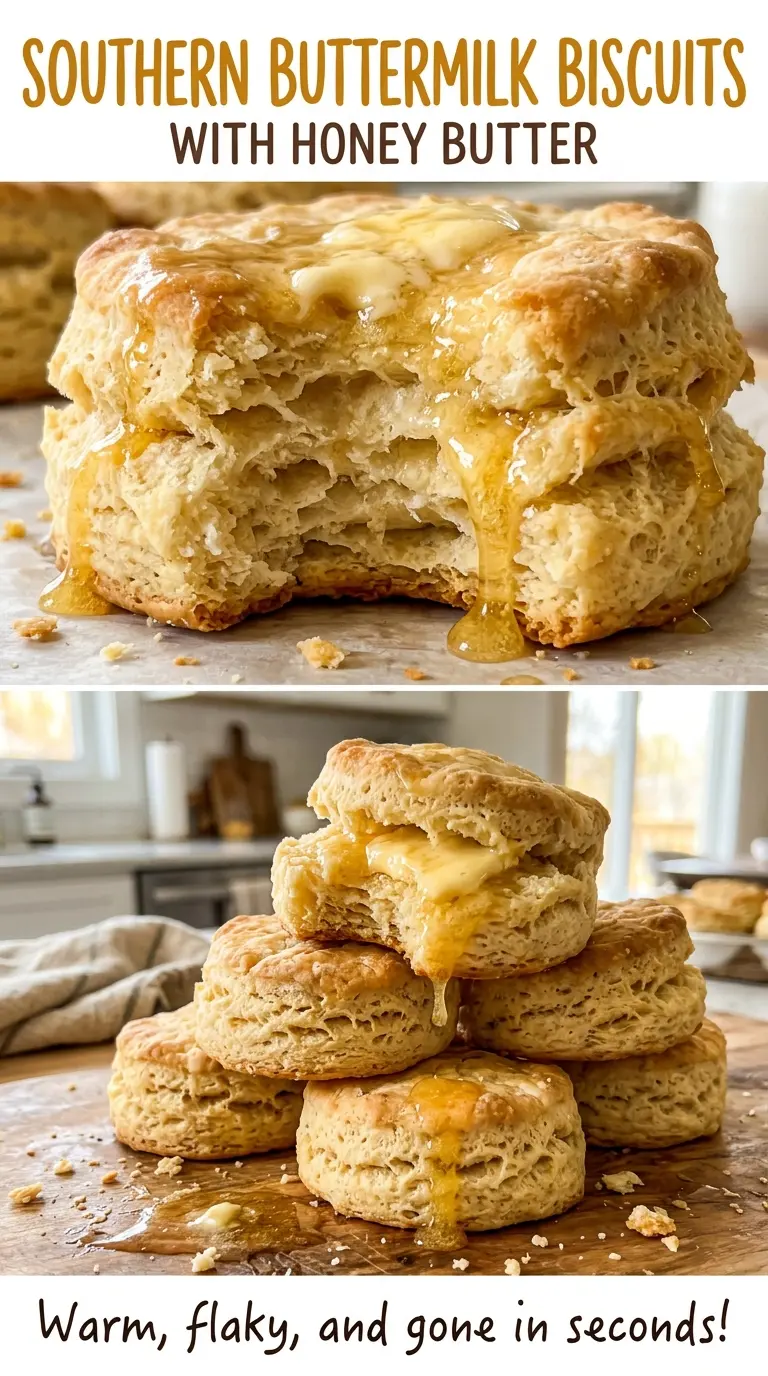
- All-purpose flour — Regular all-purpose flour gives the biscuits enough structure while keeping the crumb tender. A standard grocery-store bag works well; you don’t need specialty flour. For a gluten-free version, use a cup-for-cup baking blend that includes xanthan gum, as noted below.
- Baking powder and baking soda — Both help the biscuits rise, and the soda also balances the tang of the buttermilk. Fresh leaveners matter more than an expensive brand; old baking powder is a common reason biscuits bake up squat.
- Cold unsalted butter — Small, cold pieces leave pockets in the dough that help create a tender, layered biscuit. A good everyday butter is fine here. Salted butter can work, but it changes the seasoning, so unsalted gives you more control over the kosher salt.
- Buttermilk — Its acidity and thickness contribute to the dough’s flavor and texture. Plain kefir is the closest easy swap; use it in the same volume. A thinner milk-based substitute won’t give quite the same richness.
- Honey — Its flavor comes through clearly in the butter, so use a honey whose taste you enjoy. A mild, inexpensive honey works perfectly; there’s no need to reach for a rare variety.
From Pea-Size Butter to Golden Biscuit Tops
Whisk the Dry Ingredients and Cut in the Butter
Heat the oven to 450°F and line a 13×18-inch rimmed baking sheet with parchment paper. Whisk the flour with the baking powder, baking soda, and kosher salt in a large bowl so the leaveners are spread through the flour. Cut in the cold butter with a pastry cutter or your fingertips until the pieces are about pea-size. If the butter starts to soften while you work, keep handling brief and move on once the pieces are small.
Stir Until the Dough Is Just Shaggy
Pour in the cold buttermilk and stir just until a shaggy dough forms. Stop when the flour is mostly moistened and the dough is holding together in rough clumps; it doesn’t need to look smooth. Stirring past that point develops more gluten and makes the finished biscuits tougher. A few uneven edges are better than an overworked bowl of dough.
Fold, Turn, and Cut Straight Down
Lightly dust the work surface and a 2 1/2-inch biscuit cutter with the reserved flour. Pat the dough into a 3/4-inch-thick rectangle, fold it in half, turn it 90 degrees, and repeat the fold once. Pat it back to 3/4 inch, then cut straight down into rounds without twisting the cutter. Bring the scraps together and reroll them once for the remaining biscuits.
Bake Until Risen and Finish the Honey Butter
Arrange the biscuits close together on the prepared baking sheet and bake at 450°F for 12–15 minutes, until they’ve risen and the tops are golden brown. While they bake, stir the softened butter, honey, and kosher salt together until smooth. Let the biscuits rest on the baking sheet for 5 minutes before serving them warm with the honey butter. The tops should look browned, not pale, when they come out of the oven.
Two Easy Swaps Without Losing the Biscuit-and-Butter Spirit
Make a gluten-free batch with a cup-for-cup blend
Replace the all-purpose flour with the same amount of a cup-for-cup gluten-free baking blend that includes xanthan gum, including the flour used for shaping. The dough may feel more fragile, and the biscuits usually have a slightly more delicate crumb, so handle them gently as you fold and cut.
Trade the honey for maple in the butter
Use an equal amount of pure maple syrup in place of the honey, then stir it with the softened butter and salt until smooth. The spread will taste more maple-forward and may be a little softer than honey butter. Pancake syrup has a different flavor and sweetness, so pure maple syrup is the better fit.
Storage and Reheating
- Refrigerator: Keep leftover biscuits in an airtight container for up to 3 days. They’ll lose some of their fresh-baked softness in the fridge.
- Freezer: Freeze fully cooled biscuits in an airtight freezer-safe container for up to 2 months. Thaw before reheating for more even warming.
- Reheating: Warm a biscuit in the microwave in short bursts until heated through. Stop as soon as it’s warm; too much time in the microwave can make the crumb tough.
Questions That Come Up When Baking These Biscuits
Southern Buttermilk Biscuits with Honey Butter
Ingredients
Equipment
Method
- Heat the oven to 450°F.
- Line a 13x18-inch rimmed baking sheet with parchment paper.
- Whisk 2 cups of the flour with the baking powder, baking soda, and 3/4 teaspoon salt in a large bowl.
- Cut in the cold butter with a pastry cutter or your fingertips until the pieces are about pea-size.
- Pour in the buttermilk and stir just until a shaggy dough forms.
- Use the remaining flour to lightly dust the work surface and a 2 1/2-inch biscuit cutter.
- Pat the dough into a 3/4-inch-thick rectangle, fold it in half, turn it 90 degrees, and repeat once.
- Pat the dough back to 3/4 inch.
- Cut straight down into rounds and reroll the scraps once.
- Arrange the biscuits close together on the prepared baking sheet.
- Bake at 450°F for 12-15 minutes, until risen and golden brown on top.
- While the biscuits bake, stir the softened butter, honey, and 1/8 teaspoon salt together until smooth.
- Let the biscuits rest on the baking sheet for 5 minutes.
- Serve warm with the honey butter.