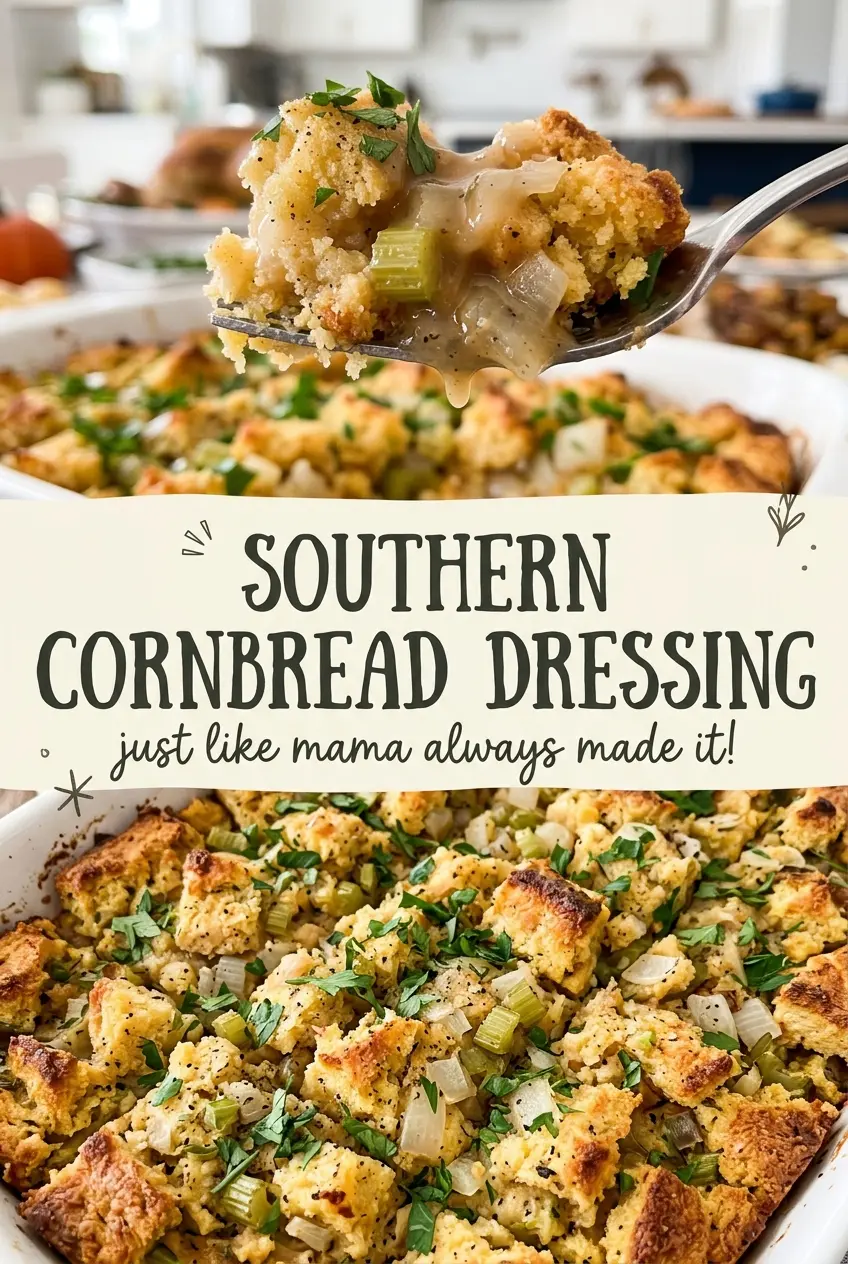
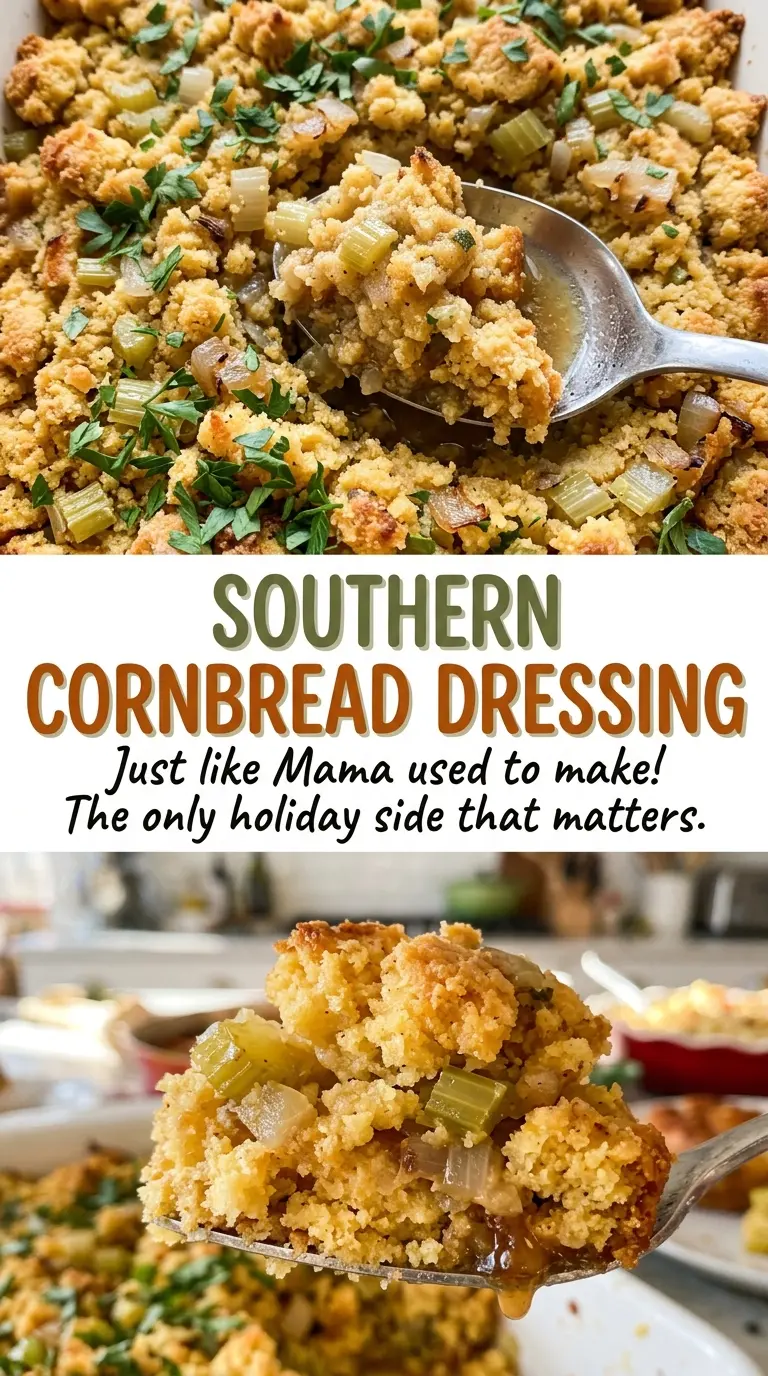
The first thing I notice when this dressing comes out of the oven is the top: golden and lightly crisp, with a center that stays tender instead of drying out. Southern cornbread dressing has a hearty, savory texture, and making the cornbread from scratch gives me control over how it soaks up the broth.
I bake the cornbread ahead of the dressing, then crumble and dry it before adding the vegetables, eggs, and broth. That extra step is practical, not fussy. Fresh, soft cornbread can drink up the liquid unevenly; dry crumbs give the broth room to spread through the bowl before everything goes into the oven.
Onion and celery soften in butter, while rubbed sage and poultry seasoning give the dressing its familiar savory character. After baking, a short rest helps the center settle, so each scoop holds together with a browned top and a moist, tender crumb.
Kitchen Note
Set aside the three eggs for the dressing before you start mixing the cornbread. I keep them in a separate bowl so they don’t accidentally end up in the batter.
Save this Southern Cornbread Dressing for its golden top, tender center, and homemade cornbread crumbs.
Why Drying the Cornbread Crumbs Keeps the Dressing From Turning Heavy
Soft, freshly baked cornbread and broth don’t behave like dry crumbs and broth. If the cornbread goes straight from the pan into the mixing bowl, it can collapse as you stir, leaving some spots saturated and others compacted. The dressing may bake through and still feel dense or pasty in the middle.
Drying the crumbled cornbread in a low oven gives it a more even starting texture. The crumbs can absorb the broth without immediately breaking down, so the mixture is easier to moisten evenly before baking. This isn’t about making them hard or toasted; they should be dry enough to handle the liquid but still crumble easily.
Watch the crumbs rather than waiting for a dark color. They should look drier after their time in the oven, not deeply browned. Stirring them once halfway through helps the crumbs on the edges and in the middle dry more evenly. That small bit of preparation is what lets the finished dressing stay tender without losing its shape.
What the Cornmeal, Buttermilk, and Broth Each Bring to the Dressing
- Yellow cornmeal — It gives the homemade cornbread its distinctive corn flavor and crumb. Use the yellow cornmeal you normally bake with; the cornmeal is the defining base, so replacing it with extra flour would change the dressing’s character.
- All-purpose flour and baking powder — Flour keeps the cornbread from being all cornmeal and too fragile to crumble, while baking powder gives the batter lift. Check that your baking powder is fresh if it has been sitting open for a long time.
- Buttermilk — Its tang balances the cornmeal and makes a moist cornbread. Plain milk won’t bring the same flavor, so buttermilk is worth choosing when you shop for this version.
- Eggs — The eggs have two separate jobs: some go into the cornbread, and the rest help bind the dressing. Keeping those portions separate makes the two-stage method easier to manage.
- Low-sodium chicken broth — Broth carries savory flavor into the crumbs and gives you a chance to season the dressing without starting with an overly salty liquid. Choose low-sodium broth when you want the sage and poultry seasoning to come through clearly.
- Butter, onion, celery, and seasonings — Butter softens the finely chopped vegetables and gives the dressing a savory base. Rubbed sage and poultry seasoning provide the familiar herb flavor; freshness matters more here than buying an expensive brand.
Build the Dressing in Stages for Evenly Moist Crumbs
Mix and bake the cornbread
Heat the oven to 400°F and grease a 9×13-inch baking dish. Whisk the cornmeal, flour, baking powder, and salt in a large bowl, then whisk three eggs with the buttermilk and vegetable oil in a second bowl. Stir the wet mixture into the dry ingredients just until combined; stop when no dry pockets remain, since extra mixing can make the cornbread tougher. Bake for 25–30 minutes, until golden and a toothpick inserted in the center comes out clean.
Cool, crumble, and dry the cornbread
Let the cornbread cool completely in the baking dish before crumbling it. Break it into crumbs and spread them across two rimmed baking sheets rather than piling them together. Lower the oven to 250°F and dry the crumbs for 30–40 minutes, stirring once halfway through. Set them aside when the drying time is finished.
Soften the onion and celery in butter
Melt the butter in a 12-inch skillet over medium heat, then add the finely chopped onion and celery. Cook for 8–10 minutes, stirring occasionally, until both vegetables have softened. Keep the heat at medium so the vegetables have time to turn tender without rushing into browning.
Moisten the crumbs without compacting them
In a 6-quart bowl, whisk the remaining eggs with the rubbed sage, poultry seasoning, and black pepper. Add the dried cornbread crumbs and cooked vegetables, then pour in the broth and stir until everything is evenly moistened. Check the bottom and sides of the bowl as you mix; dry patches there are easy to miss. The mixture should be moist throughout, not compressed into a smooth paste.
Bake until the center is set, then let it rest
Heat the oven to 350°F and grease the same 9×13-inch baking dish. Transfer the mixture to the dish and bake for 45–55 minutes, until the top is golden and the center reaches 160°F on an instant-read thermometer. If the top is browned before the center reaches temperature, keep baking and check the center again rather than relying on the surface color alone. Rest the dressing for 15 minutes before serving so it settles enough to scoop neatly.
Two Practical Ways to Adapt Southern Cornbread Dressing
Make It Vegetarian With Vegetable Broth
Replace the chicken broth with the same amount of low-sodium vegetable broth. The dressing will have a lighter, less chicken-forward savory flavor, while the cornbread, vegetables, and seasonings still make a hearty base. If you need the dish to be fully vegetarian, choose a poultry-seasoning blend made without animal ingredients.
Prepare the Dried Crumbs a Day Ahead
Bake, cool, crumble, and dry the cornbread a day before you plan to serve the dressing. Once the crumbs have cooled, keep them in an airtight container at room temperature; the next day, continue with the vegetables and dressing mixture. This splits the work without changing the texture you want from the finished dish.
Storage and Reheating
- Refrigerator: Store leftovers covered for 3–4 days. The top will soften in the refrigerator, while the center stays moist.
- Freezer: Freeze cooled portions in airtight, freezer-safe containers for up to 2–3 months. Thaw in the refrigerator before reheating for the most even result.
- Reheating: Cover a portion and warm it in a 325°F oven until the center reaches 165°F. Avoid reheating uncovered for too long, which can dry out the edges before the middle is hot.
Questions That Come Up While Making Cornbread Dressing
Southern Cornbread Dressing
Ingredients
Equipment
Method
- Heat the oven to 400°F.
- Grease a 9x13-inch baking dish.
- Whisk the cornmeal, flour, baking powder, and salt in a large bowl.
- In a second bowl, whisk 3 eggs with the buttermilk and oil.
- Stir the wet ingredients into the dry ingredients just until combined.
- Pour the batter into the prepared dish and bake for 25–30 minutes, until golden and a toothpick inserted in the center comes out clean.
- Cool the cornbread completely in the dish.
- Crumble the cornbread onto two rimmed baking sheets.
- Heat the oven to 250°F.
- Dry the crumbs for 30–40 minutes, stirring once halfway through, then set aside.
- Melt the butter in a 12-inch skillet over medium heat.
- Add the onion and celery and cook for 8–10 minutes, stirring occasionally, until softened.
- In a 6-quart bowl, whisk the remaining 3 eggs with the sage, poultry seasoning, and black pepper.
- Add the cornbread crumbs and cooked vegetables.
- Stir in the broth until evenly moistened.
- Heat the oven to 350°F and grease the same 9x13-inch baking dish.
- Transfer the mixture to the dish and bake for 45–55 minutes, until the top is golden and the center reaches 160°F on an instant-read thermometer.
- Rest the dressing for 15 minutes before serving.