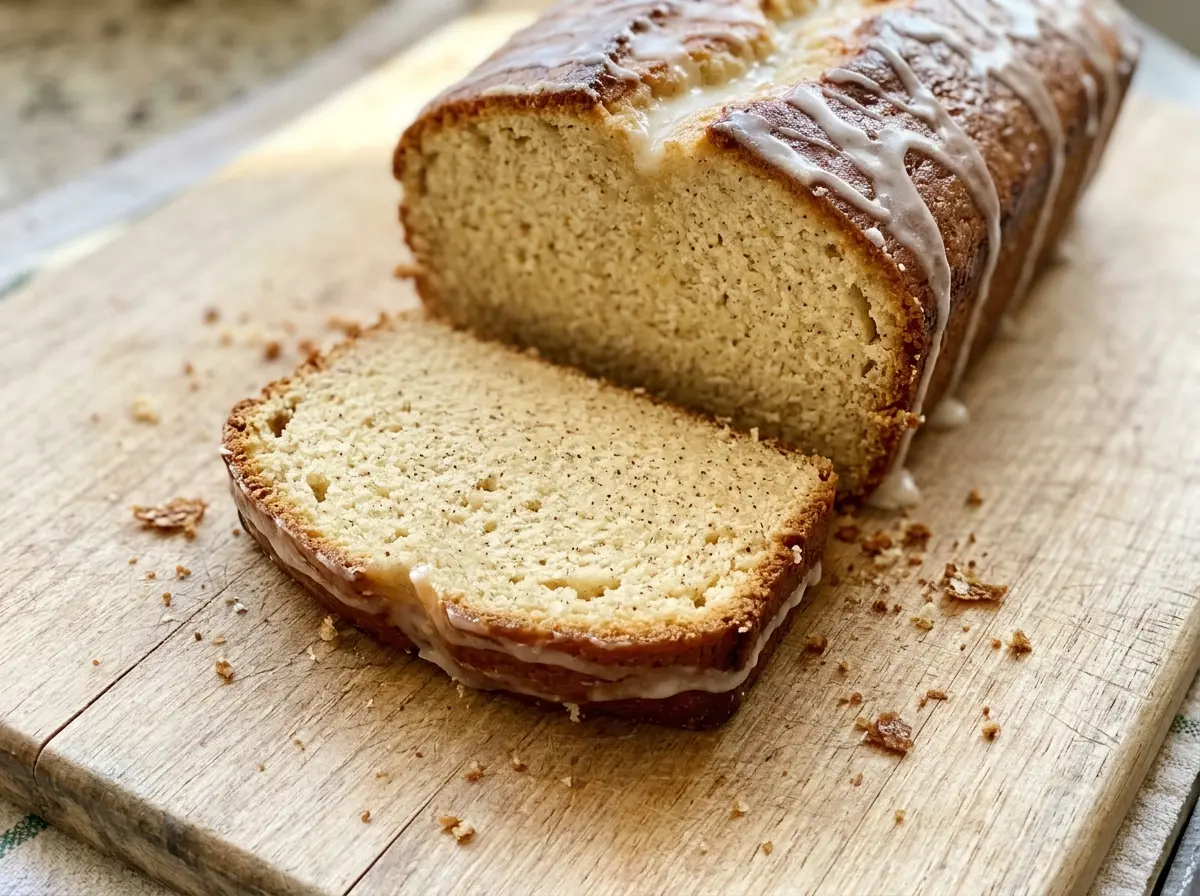
The loaf is already golden on top when the center still needs a little time, so I trust the toothpick more than the color. A few moist crumbs are fine; wet batter means it needs another stretch in the oven. That small distinction keeps Sweet Eggnog Bread tender instead of leaving a gummy stripe through the middle.
Eggnog brings a gentle spiced richness to a simple loaf, and nutmeg makes that flavor feel familiar without taking over. I keep the mixing brief once the wet ingredients meet the flour. The batter only needs to lose its dry streaks, not become silky smooth. Once it’s baked and completely cool, a quick eggnog glaze adds a sweet finish that sets into a thin, neat layer over the golden crust.
Kitchen Note
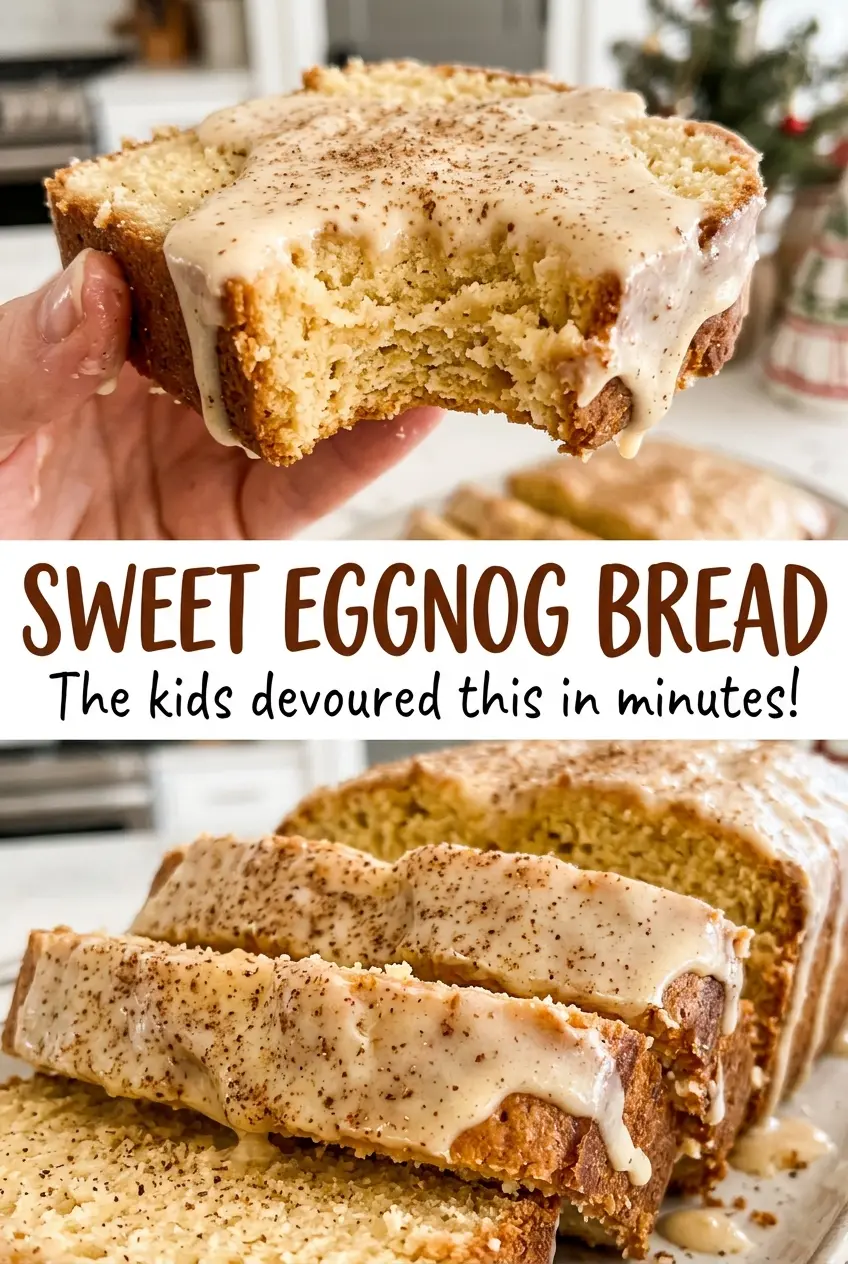
Let the loaf cool all the way before you drizzle the glaze. If the bread is still warm, the glaze thins and runs off instead of setting in a smooth layer.
Save this Sweet Eggnog Bread for a tender, nutmeg-scented loaf with a smooth eggnog glaze.
Why stirring this batter until smooth can make the loaf heavy
This is a quick bread, not a yeast dough, so the flour doesn’t need a long mixing session. Once the wet ingredients go into the bowl, stirring develops gluten in the flour. Too much mixing can leave the baked loaf tight and chewy instead of soft and tender. A few small lumps are harmless; dry pockets of flour are what you’re trying to eliminate.
I fold the wet mixture into the dry ingredients only until no dry streaks remain, scraping the bottom and sides of the bowl as I go. Stop when the batter looks evenly moistened, even if it isn’t perfectly smooth. Then get it into the prepared pan and into the oven rather than continuing to stir. This brief mix is what gives the bread a fine, tender crumb without asking for special equipment or a complicated method.
How eggnog and nutmeg shape this loaf’s crumb
- Eggnog — It gives the loaf its distinctive dairy richness and contributes the familiar eggnog flavor. Use one you enjoy drinking, since its taste comes through in both the bread and glaze. A smooth, pourable homemade eggnog can stand in for store-bought; very thick eggnog can make the batter harder to combine evenly.
- Nutmeg — Ground nutmeg adds warmth that complements the eggnog without needing a separate spice blend. Freshly grated nutmeg has a brighter aroma, but ordinary preground nutmeg works well here. Keep the measurement level so the spice doesn’t overpower the loaf.
- Unsalted butter — Melted butter adds richness and helps keep the crumb tender. Let it cool before whisking it with the eggs so the mixture stays cohesive. Unsalted butter also lets the measured salt stay in control; if you use salted butter, the bread may taste saltier because the salt amount hasn’t been adjusted.
- All-purpose flour — It gives the loaf enough structure to rise and hold together while staying soft. Stir the flour in its container before measuring so it isn’t packed into the cup. A scoop that’s too heavy can make the batter stiff and the finished bread dry.
- Powdered sugar — Its fine texture dissolves into the eggnog for a smooth drizzle, unlike granulated sugar, which would leave a gritty glaze. Sift it if it has clumps; that makes whisking the glaze smooth much easier.
Mixing and baking the eggnog loaf without a heavy center
Whisk the dry ingredients evenly
Heat the oven to 350°F and grease a 9×5-inch loaf pan before mixing. Whisk the flour, sugar, baking powder, salt, and nutmeg in a large bowl until the nutmeg is distributed through the flour. This even start helps the loaf rise consistently rather than leaving pockets of baking powder or spice. Set the bowl aside while you prepare the wet mixture.
Combine the wet mixture without warming the eggs
In a medium bowl, whisk the eggs with the eggnog, melted butter, and vanilla until blended. The butter should be melted but cooled, not hot; warm butter can make the egg mixture uneven. Pour the wet mixture into the flour mixture and stir just until the last dry streaks disappear. Scrape down to the bottom of the bowl, where flour often hides, then stop mixing.
Bake until the center passes the toothpick test
Scrape the batter into the greased pan and bake for 50–60 minutes. The top should look golden, but don’t use color alone to judge the middle. Insert a toothpick into the center: it should come out clean or with a few moist crumbs, not streaked with wet batter. If batter clings to it, return the loaf to the oven and check again after a little more baking.
Cool before adding the eggnog glaze
Leave the bread in the pan for 15 minutes, then turn it out onto a wire rack to cool completely. Whisk the powdered sugar and eggnog until the glaze looks smooth, with no dry pockets of sugar. Drizzle it over the cooled loaf and let the glaze set before slicing. Cutting too soon smears the glaze and can compress the warm crumb.
Two ways to change the spice or make the loaf dairy-free
Swap cinnamon for the nutmeg
Use ground cinnamon in place of the nutmeg in the dry mixture for a sweeter, familiar spice note. Keep the same amount so cinnamon doesn’t crowd out the eggnog flavor. The loaf will taste less nutmeg-forward, but the crumb and method stay the same.
Make a dairy-free eggnog loaf
Use a pourable dairy-free eggnog and dairy-free butter in place of the regular eggnog and unsalted butter, including the eggnog used in the glaze. The loaf will still contain eggs, so this adaptation is dairy-free rather than egg-free or vegan. Plant-based eggnog brands vary in sweetness and thickness, so expect a slightly different flavor and crumb.
Storage and Reheating
- Refrigerator: Store the glazed loaf in an airtight container for up to 4 days. The chilled crumb firms up, so let a slice stand briefly before eating for a softer texture.
- Freezer: The loaf freezes best without glaze. Wrap the fully cooled bread tightly and freeze for up to 2 months; thaw it in the refrigerator, then make and add the glaze.
- Reheating: Warm an individual slice in the microwave for about 10 seconds if you’d like it warm. The glaze will soften, so avoid heating it for too long or it may melt away.
Questions that come up when baking Sweet Eggnog Bread
Sweet Eggnog Bread
Ingredients
Equipment
Method
- Heat the oven to 350°F.
- Grease a 9x5-inch loaf pan.
- Whisk the flour, sugar, baking powder, salt, and nutmeg in a large bowl.
- In a medium bowl, whisk the eggs, eggnog, melted butter, and vanilla.
- Stir the egg mixture into the flour mixture just until no dry streaks remain.
- Scrape the batter into the prepared pan.
- Bake for 50–60 minutes, until golden and a toothpick inserted in the center comes out clean or with a few moist crumbs.
- Cool the bread in the pan for 15 minutes.
- Turn it out onto a wire rack and cool completely.
- Whisk the powdered sugar and eggnog until smooth.
- Drizzle the glaze over the cooled bread.
- Let the glaze set before slicing.