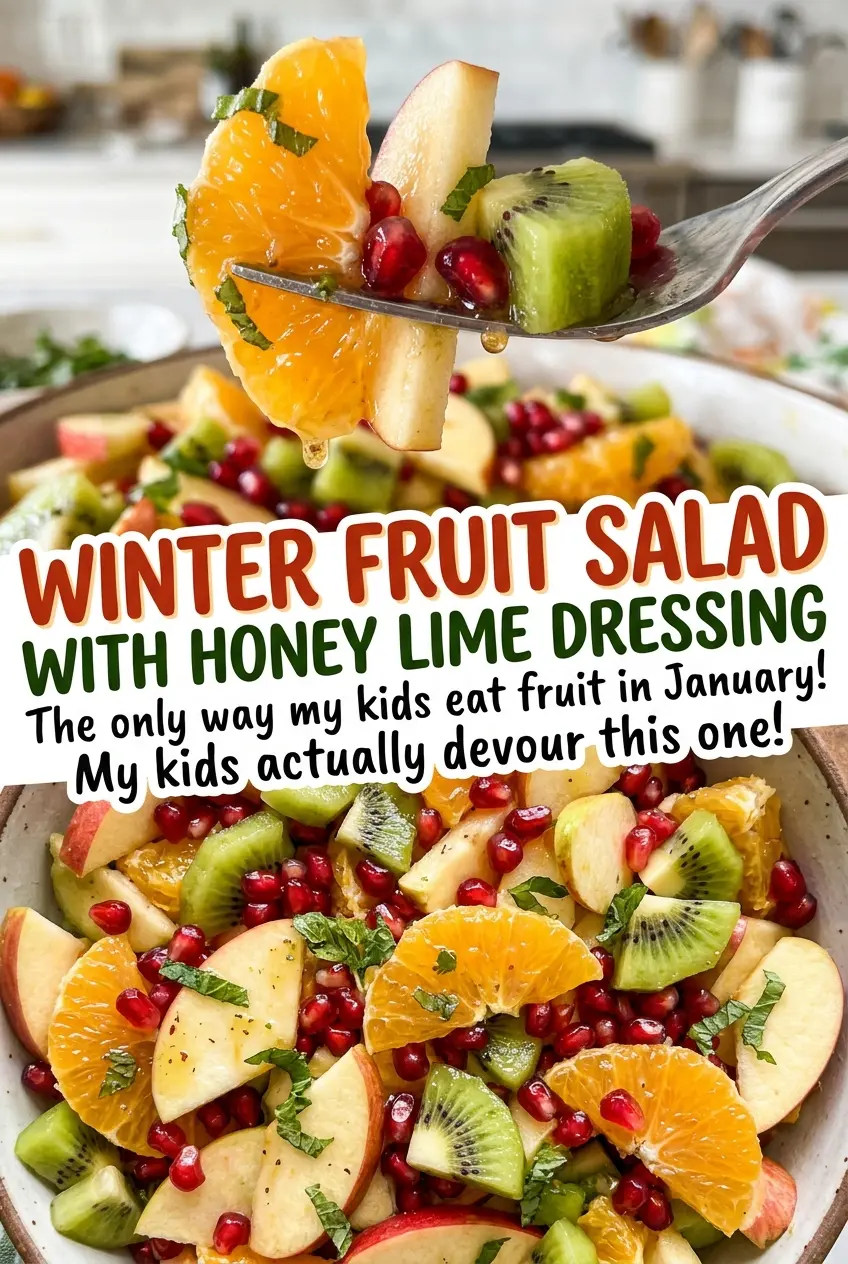
Cut apples can start to brown while you’re still peeling the rest of the fruit, and a bowl of fruit salad can turn watery if everything gets stirred together too roughly. I like this winter fruit salad because the lime and honey dressing goes onto the apples and pears first, while the juicier fruit waits its turn. The apples stay bright, and each bite still has its own texture.
Fresh lime juice gives the dressing a clean, tart edge, and honey rounds it out without hiding the fruit. I whisk those together, toss the apples and pears with half, then add the clementines, kiwi, grapes, and pomegranate arils with the rest. A short rest in the refrigerator brings the bowl together without asking the softer fruit to sit around for hours. The finished salad is colorful, lightly sweet, and fresh-tasting, with a little crunch from the apples and grapes beside tender citrus and kiwi.
Kitchen Note
Let the fruit rest in the refrigerator for the full 15 minutes before serving. That brief chill takes the edge off freshly cut fruit while keeping the kiwi slices and clementine segments intact.
Save this Winter Fruit Salad with Honey Lime Dressing for a bright bowl of crisp apples, juicy citrus, and ruby pomegranate dressed with fresh lime.
Why the Apples and Pears Get Dressed Before the Juicier Fruit
There’s a reason the first toss is just apples and pears with half the dressing. These are the fruits most likely to show browning once cut, and the lime juice helps slow that color change as the pieces get coated. Giving them a head start also spreads the dressing where it matters before the bowl fills up with fruit that releases more juice.
Clementines, kiwi, grapes, and pomegranate arils go in afterward with the remaining dressing. That order makes the final toss gentler: the apples and pears are already coated, so you don’t have to keep stirring the whole bowl to distribute the lime and honey. It also helps protect the softer kiwi and the delicate clementine segments from getting crushed.
Keep the sequence in mind if you’re scaling the bowl for a gathering or transferring it to a serving dish. You want a light, even coating rather than a puddle of dressing at the bottom, and the pomegranate arils should stay whole enough to give little bursts of juice as you eat.
What Lime, Honey, and Each Winter Fruit Bring to the Bowl
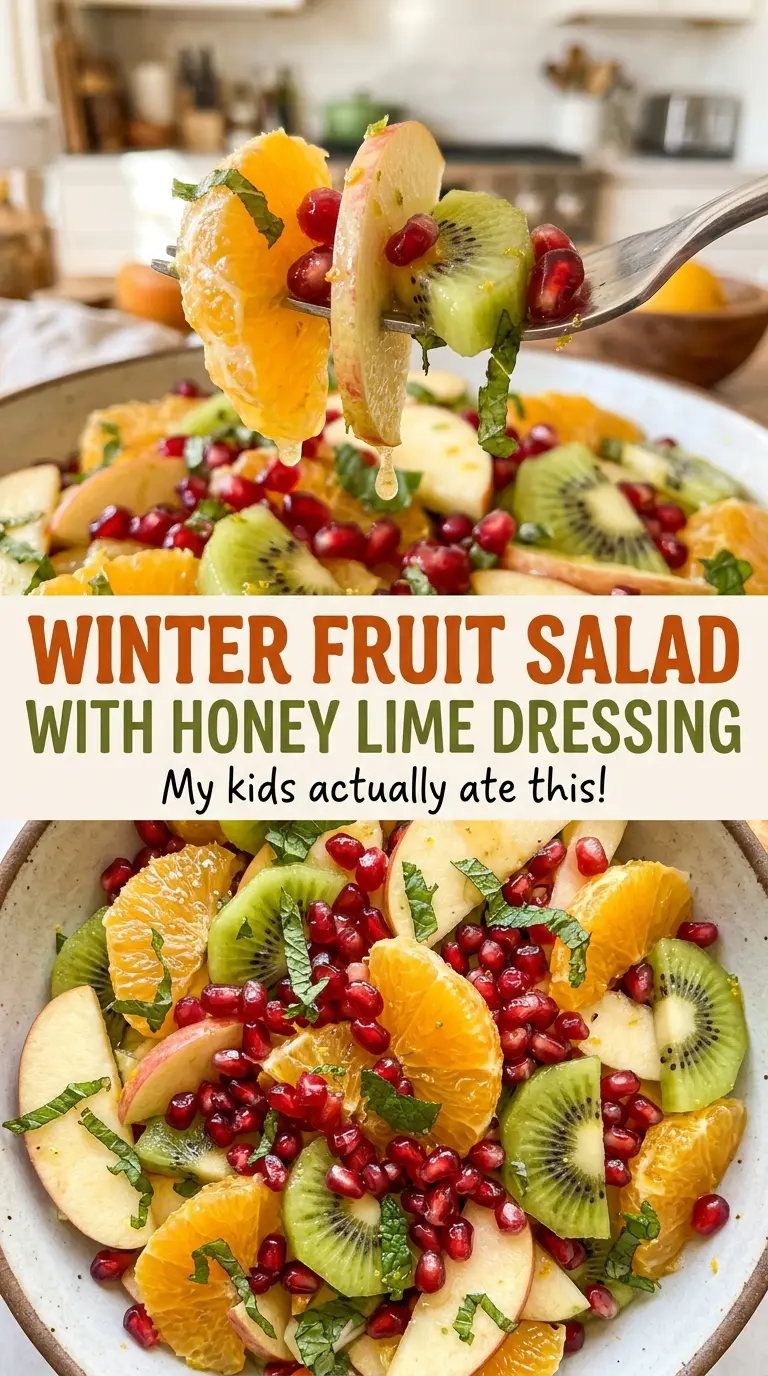
- Apples — Their crisp bite gives the salad a sturdy base and contrasts with the softer fruit. Choose apples that feel firm and cut cleanly; a budget-friendly apple works well as long as it isn’t mealy. Core and dice them so the pieces are easy to scoop with the other fruit.
- Pears — Pears bring a softer, mellow sweetness alongside the apples. Use fruit that’s ripe but still holds its shape when diced; an overly soft pear can collapse during tossing. Core and dice them to match the apples.
- Clementines — Their juicy segments add a bright citrus note without needing another dressing ingredient. Peel them fully and separate the segments; remove any loose bits of pith that would get in the way of a clean bite.
- Kiwi — Kiwi adds a tender, tart-sweet contrast and a vivid green color. Pick fruit that gives slightly but isn’t mushy, then peel and slice it. Gentle handling keeps the slices from breaking apart.
- Red grapes — Grapes bring a crisp, juicy pop. Halving them exposes more of the fruit to the dressing and makes them easier to eat in a mixed spoonful; ordinary fresh grapes are just right here.
- Pomegranate arils — These provide a tart, crunchy burst and the bowl’s jewel-like finish. Keep the arils whole as you toss; crushing them releases juice that can tint the rest of the fruit.
- Fresh lime juice and honey — Lime supplies the sharpness that keeps the dressing lively, while honey softens its edge and helps it cling to the fruit. Fresh lime has the brightest aroma, and a familiar everyday honey works well; whisk until the two are evenly combined.
Build the Salad in Two Tosses, Then Let It Chill
Whisk the Lime and Honey Together
Whisk the fresh lime juice and honey in a small bowl until combined. At first, the honey may look like a heavier streak through the juice; keep whisking until the mixture looks uniform. A small bowl gives you enough room to blend it without splashing.
Coat the Apples and Pears First
Add the cored, diced apples and pears to a large serving bowl. Pour in half of the dressing and toss until the cut surfaces have a light coating. Use a broad, gentle motion rather than pressing down on the fruit. If dressing collects under the pieces, keep turning the fruit through it instead of adding more.
Add the Remaining Fruit Gently
Add the peeled clementine segments, sliced kiwi, halved grapes, and pomegranate arils. Pour the remaining dressing over the bowl and toss gently until the fruit is lightly coated. The kiwi and clementine segments are softer than the apples, so stop once everything is distributed. A few arils may settle at the bottom; that’s fine.
Give the Bowl Its Short Rest
Refrigerate the salad for 15 minutes before serving. The rest lets the dressing settle over the fruit and gives the bowl a refreshing chill. Keep the bowl level as you move it so the dressing doesn’t gather on one side.
A Vegan Bowl, Individual Portions, or a Serving Platter
Make the Dressing Vegan by Leaving Out the Honey
For a vegan version, omit the honey and dress the fruit with the lime juice. The result will be noticeably sharper and less rounded, but the ripe fruit still brings natural sweetness. This is a simple omission rather than a one-for-one replacement.
Set Out Individual Fruit Cups
Keep the same fruit and dressing, then divide the finished salad among small cups instead of serving it from one bowl. Each portion gets a little of the colorful mix, and there’s no need for guests to reach into a shared serving bowl. Use a spoon to lift fruit from the bottom so the dressing is distributed between portions.
Arrange It as a Fruit Platter
For a more composed presentation, toss the diced apples and pears with half the dressing, then arrange them with the clementines, kiwi, grapes, and pomegranate on a platter. Drizzle the remaining dressing over the fruit and turn the pieces lightly to coat. The platter shows off each fruit separately, though the dressing won’t be as evenly distributed as it is in a tossed bowl.
Storage and Reheating
- Refrigerator: Cover leftovers and refrigerate for up to 2 days. The fruit softens and releases juice as it sits, so the texture is best on the day you make it.
- Freezer: Freezing isn’t a good fit; the apples, pears, kiwi, and citrus become soft and watery after thawing.
- Reheating: Serve the salad cold; reheating isn’t needed and will soften the fruit further.
Questions That Come Up Before You Toss the Fruit
Winter Fruit Salad with Honey Lime Dressing
Ingredients
Method
- Whisk the lime juice and honey together in a small bowl until combined.
- Add the apples and pears to a large serving bowl and toss with half of the dressing.
- Add the clementines, kiwi, grapes, and pomegranate arils, then toss gently with the remaining dressing.
- Refrigerate for 15 minutes before serving.