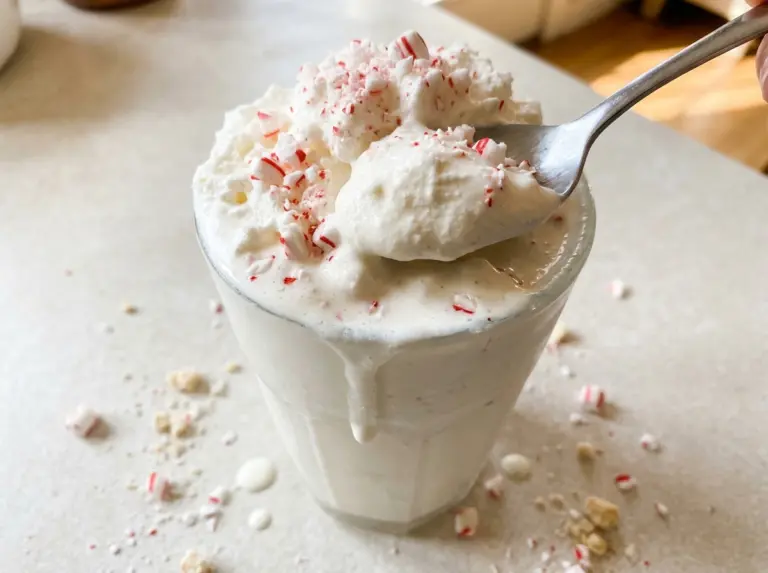
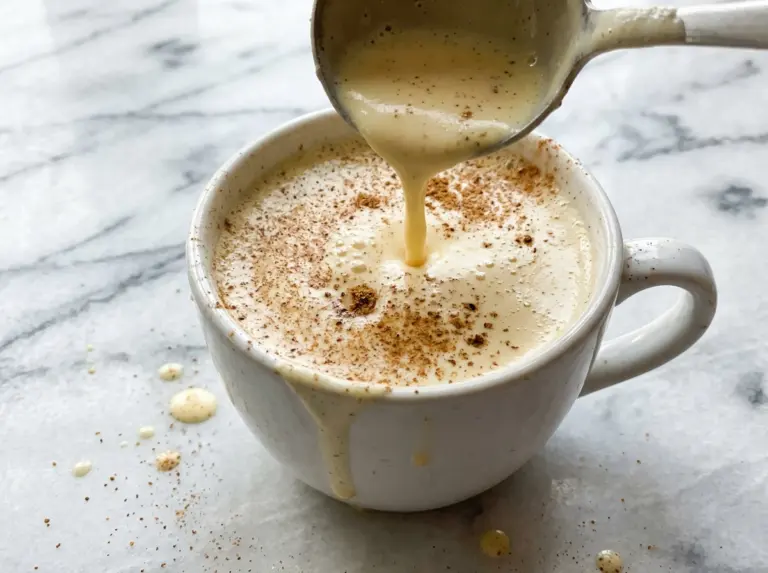
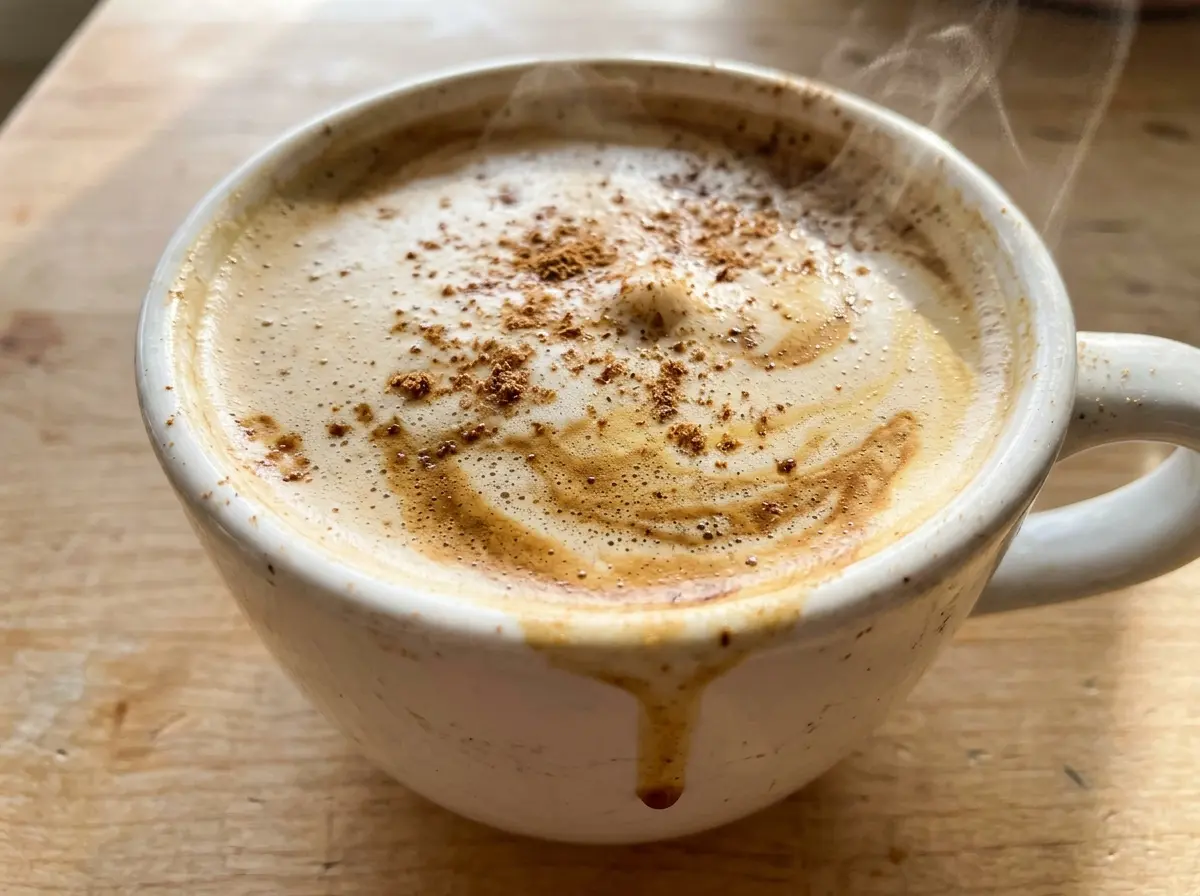
The espresso darkens the mug first, then the warm eggnog turns it creamy and pale as you pour. I like how the coffee keeps this drink from tasting like a cup of straight eggnog; the whole milk softens the richness without burying the espresso. This Eggnog Latte comes together on the stovetop, so you don’t need a steam wand to get a little foam on top.
Eggnog already brings sweetness and body, which is why I pair it with milk instead of heating it on its own. Whisking the two together gives the mixture a lighter texture, and ground nutmeg adds the familiar warm finish. The result is a smooth, coffee-forward mug with a foamy top and just enough spice to announce itself.
Kitchen Note
I brew and divide the espresso before I start warming the eggnog. That way, the mugs are ready when the mixture turns foamy, and I can pour it while it’s hot instead of letting it sit in the saucepan.
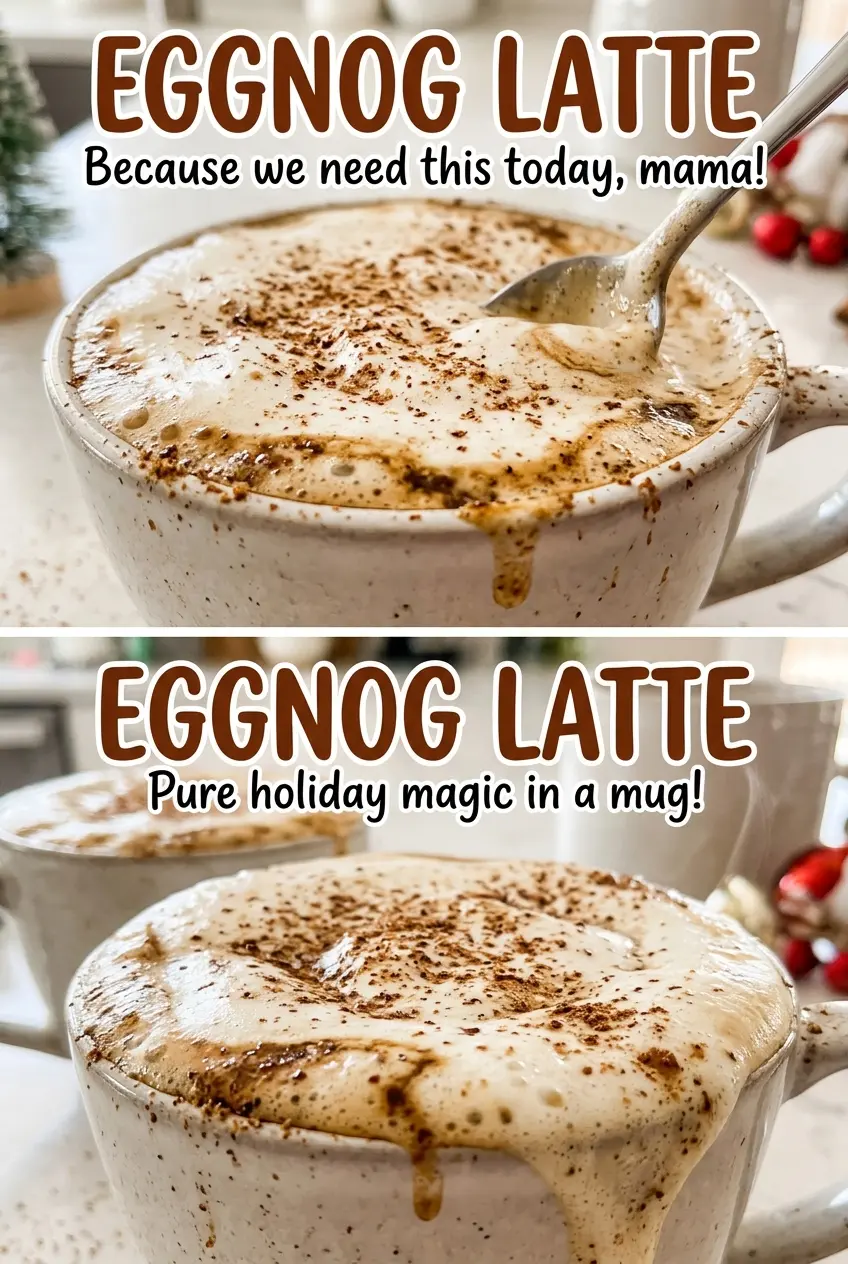
Save this Eggnog Latte for a creamy espresso break with a lightly foamy top and a dusting of nutmeg.
Why This Eggnog Latte Should Never Come to a Boil
Eggnog is richer than plain milk, and it doesn’t benefit from a hard, rolling heat. If the saucepan gets too hot, the mixture can turn grainy or develop an unpleasant cooked texture before you have a chance to pour it. A gentle medium-low heat gives you time to whisk the eggnog and milk together while they warm, rather than rushing them to a simmer.
Look for steam and a thin cap of foam, not bubbling around the edges. The mixture should be hot enough to warm the espresso when you combine them, but it should still move smoothly when you whisk. If you see bubbles breaking across the surface, take the pan off the heat. A little patience here preserves the silky texture that makes this drink feel like a latte instead of hot eggnog with coffee added.
The espresso goes into the mugs first, so the hot mixture meets the coffee right away. That gives you a balanced cup without having to stir a thick, sweet base for long. Keep your whisk moving as the saucepan warms, especially around the bottom and sides where milk mixtures heat fastest.
What the Eggnog, Milk, and Espresso Each Bring to the Mug
- Espresso — Its concentrated coffee flavor stands up to the sweetness and richness of eggnog. Brewed espresso is the best fit here; regular drip coffee has a lighter body and would make the same-size drink taste less coffee-forward. Decaf espresso works in the same amount if you want the coffee taste without the caffeine.
- Eggnog — This is the drink’s sweet, custardy base, so the kind you buy has a noticeable effect on the finished cup. Some cartons are thicker or sweeter than others; choose one you enjoy drinking on its own. Dairy-free eggnog can work too, though its body and sweetness vary by brand.
- Whole milk — Milk loosens the eggnog so it pours easily and keeps the finished drink from feeling too dense. Two-percent milk can stand in at the same amount, with a slightly lighter body. For a dairy-free mug, pair dairy-free eggnog with unsweetened oat milk rather than using regular whole milk.
- Ground nutmeg — A small sprinkle gives the top a warm, fragrant finish. Keep the jar tightly closed; ground spices lose their aroma as they sit. If you’re out, leaving it off is better than adding a spice that changes the drink in a different direction.
Three Stovetop Stages for a Smooth, Foamy Eggnog Latte
Set Up the Espresso Mugs
Brew the espresso and divide it between two mugs before you heat the milk mixture. This keeps the coffee portion ready for the pour and avoids leaving espresso to sit while you finish the saucepan. Use mugs with enough room for the espresso and the hot eggnog mixture together. Keep them close to the stove so the final pour is easy.
Whisk the Eggnog and Milk Until Steaming
Combine the eggnog and whole milk in a small saucepan, then set it over medium-low heat. Whisk for 3 to 5 minutes, moving the whisk across the bottom and around the sides so the mixture warms evenly. Watch for steam and a lightly foamy surface; it should not boil. If it starts bubbling, lift the pan from the burner and keep whisking until the bubbling stops.
Pour and Finish with Nutmeg
Divide the hot eggnog mixture between the mugs, pouring it over the espresso. A gentle pour helps the two layers mingle without knocking all the light foam away. Sprinkle ground nutmeg over each mug just before serving, so its aroma stays on top. Serve while the latte is hot and the foam is fresh.
Easy Ways to Adapt This Eggnog Latte
Make It Dairy-Free
Use dairy-free eggnog in place of the regular eggnog and unsweetened oat milk instead of whole milk, keeping the listed amounts the same. The texture may be a little less rich, and the sweetness depends on the eggnog you choose, but the espresso and nutmeg still give you the same cozy latte character.
Make One Mug Instead of Two
Halve each ingredient for a single serving, then use the same stovetop approach. The smaller quantity will warm faster, so pay attention to the steam and light foam rather than relying on the full-batch timing. This is a handy way to make a fresh cup without keeping extra latte warm.
Storage and Reheating
- Refrigerator: This latte is best fresh. Refrigerate leftovers in a covered container within 2 hours and use them within 3 to 4 days; the mixture may separate as it chills.
- Freezer: Freezing isn’t recommended because the dairy mixture can separate and turn grainy when thawed.
- Reheating: Warm leftovers gently in a saucepan over medium-low heat, whisking until hot. Don’t let the mixture boil, and avoid reheating it over high heat, which can spoil its smooth texture.
Questions That Come Up When Making Eggnog Lattes
Eggnog Latte
Ingredients
Equipment
Method
- Brew the espresso.
- Divide it between two mugs.
- Combine the eggnog and milk in a small saucepan.
- Heat over medium-low heat, whisking, for 3 to 5 minutes until steaming and lightly foamy; do not let it boil.
- Divide the hot eggnog mixture between the mugs.
- Sprinkle with nutmeg.