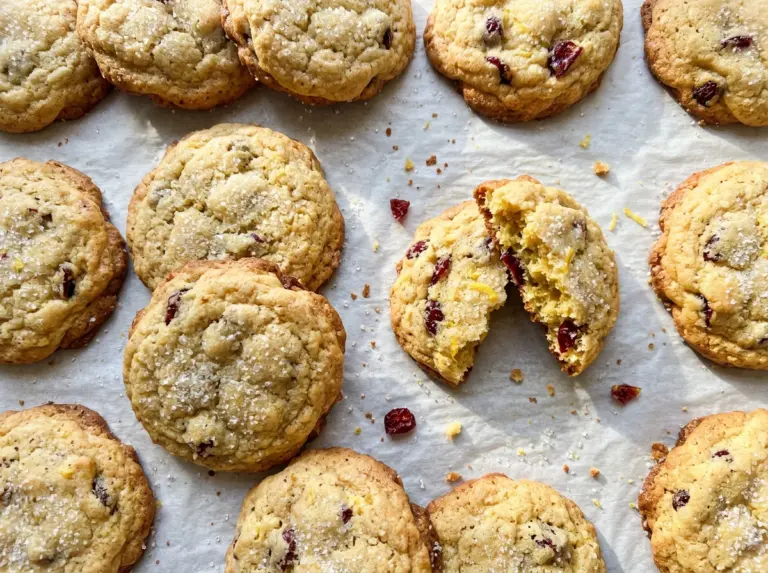
The first clue that these cookies are ready isn’t a firm center; it’s the cracked top and edges that have just set. When I pull the tray from the oven, the middles still look soft, which is exactly what keeps these lemon crinkle cookies tender after they cool. The bright lemon comes through in every bite, while a generous powdered sugar coating gives each cookie its snowy, crinkled finish.
Finely grated zest brings the lemon’s fragrant oils into the dough, and lemon juice adds a sharper note. I chill the dough before shaping so it’s easier to roll and coat, then give each ball two layers of sugar: granulated first, powdered sugar second. That order makes the crackled tops stand out against the sunny lemon cookie underneath.

Kitchen Note
Roll each dough ball in granulated sugar before the powdered sugar. That first coat helps the snowy layer stay distinct as the cookies crack in the oven, so don’t skip it or reverse the order.
Save these lemon crinkle cookies for a bright, lemony bake with soft centers and crackled powdered sugar tops.
Why the Two Baking Sheets Need a Mid-Bake Switch
These cookies bake on two oven racks at once, and the trays won’t get identical heat throughout the bake. One rack may brown the bottoms faster while the other tray sits in a different pocket of airflow. Switching the pans’ rack positions and turning them front to back halfway through helps the cookies bake more evenly across both sheets.
That midway change matters because the dough portions are small and the baking window is short. A couple of extra minutes can take a soft center toward dry, especially if one pan is already getting more heat. Keep the cookies on separate racks rather than crowding all 24 onto one sheet, and use the halfway point to rotate each pan front to back as you swap their positions. You’ll have a better chance of getting matching batches instead of one tray that’s pale and another that’s overbaked.
What the Lemon, Butter, and Two Sugars Each Bring

- Lemon zest and juice — Zest carries the fragrant oils that give the cookies their unmistakable lemon aroma; juice brings acidity and a brighter, sharper taste. Use fresh lemons when you can, and grate the zest finely so it disperses through the dough instead of leaving long strips. Bottled juice can stand in for the juice, but it can’t replace the fresh zest.
- Unsalted butter — Butter gives the dough richness and helps it cream smoothly with the sugar. Softened butter should give slightly when pressed but shouldn’t look greasy or melted. Unsalted butter also lets the salt level stay consistent; salted butter varies by brand and can make the cookies taste saltier.
- Room-temperature eggs — Eggs bind the dough and contribute structure. Bringing them to room temperature helps them blend into the creamed butter without firming it up. If you forget, place the eggs in a bowl of warm water for a few minutes before cracking them.
- Granulated and powdered sugar — The granulated sugar sweetens the dough and gives the outside its first coating, while powdered sugar creates the pale, crinkled finish. Powdered sugar is worth keeping for this look; granulated sugar alone won’t give the tops the same contrast.
- All-purpose flour and leaveners — Flour gives the cookies their shape, while baking powder and baking soda help them puff as they bake. Spoon flour into the measuring cup and level it rather than packing it down; too much flour can make the centers dense.
Mixing and Baking Lemon Crinkle Cookies Without Guesswork
Whisk the Dry Ingredients Evenly
Whisk the flour, baking powder, baking soda, and kosher salt together in a medium bowl. Break up any small clumps so the leaveners are distributed throughout the flour before they meet the wet ingredients. This quick mix helps the cookies puff evenly instead of developing isolated bumps. Set the bowl aside while you cream the butter.
Cream the Butter, Then Add the Lemon
Beat the softened butter with 1 cup of the granulated sugar in a large bowl until light and fluffy, about 2 minutes. Add the eggs one at a time, beating after each addition, then mix in the lemon zest, lemon juice, and vanilla extract until combined. Room-temperature eggs incorporate more smoothly than cold ones, so the mixture is less likely to look curdled. Scrape the bowl if butter or sugar is clinging to the sides.
Bring the Dough Together and Chill
Add the flour mixture and mix on low just until no dry streaks remain. Stop as soon as the flour disappears; continuing to mix develops more gluten and can make the cookies tougher. Cover the dough and refrigerate it for 2 hours. Chilled dough is less sticky to handle when you portion and roll it.
Set Up the Coating and Baking Sheets
Heat the oven to 350°F and line two 18×13-inch baking sheets with parchment paper. Put the remaining 1/4 cup granulated sugar and the powdered sugar in separate small bowls. Scoop the dough into 24 portions, roll each portion into a ball, then coat first in granulated sugar and generously in powdered sugar. Arrange 12 cookies on each sheet with about 2 inches between them.
Bake for Cracks, Then Let the Centers Set
Bake the sheets on separate oven racks for 10–12 minutes, swapping their rack positions and rotating them front to back halfway through. Look for puffed cookies with cracked tops, set edges, and centers that still look soft. Let them cool on the baking sheets for 5 minutes before transferring them to a wire rack to cool completely. Moving them too soon can break the tender cookies while they’re still setting.
Two Practical Ways to Adapt the Lemon Crinkle Dough
A Gluten-Free Batch with a Cup-for-Cup Blend
Replace the all-purpose flour with a 1:1 gluten-free baking flour blend that includes xanthan gum, using the same amount. The dough may feel a little different after chilling, and the finished cookies can be more delicate, so let them cool fully on the sheet before moving them.
A Dairy-Free Version
Use a stick-style plant-based butter in place of the unsalted butter, keeping it softened rather than melted. The lemon and sugar coating will still lead the flavor, though the cookie’s richness and spread can vary with the butter brand. A spreadable tub-style product is too soft for this dough.
Storage and Reheating
- Refrigerator: Store cooled cookies in an airtight container for up to 1 week; the powdered sugar coating may absorb moisture and look less crisp.
- Freezer: Freeze fully cooled cookies in a sealed freezer container for up to 2 months, with parchment between layers to protect the coating. Thaw at room temperature.
- Reheating: These cookies are best at room temperature and don’t need reheating. Microwaving can soften the powdered sugar coating unevenly.
Questions That Come Up While Baking Lemon Crinkle Cookies
Lemon Crinkle Cookies
Ingredients
Equipment
Method
- Whisk the flour, baking powder, baking soda, and salt together in a medium bowl.
- Beat the butter with 1 cup of the granulated sugar until light and fluffy, about 2 minutes.
- Beat in the eggs one at a time.
- Mix in the lemon zest, lemon juice, and vanilla extract until combined.
- Add the flour mixture and mix on low just until no dry streaks remain.
- Cover and refrigerate the dough for 2 hours.
- Heat the oven to 350°F.
- Line two 18x13-inch baking sheets with parchment paper.
- Put the remaining 1/4 cup granulated sugar and the powdered sugar in separate small bowls.
- Scoop the dough into 24 portions and roll each into a ball.
- Coat each ball first in granulated sugar and then generously in powdered sugar.
- Arrange 12 cookies on each baking sheet, spacing them about 2 inches apart.
- Bake on separate oven racks for 10–12 minutes, swapping the pans’ rack positions and rotating them front to back halfway through, until the cookies are puffed and cracked with set edges and soft-looking centers.
- Let the cookies cool on the baking sheets for 5 minutes.
- Transfer the cookies to a wire rack to cool completely.